Showing posts with label CANCER. Show all posts

Wednesday, 8 June 2022

Indian origin patient among those healed completely of cancer in drug trial

 An Indian origin patient was among those who had a “miracle” cure using a cancer medication that is being tried out by a research centre here achieving an unprecedented healing rate

An Indian origin patient was among those who had a “miracle” cure using a cancer medication that is being tried out by a research centre here achieving an unprecedented healing rate when all 14 patients in the trial had their cancers disappear.

“It’s a miracle”, Nisha Varughese said about the immunotherapy drug’s efficacy in curing her. In the trial at the Memorial Sloan Kettering (MSK) Cancer Center in New York using dostarlimab, “the rectal cancer disappeared after immunotherapy — without the need for the standard treatments of radiation, surgery, or chemotherapy — and the cancer has not returned in any of the patients, who have been cancer-free for up to two years,” the MSK said.

According to researchers, this was the first time that all the patients in a cancer trial were completely healed with a medication and they did not have serious side effects. The results of the trial were disclosed over the weekend in the New England Journal of Medicine and at a meeting of the American Society of Clinical Oncology….

Thursday, 4 April 2019

Poor diet leads to hundreds of deaths in India every year: Lancet study

The study estimates that one in five deaths globally — equivalent to 11 million deaths — are associated with poor diet.
Image via Shutterstock
Poor diet leads to hundreds of deaths in India annually, according to a Lancet study which found that globally one in five people die due to the lack of optimal amounts of food and nutrients on their plates. The report, which tracked trends in consumption of 15 dietary factors from 1990 to 2017 in 195 countries, showed that almost every region of the world could benefit from rebalancing their diets.
The study estimates that one in five deaths globally — equivalent to 11 million deaths — are associated with poor diet, and diet contributes to a range of chronic diseases in people around the world. In 2017, more deaths were caused by diets with too low amounts of foods such as whole grains, fruit, nuts and seeds than by diets with high levels of foods like trans fats, sugary drinks, and high levels of red and processed meats.
Low intake of whole grains — below 125 grammes per day — was the leading dietary risk factor for death and disease in India, the US, Brazil, Pakistan, Nigeria, Russia, Egypt, Germany, Iran, and Turkey. In Bangladesh, low intake of fruits — below 250 grammes per day — was the leading dietary risk.
In 2017, the countries with the lowest rates of diet-related deaths were Israel, France, Spain, Japan, and Andorra. India ranked 118th with 310 deaths per 100,000 people. The UK ranked 23rd (127 deaths per 100,000), and the US ranked 43rd (171 deaths per 100,000) after Rwanda and Nigeria (41st and 42nd)…

Monday, 3 December 2018

There is a magic bullet for some cancers, but it’s not a slam-dunk

‘What you don’t want to do is use therapy where it brings no value to patients, adds to cost and doesn’t lead to better results,’ said Joseph Alvarnas, a hematologist oncologist at City of Hope in Dua
Novartis
Health News: Shahzad Bhat, 53, was working at the MGM Mansion in Las Vegas when his doctor gave him three months to live in October 2017. There were no more treatments available for his aggressive form of lymphoma.
Like some of the elite gamblers who stayed at the casino, Bhat got lucky. A day before his appointment, an experimental cancer drug from Gilead Sciences Inc. had been approved in the U.S. Bhat become one of the first people to get the breakthrough therapy, Yescarta, after its approval, and his cancer went in remission quickly.“It was a miracle,” said his wife, Nicole Bhat. “He was feeling fantastic. Thirty days out and we got a renewal on life.”
It didn’t last. About six months later, the cancer known as diffuse large B cell lymphoma was back. Doctors and scientific researchers now are grappling with how they should treat patients like Bhat, who relapsed after getting promising therapies known as CAR-Ts. A study presented at the American Society of Hematology meeting in San Diego this weekend showed that 61 percent of patients who underwent the novel treatment weren’t cancer-free two years later.

Click Here : Business Standard OR  BS

Tuesday, 18 September 2018

Vitamin D may reduce cancer risk, breast cancer mortality

Apart from building healthy bones, vitamin D also may reduce cancer risk as well as breast cancer mortality, especially in women with a lower body mass index.
Image result for Vitamin D may reduce cancer risk, breast cancer mortality
BS| Breast cancer remains the most common cancer in women worldwide and is the leading cause of death from cancer in women. Reproductive risk factors such as early onset of puberty, late menopause, later age at first pregnancy, never having been pregnant, obesity, and a family history have all been shown to be associated with breast cancer development.
The role of vitamin D concentration in the development of breast cancer, however, continues to be debated.
Researchers involved in the study concluded that postmenopausal women had an increased risk of vitamin D deficiency at the time of their breast cancer diagnoses, associated with higher rates of obesity than women of the same age group without cancer.
Similar studies also have previously demonstrated a relationship between vitamin D and breast cancer mortality. Women in the highest quartile of vitamin D concentrations, in fact, had a 50% lower death rate from breast cancer than those in the lower quartile, suggesting that vitamin D levels should be restored to a normal range in all women with breast cancer.
>>Thank You<<<

Monday, 20 August 2018

Platform to kill cancer cells developed!

A new breakthrough in cancer diagnosis will now help in the identification and treatment of malignant tumours.
Image result for cancer
For the first time ever, scientists have shown that a hybrid nanomaterial based on magnetite-gold particles can serve as a universal platform to both detect cancer cells anywhere in the body and to complete targeted deliveries of drugs to these cells.
Made by an interdisciplinary Russian-German collaboration of chemists, physicists, and biologists from NUST MISIS, Lomonosov Moscow State University, Pirogov Russian National Research Medical University (RNRMU), and the University of Duisburg-Essen (Germany), this platform will kill cancer cells.
The discovery makes it possible to create and implement a completely new generation of cancer treatments in the coming years.
The results of this fundamental research conducted at the intersection of physics, chemistry, biology, and medicine have been published in Scientific Reports, one of the most prestigious scientific journals.
If these pathogenic cells are tagged with magnetic nanoparticles, they can be diagnosed with the help of magnetic resonance imaging (MRI) and subsequently destroyed by either a drug or a magnetic field that heats and kills cancer cells.
One of the project participants, Maxim Abakumov, said, “We have managed to combine gold (Au) and magnetite (Fe3O4) nanoparticles into a hybrid that has both magnetic properties and is capable of carrying the drug [to a tumor]. It turned out as a kind of ‘nanodumbbell’ which could become a platform — a universal base — of future theranostics, and we have shown that in our research.”
Article Source : BS

Friday, 3 August 2018

Toxic air to blame for lung cancer; no longer just a smoker’s disease

Currently, lung cancer is responsible for five deaths per 1,000 in India and seven per 1,000 in Delhi
Air pollution in India
Smokers and non-smokers now represent an equal number of lung cancer patients, according to a study carried out by the Lung Care Foundation, a not-for-profit organisation focused on improving lung health in India.
An analysis of 150 patients at Sir Ganga Ram Hospital (SGRH), New Delhi, found that close to 50 per cent of patients with lung cancer–the type of cancer responsible for the highest number of cancer deaths nationwide–had never smoked, and yet had developed the pulmonary disease.
Health professionals in India now believe there is strong evidence that points to the role of air pollution in the increasing incidence of lung cancer amongst the young and female populations.
“This is the first time I have seen this 1:1 ratio of smokers to non-smokers suffering from lung cancer”, Arvind Kumar, chairman, centre for chest surgery, Sir Ganga Ram Hospital, New Delhi, told IndiaSpend. “Looking at this data, the obvious reason that comes to mind is air pollution, which contains smoke and PM 2.5.”
PM 2.5 is particulate matter less than 2.5 microns in size, or 30 times finer than a human hair, which, when inhaled deeply into the lungs is known to cause lung cancer, cardiovascular and respiratory diseases. Outdoor pollution was classified as a cancer-causing agent in 2013 by the International Agency for Research on Cancer (IARC), a part of the World Health Organization.

News Source : BS

Tuesday, 31 July 2018

Anti-bodies that fight Ebola viruses are now a reality

Finally, anti-bodies to three major Ebola viruses have now been developed.

images
Researchers at Vanderbilt University Medical Center are a step closer to developing a broadly effective antibody treatment against these viruses that cause the lethal disease in humans.
Researchers found that the isolation of two potent monoclonal antibodies from human survivors of Ebola virus disease in cell culture studies efficiently neutralized the Zaire, Sudan and Bundibugyo Ebola viruses.
The antibodies, EBOV-515 and EBOV-520, also showed the capacity to protect against infection by these viruses in animal models.
Researchers said further study is needed as these antibodies could lead to development of injectable antibody “cocktails” for people at high risk of being infected by Ebola viruses.

>>>READ MORE<<<

Monday, 30 July 2018

Physical activities can reduce risk of cancer

A healthy diet and physical activities with no alcohol consumption can help in reducing overall cancer risk besides also lowering breast, prostate and colorectal cancer risks.
positive-health-wellness
Researchers at the American Association for Cancer Research analysed the nutritional scores which showed the biggest benefit from a diet that discourages alcohol and reduces the risk of cancer.
The researchers estimated that in developed countries, around 35 per cent of breast cancers and 45 per cent of colorectal cancers could be avoided by better adherence to nutritional recommendations. It is, therefore, very important to investigate the role of nutrition in cancer prevention.
This study evaluated three previously validated nutritional recommendations: The WCRF/AICR score; the Alternate Healthy Eating Index; and the French Nutrition and Health Program-Guidelines Score, plus one relatively new index, the MEDI-LITE score, which measures adherence to a Mediterranean diet. Researchers found that all the diets were associated with some reduced risk, but the WCRF/AICR recommendations, developed specifically with cancer prevention in mind, had the strongest association with reduced risk…READ MORE

Monday, 23 July 2018

Cause of prostate cancer progression uncovered

The cause of prostate cancer progression to the incurable stage has likely been uncovered in a recent study.
prostatecancerawarenessshutterstock_475114351768x576
Researchers at the University of Oulu in Finland have discovered novel genes and mechanisms that can explain how a genomic variant in a single nucleotide polymorphism influences prostate cancer aggressiveness.
Their findings also suggest ways to improve risk stratification and clinical treatment for advanced prostate cancer.
Three billion base pairs in the human genome are nearly identical between any two individuals. Nevertheless, genome sequence variation such as single nucleotide polymorphism does occur in the population and may have profound effects on an individual’s risk of developing various diseases, including prostate cancer.
Academy Research Fellow Gong-Hong Wei said, “How human genomic variants cause disease and its progression is in general one of the most compelling puzzles and questions in medicine.”(READ FULL SOURCE)

Friday, 20 July 2018

Sunscreen can reduce skin cancer risk by 40% in youth: Study

Young adults who regularly use sunscreen reduce their risk of skin cancer by 40 per cent, a study has found.

According to the World Health Organization (WHO), between two and three million non-melanoma skin cancers and 1,32,000 melanoma skin cancers occur each year globally.
The global incidence of melanoma continues to increase, however, the main factors that predispose to the development of melanoma seem to be connected with recreational exposure to the sun and a history of sunburn. These factors lie within each individual’s own responsibility.

ALSO READ : CT scan may increase brain tumor risk

“The association of sun exposure and sunburn with melanoma risk, particularly in childhood, is well established and this study showed that regularly using sunscreen was protective against the harmful effects of sun exposure,” Xinhua news agency quoted lead researcher Anne Cust, Associate Professor at the University of Sydney in Australia, as saying.
Cust noted that it is still difficult to get people to regularly apply sunscreen, and that likelihood to do so depended on a number of factors.
“Regular users of sunscreen were more likely to be female, younger, of British or northern European ancestry, and have higher education levels, lighter skin pigmentation, and a strong history of blistering sunburn,” Cust said.
“People were less likely to use sunscreen if they were male, older, less educated, or had skin that was darker or more resistant to sunburn.”
For the study, the team analysed data of around 1,700 people aged between 18 to 40 years.
“This study confirms that sunscreen is an effective form of sun protection and reduces the risk of developing melanoma as a young adult,” Cust said.(Article Source : BS)

Thursday, 19 July 2018

CT scan may increase brain tumor risk

A new study shows that CT Scans, commonly used in medical imaging, may increase the risk of brain tumors.
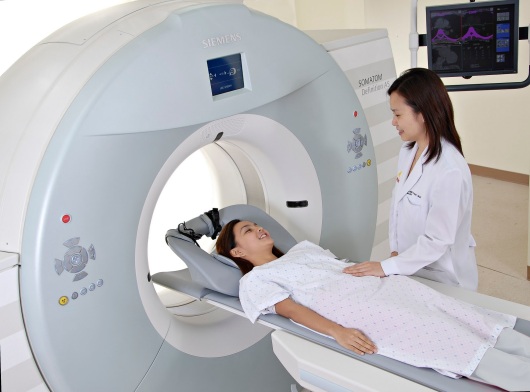
Related image
The use of computed tomography (CT) scans has dramatically increased over the last two decades.
While CT scans have greatly improved diagnostic capabilities, they also deliver higher radiation doses than any other test. Therefore, radiation protection is a concern. Especially among children, who may receive higher radiation doses, are more open to radiation-related malignancies than adults. Children also have more time to show effects.
Leukemia and brain tumors are the most common malignancies caused by radioactivity among children and young adults. Researchers have therefore evaluated brain tumor and leukemia risks following exposure to radiation from CT scans in children.
From a nationwide group of 168,394 Dutch children who received one or more CT scans between the year 1979 and 2012, researchers found cancer incidents and vital status by recording linkage.
The study found that cancer incidents 1.5 times higher than expected. For all kinds of brain tumors combined and for malignant and nonmalignant brain tumors separately, dose-response relationships were seen with radiation dose to the brain.
Relative risks have increased to between two to four for highest dose category. The radiation doses to the bone marrow, where leukemia originates, were found to be low.
The study also shows that this pattern of excess cancer risk may be partially due to confounding by indication, as the incidence of brain tumor was higher in the cohort than in the general population.
CT scans are sometimes also used to identify conditions related to an increase tumor risk.
“Epidemiological studies of cancer risks from low doses of medical radiation are challenging, nevertheless, our careful evaluation of the data and evidence from other studies indicates that CT-related radiation exposure increases brain tumor risk. Careful justification of pediatric CT scans and dose optimization, as done in many hospitals, are essential to minimize risks.” said the study’s principal investigator, Michael Hauptmann.
The findings appeared in the journal, Journal of National Cancer Institute.(SOURCE : BS)

People with HIV infection twice at risk of heart disease

According to a global study, HIV infection doubles the risk of heart disease.


Analysis of global figures reveals that HIV-associated cardiovascular disease has more than tripled in the past 20 years as more people are living longer with the virus.
The greatest impact is in sub-Saharan Africa and Asia Pacific regions, with Swaziland, Botswana and Lesotho particularly affected.
Researchers say the findings will help to target treatments to people facing the greatest risk, helping to maximise resources in countries with limited healthcare funding.
An international team of experts, led by the University of Edinburgh, reviewed studies from 153 countries to determine the rate of heart disease in people living with HIV.
They also calculated the number of years lost as a result of death or ill-health in each country to measure the disease’s global impact – or so-called health burden.
The research, which included studies with almost 800,000 people, found the risk of cardiovascular disease among people living with HIV was double the rate among uninfected people.
More than two-thirds of the burden of HIV-associated heart disease was found in sub-Saharan Africa and Asia Pacific regions, the study found.
In some parts of the world, HIV ranks alongside better-known risk factors – such as diet and lifestyle – as a major cause of heart disease.
There are more than 35 million people infected with HIV worldwide, a figure that is steadily increasing. Those infected are now more likely to die from chronic diseases, such as cancer or cardiovascular disease, because life-saving medications can keep the virus in check.
The link between HIV and heart disease is poorly understood. Scientists think the virus may cause inflammation of blood vessels, which puts pressure on the cardiovascular system.
The virus is also thought to raise fat levels in the blood and affect the body’s ability to regulate sugar levels, which may also contribute to heart disease.
Dr Anoop Shah, Clinical Lecturer in Cardiology at the University of Edinburgh, said, “This study has important implications when planning cardiovascular preventative policies in low resource countries where the burden of HIV remains high and that of cardiovascular disease is growing.”
The findings have been reported in Circulation.(Article Sporce : BS)

Thursday, 11 May 2017

What is cancer radiotherapy and why do we need proton beam therapy?

Proton beam therapy is radiation therapy that uses heavier particles instead of the X-rays

 1494481504-1358 (1)

Australia: In last night’s federal budget, the government dedicated up to A$68 million to help set up Australia’s first proton beam therapy facility in South Australia. The government says this will help Australian researchers develop the next generation of cancer treatments, including for complex children’s cancers.

Proton beam therapy is radiation therapy that uses heavier particles (protons) instead of the X-rays used in conventional radiotherapy. These particles can more accurately target tumours closer to vital organs, which can be especially beneficial to patients suffering from brain cancer and children whose organs are still developing and are more vulnerable to damage.

So, the facility will also be an alternative to conventional radiotherapy for treating certain cancer. But what is traditional radiotherapy, and how will access to proton beam therapy improve how we manage cancer?

What is radiotherapy?

Radiotherapy, together with surgery, chemotherapy and palliative care, are the cornerstones of cancer treatment. Radiotherapy is recommended for half of cancer patients.

It is mostly used when the cancer is localised to one or more areas. Depending on the cancer site and stage, radiotherapy can be used alone or in combination with surgery and chemotherapy. It can be used before or after other treatments to make them more effective by, for example, shrinking the tumour before chemotherapy or treating cancer that remains after surgery.

How it works

Wilhelm Röntgen discovered X-rays in 1895 and within a year, the link between exposure to too much radiation and skin burns led scientists and doctors to pursue radiation in cancer treatment..

Benefits and side effects

Radiotherapy’s targeting technology has made a significant difference to many cancers, in particular early-stage lung and prostate cancers. It is now possible to have effective, low toxicity treatments for these with one to five radiotherapy sessions.

For early-stage lung cancer studies estimate with radiotherapy, survival three years after diagnosis is at 95%. For prostate cancer, one study estimates survival at the five year mark is about 93%.

Other radiotherapy challenges

There are several challenges to current radiotherapy. It is often difficult to differentiate the tumour from healthy tissue, and even experts do not always agree on where exactly the tumour is. (READ MORE)

14th BRICS summit to review current global issues, reach key agreements

  At the   14th BRICS summit   which is to be hosted by China in a virtual mode on 23-24 June, the member nations will review the current gl...