Showing posts with label Dow Jones. Show all posts

Tuesday, 8 September 2020

10 reasons Goldman Sachs believes the bull-run in markets will continue

Major global indices have all gained 37 per cent to 75 per cent since their respective March 2020 low
The Goldman Sachs logo is displayed on a post above the floor of the New York Stock Exchange
The market rally that started in March 2020 after hitting their lowest point in calendar year 2020 has more legs, believe analysts at Goldman Sachs, who do caution that there could be intermittent corrections along the way. Markets, Goldman Sachs says, are in the first phase of a new investment cycle, which it calls a ‘Hope’ phase, following a deep recession. Investors, it says, start to anticipate a recovery in this phase and is typically the strongest part of the cycle.
“That is what we have been seeing this year. The main triggers for the rebound, in our view, were a combination of slowing infection rates and extraordinary policy support. Financial conditions, which were tightening sharply in the early part of the lockdown, eased rapidly and governments implemented extraordinary fiscal support packages,” wrote London-based Peter Oppenheimer, chief global equity strategist and head of macro research at Goldman Sachs in a September 7 report.
That apart, Oppenheimer believes the economic recovery looks more durable as vaccines become more likely. “Our economists have recently made upward revisions to their economic forecasts and it is likely that analysts’ expectations will follow. Our Bear Market Indicator (GSBLBR), which was at very elevated levels in 2019, is pointing to relatively low risks of a bear market despite very high valuations,” he said.


The bear market of 2020 was sharp and short-lived like other event-driven bear markets in the past. The falls, on average, were around 30 per cent in most markets, but the speed of collapse and rebound were even faster than normal. Since March 2020 low when the most global markets hit bottom as economic activity came to a standstill following lockdowns to arrest the spread of Covid-19, markets have rebounded sharply.

Thursday, 21 May 2020

RBI cuts repo rate by 40bps to 4%, sees contraction in FY21 GDP growth

Catch all the market updates here
RBI
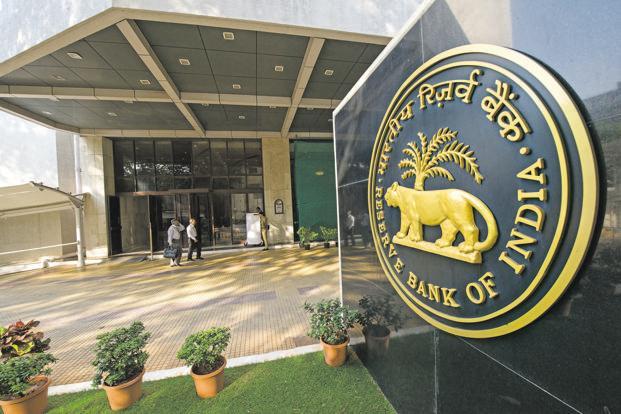
Indian markets declined on Friday even as the Reserve Bank of India (RBI) slashed repo rate by 40 basis points (bps) to 4 per cent and maintained the stance ‘accomodative’. Consequently, reverse repo rate now stands at 3.35 per cent from 3.75 per cent earlier. Moreover, RBI Governor Shaktikanta Das said that the GDP growth in FY21 is expected to be in negative territory. READ MORE
Among headline indices, the S&P BSE Sensex slipped 290 points to around 30,630 levels and the Nifty50 index slipped below the 9,050 level. Infosys gained 2 per cent after the class action lawsuit filed against the company in the US was dismissed. Reliance Industries gained 1 per cent after the conglomerate said that KKR would invest Rs 11,367 crore into Jio Platforms for 2.32 per cent equity stake. READ MORE
The trends among Nifty sectoral indices was mixed. Nifty PSU Bank index, up 1.8 per cent, gained the most.
Results today: A total of 25 companies including Alembic Pharmaceuticals, IDFC First Bank, and UPL, are scheduled to announce their March quarter earnings later in the day.

COMMENT :: VK Vijayakumar, chief investment strategist, Geojit Financial Services


RBI, which has been proactive in recent times, has risen to the occasion by advancing the policy meet to cut policy rates by 40bp. Also, the unequivocal statement that monetary policy will continue to be accommodative till growth revives sends positive signals. The fact that the central bank has refrained from giving a GDP growth figure is a reflection of the complexity in giving projections with the present growth models. Extension of the moratorium announced earlier by another 3 months is a relief. A takeaway from the policy announcement is that the stress in the banking sector will continue..Read More

Thursday, 27 February 2020

Global shares head for worst week since 2008 crisis on coronavirus fears

Wall Street shares led the rout as the S&P 500 fell 4.42 per cent, its largest percentage drop since August 2011
Traders work on the floor of the New York Stock Exchange (NYSE) in New York City, US
Global share prices headed for the worst week since the darkest days of the world financial crisis in 2008 as investors braced for the coronavirus to become a pandemic and rapidly spread around the world. Hopes that the epidemic that started in China would be over in a few months and economic activity would return to normal have been shattered, as new infections reported around the world now surpass those in China.
“The coronavirus now looks like a pandemic. Markets can cope even if there is big risk as long as we can see the end of the tunnel,” said Norihiro Fujito, chief investment strategist at Mitsubishi UFJ Morgan Stanley Securities. “But at the moment, no one can tell how long this will last and how severe it will get.” MSCI all country world index fell 3.3 per cent on Thursday to bring its losses so far this week to 8.8 per cent, on course for its biggest weekly decline since a 9.8 per cent plunge in November 2008.
Wall Street shares led the rout as the S&P 500 fell 4.42 per cent, its largest percentage drop since August 2011. It has lost 12 per cent since hitting a record close on Feb. 19, marking its fastest correction ever in just six trading days while the Dow Jones Industrial Average fell 1,190.95 points, its biggest points drop ever. In Asia, Australian shares dropped 2.8 per cent to a six-month low while futures suggested Japan’s Nikkei is on course to fall more than 2 per cent.

Thursday, 18 July 2019

A widening financial toll for Boeing from fallout of 737 Max grounding

Since the March 10 crash of an Ethiopian Airlines 737 Max 8 jet, Boeing has dropped 15%
Boeing 737 MAX
International News: Boeing Co intends to report a $4.9 billion bookkeeping accuse of its second-quarter results one week from now, an indication of the augmenting money related toll from the organization’s ambushed 737 Max jetliner.
The after-charge writedown, proportional to $8.74 an offer, covers potential concessions and contemplations for carrier clients who have been compelled to drop flights and line up substitution air ship as the Max’s establishing enters its fifth month, Boeing said in an announcement Thursday. The costs will cut $5.6 billion from income and pretax profit in the quarter.
The suspicions behind the bookkeeping charge additionally gave a look at Boeing’s recuperation plan for its top rated fly, which smashed twice in a five-month range and immersed the US planemaker in one of the most noticeably terrible emergencies of its century-long history. The organization assessed that the Max will be endorsed to come back to support in the US and different nations starting “right off the bat in the final quarter,” facilitating fears that the timetable would slip to 2020.
“This is a vital crossroads for Boeing,” Chief Executive Officer Dennis Muilenburg said in the announcement. “Nothing is more imperative to us than the security of the flight teams and travelers who fly on our planes. The Max establishing presents noteworthy headwinds and the monetary effect perceived this quarter mirrors the present difficulties and addresses future budgetary dangers…
Read More: Boeing 737 Max

14th BRICS summit to review current global issues, reach key agreements

  At the   14th BRICS summit   which is to be hosted by China in a virtual mode on 23-24 June, the member nations will review the current gl...