Showing posts with label MODI GOVERNMENT. Show all posts

Friday, 1 April 2022

India will frame cryptocurrency law after global consensus: Report

 India’s central bank has openly voiced its opposition to private digital currencies.

India will frame a legislation for cryptocurrencies only after a global consensus emerges on regulating such assets, according to a person familiar with the matter. The government isn’t planning a law soon to either regulate or tighten provisions, the person said, asking not to be identified as the discussions are private. A finance ministry spokesman wasn’t immediately available for a comment.

After years of back-and-forth, Prime Minister Narendra Modi’s administration announced a 30% tax on income from digital assets from April 1, making it costlier to trade and bringing such transactions at par with activities like horse racing and lotteries. It had earlier planned to come up with a legislation to make the government’s stand clear on the matter.

A global uniform approach on cryptocurrencies is needed and steps by one nation will not be sufficient, Modi said in his address to the World Economic Forum in January. The central bank has openly voiced its opposition to private digital currencies, equating them with Ponzi schemes and said they were a threat to financial sovereignty. Crypto investments have flourished in India after the country’s top court set aside restrictions imposed by the Reserve Bank of India in March 2020. An October report from Chainalysis, a crypto-analysis firm, found the Indian market grew 641% from July 2020 through June 2021.

Thursday, 13 August 2020

PM Modi unveils ‘fundamental reforms’ for taxpayers

PM Modi has launched taxation reforms. Faceless assessment, taxpayer charter starts from today, faceless appeal to begin from Sep 25. Stay tuned for live updates on latest news
Narendra Modi
Prime Minister Narendra Modi has launched a new platform, ‘Transparent Taxation Honouring the Honest’, aimed to carry forward the journey of direct tax reforms. The focus of the tax reforms has been on reduction in tax rates and on simplification of direct tax laws. Several initiatives have been taken by the Central Board of Direct Taxes (CBDT) to bring efficiency and transparency in the functioning of the Income Tax (IT) department, according to officials.
Stay tuned for the latest news of the day

Taxpayer must pay tax because that is how system works, says PM Modi

Taxpayer charter comes with responsibilities for taxpayers too. The taxpayer must pay tax because that is how the system works, says Prime Minister Narendra Modi…

Key highlights of PM Modi’s speech

Faceless assessment, faceless appeal and taxpayer charter part of new platform ‘Transparent Taxation – Honoring the Honest’
Policy-driven governance minimises grey areas, cutting discretion,
Faceless assessment, taxpayer charter starts from today, faceless appeal to begin from Sep 25
Fundamental reforms were needed in Indian tax systemEffort is to make tax system seamless,
painless and faceless
India among nations with lowest corporate tax


Sunday, 26 April 2020

CMs to discuss migrants issue, exit strategy with PM Narendra Modi today

Several CMs say they’re staring at economic ruin if limited activity is not started
Modi
Prime Minister Narendra Modi’s videoconference with chief ministers (CMs) on Monday will focus on how best to facilitate interstate transit of migrants. At least some CMs are likely to flag how the Centre has caused confusion by speaking in different voices on the issue, indicating that the Centre has favoured Bharatiya Janata Party-ruled states.
Several states, including Uttar Pradesh and Chhattisgarh, have deployed buses to evacuate their migrants, particularly students from Kota in Rajasthan. However, the Centre is yet to announce a policy on the issue. Neither do the CMs agree on how best to help migrants reach their native places. If Rajasthan CM Ashok Gehlot wants special trains for migrants, Maharashtra’s Uddhav Thackeray has rejected it lest it leads to overcrowding. Even Chhattisgarh and Odisha, both of which have fewer cases, are not keen that train services start at the current juncture.


The CMs would highlight, as Rajasthan’s Gehlot did on Saturday, that the Centre “should show the same unity when it comes to issuing guidelines for the states irrespective of the party lineage”. On movement of stranded migrants and other issues, Gehlot is set to flag how “it is creating confusion” for everyone that the Union home secretary and cabinet secretary are not on the same page…Read More Here

Tuesday, 25 February 2020

‘World is watching’: US lawmakers express concern over Delhi violence

Reacting to the violence that has claimed at least 13 lives in the past a couple of days, US Congresswoman Pramila Jayapal said the ‘deadly surge of religious intolerance in India is horrifying’
Delhi violence
International News: The savagery over the corrected citizenship act in India’s capital New Delhi drew sharp responses from US legislators with the prevailing press noticeably revealing it alongside the simply finished up visit of President Donald Trump. Responding to the savagery that has asserted in any event 13 lives in the previous two or three days, US Congresswoman Pramila Jayapal said the “lethal flood of strict prejudice in India is astonishing”. “Majority rule governments ought not endure division and segregation or advance laws that undermine strict opportunity,” she said in a tweet, including that the “world is viewing”.
The Indian Parliament had passed the Citizenship Amendment Act (CAA) a year ago, bringing about a progression of fights the nation over. Pramila Jayapal had a year ago presented a Congressional goals encouraging India to end the limitations on correspondences in Jammu and Kashmir and save strict opportunity for all inhabitants.
Congressman Alan Lowenthal too named the savagery a “sad disappointment of good administration”. “We should stand up despite dangers to human rights in India,” he said. Popularity based presidential applicant and Senator Elizabeth Warren additionally a swipe at the savagery, saying, “It’s critical to fortify associations with equitable accomplices like India. Be that as it may, we should have the option to talk honestly about our qualities, including strict opportunity and opportunity of articulation, and viciousness against tranquil dissidents is rarely adequate.”

Tuesday, 18 February 2020

Govt moves to take on coronavirus challenge, plays down price rise concerns

Will hold meetings to chalk out action plan; FM plays down price rise concerns
Finance Minister Nirmala Sitharaman
The Union government is likely to announce “immediate measures” to address the operational issues being faced by industry and ease congestion at ports on the east coast as consignments from China pile up amid the coronavirus scare.
“We will come up with immediate measures that are required to address the challenges, be it at ports, related to logistics or freight movements. Freight clearances at ports will be expedited and manpower requirements will be increased, along with 24×7 services,” Finance Minister Nirmala Sitharaman told the representatives from various industries at a meeting in New Delhi. The meeting was held to assess the impact of the coronavirus epidemic on Indian industry.
The government is expected to hold a series of meetings starting from Wednesday and will announce the first set of measures in the coming few days. Sitharaman said coronavirus would not lead to any price rise, but added this was a major concern highlighted by the industry representatives who cited congestion at ports. Senior officials said the government was exploring various measures to tide over the situation, including giving relief to micro, small and medium enterprises in servicing their loans.


“Banks will be encouraged to extend the window of servicing the loans by MSMEs by 15 days or so, as it will be a ‘force majeure’ event,” an official said. Another official said that to enable banks to do so, firms across sectors might invoke ‘force majeure’ with their suppliers and partners in China…

Thursday, 23 January 2020

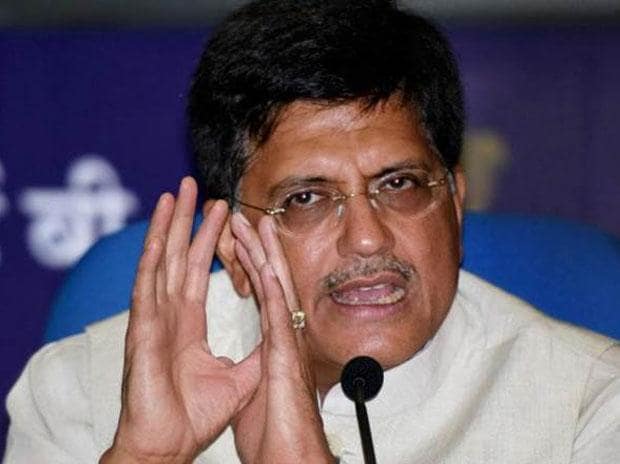
Grilled on CAA at WEF, Goyal says Muslims in India safer than anywhere else

Defending the new citizenship amendment law, Goyal also said, ‘India has a duty to protect people who are sufferers of religious persecution’
Piyush goyal
Union minister Piyush Goyal on Thursday said Muslims in India are safer than most places in the world. “India is probably one of the most inclusive societies in the world,” Goyal said here at a session on ‘Strategic Outlook: India’ at the WEF 2020. “India is a country which welcomes all diverse viewpoints, all diverse opinions, the Muslims in India are safer than any other part of the world in terms of equal opportunity,” he stressed. He further noted that there is absolutely no discrimination in any of the government programmes.
“When we take electricity to every home we do not ask them their colour or their religion, when we take toilets, digital tech, bank accounts, cooking gas to every home we do not ask their religion. All our programmes are equal for all,” the minister said. Defending the new citizenship amendment Act, Goyal also said, “India has a duty to protect people who are sufferers of religious persecution.”
The minister for Railways as well as Commerce and Industry, said India is a land that has the power of democracy, demography, leadership, talent, culminating in the “power of opportunity.” “Citizenship is an area that every country protects, that every country has the rules of the game, every country has citizenship laws that are respected by the world,” he said. He further said there are about 57 odd islamic countries in the world and except for one or two, every country respects that what India is doing is for the welfare of the people of India, across all religion” he said…

Tuesday, 7 January 2020

JNU : 2 FIRs lodged for vandalism, Sena slams Modi over JNU violence

JNU violence: Bollywood personalities led hundreds of people in a peaceful protest at Carter Road in Mumbai
protests, jnu violence
JNU Protest updates: Protests against the mob attack on Jawaharlal Nehru University (JNU) students and teachers continue in different parts of the country. In Mumbai, students who called for a “Occupy Gateway” protest at the iconic Gateway of India have been moved to a different location. On Monday evening, Bollywood personalities led hundreds of people in a peaceful protest at Carter Road in Mumbai. Students of IIT Bombay, TISS, and members of students’ organisations raised slogans against Prime Minister Narendra Modi and Union Home Minister Amit Shah.
On Sunday evening, masked people brandishing hockey sticks and iron rods stormed the JNU campus in Delhi and targeted students in three hostels, unleashing mayhem with sticks, stones and iron rods, hitting inmates and breaking windows, furniture and personal belongings. They also attacked a women’s hostel. In the violence, 34 people were injured.
Catch All Updates: 
A team of Forensic Science Laboratory at JNU to conduct investigation into January 5 violence IIMA director condemns JNU violence Indian Institute of Ahmedabad Director Errol D’Souza has condemned the violence in JNU, dubbing it as a “very low point” in the country’s post Independence history.
He said a university stands for tolerance, dialogue and an “agreement to disagree”, and violence violates the foundations of a civilization. Sitaram Yechury blames ABVP for the violence Sitaram Yechury blames ABVP for the violence alleging that the attacks were “planned” by those in power.

Sunday, 8 December 2019

Citizenship Bill a win-win for Modi, but is depriving millions of sleep

This will be the second attempt by the Modi administration to amend citizenship law. In January, the legislation was passed in the lower house of parliament but lapsed as the upper house didn’t take i
Citizenship bill
India’s parliament is set to approve legislation preventing Muslim migrants from neighboring countries from receiving citizenship — the next step in Prime Minister Narendra Modi’s hardline Hindu nationalist program and one that’s seen to go against the nation’s secular constitution.
The controversial citizenship bill has sparked protests and fear around India, with lawyers working overtime to help millions at risk of being left stateless in the world’s largest democracy.
The Citizenship Amendment Bill is listed to come before India’s Parliament for approval on Monday. The proposed changes will allow citizenship Bill for Hindus, Sikhs, Buddhists, Jains, Parsis, and Christians who illegally migrated to India from Afghanistan, Bangladesh, and Pakistan. It excludes Muslims and immigrants from India’s non-Muslim majority neighbors.
If passed as expected, the move threatens the secular foundation of the world’s second-most populous nation and its constitution that treats all religions equally. As for Modi, it’s a third major move out of his right wing playbook since retaining power earlier this year that adversely affects the country’s Muslim minority population.
On Aug. 5 India scrapped nearly seven decades of autonomy in the Muslim-majority region of Kashmir. Just three weeks later in the northeastern state of Assam some 1.9 million people, mostly Muslims, faced the risk of losing their Indian citizenship as Modi’s government seeks to enforce a National Register of Citizens to weed out illegal migrants. In November, Hindus won the Supreme Court case over a religious site disputed for centuries in northern city of Ayodhya. Modi’s Bharatiya Janata Party had promised a grand temple there..

Tuesday, 3 December 2019

Citizenship Bill on Cabinet agenda, Amit Shah meets Northeast CMs

A large section of people and organisations in the northeast have opposed the Citizenship Bill
Amit Shah
On the eve of a meeting of the Union Cabinet, which is likely to approve the Citizenship Amendment Bill (CAB), Home Minister Amit Shah met politicians and organisations from the northeastern states on Tuesday to understand their concerns over the proposed law.
Apart from the contentious Citizenship Amendment Bill, the Cabinet is likely to clear the Personal Data Protection Bill and further amendments to the Insolvency and Bankruptcy Code, the Mines and Minerals (Development and Regulation) Act and the Companies Act. The Narendra Modi government hopes to ensure the passage of these Bills during the ongoing winter session of Parliament which concludes on December 13.
Shah held discussions with the representatives of students’ bodies and civil society groups of Assam on the CAB. Chief Minister of Assam Sarbananda Sonowal, too, attended the meetings. It was the third such session held by Shah since Friday. Mizoram CM Zoramthanga also called on Shah.
The groups, including the All Assam Students Union, told Shah that they are apprehensive that the proposed law, if enacted, could affect the indigenous people of the northeast. There have been widespread protests in the northeastern states against the Bill. Government sources said the northeastern states could be kept out of the purview of the Bill…

Sunday, 1 December 2019

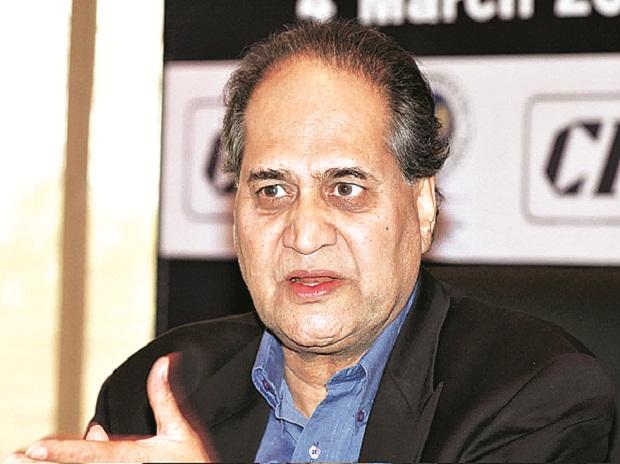
Rahul Bajaj criticism can hurt national interest: FM Nirmala Sitharaman

Kiran Mazumdar- Shaw says India Inc is treated as pariahs
Rahul Bajaj, chairman, Bajaj Group
Finance Minister Nirmala Sitharaman said the statement by Rahul Bajaj, chairman of Bajaj Group, on Saturday that India Inc was afraid of criticising the Narendra Modi government “can hurt national interest, if it gains traction”.
“The Home Minister Amit Shah answers on how issues raised by Bajaj were addressed. Questions/criticisms are heard and answered/addressed. Always a better way to seek an answer than spreading one’s own impressions, which, on gaining traction, can hurt national interest,” Sitharaman said on Twitter. Sitharaman was reacting to a statement by Rahul Bajaj on Saturday that Indian business leaders were afraid of criticising the Modi government because they do not have the confidence that the government would appreciate any criticism.
In reply, Shah said India Inc had nothing to fear. “The Centre has been criticised in the media. If you are saying there is such an environment, we need to work to improve on this,” he said. On Sunday, Kiran Mazumdar-Shaw, chairperson of Biocon, seemed to endorse what Bajaj had said.
“Hope the government reaches out to India Inc for working out solutions to revive consumption and growth. So far we are all pariahs and the government does not want to hear any criticism of our economy,” she tweeted. Other senior ministers however, said there is indeed freedom of expression. “That Rahul Bajaj could stand up to Amit Shah’s face, express himself freely, and instigate others to join him clearly indicate that freedom of expression and democratic values are alive and flourishing in India, “ said Minister of Housing and Urban Affairs Hardeep Singh Puri…

Wednesday, 20 November 2019

Govt clears Code on Industrial Relations Bill; retrenchment norms not eased

Proposes to give legal backing to fixed-term employment
labour law
The Centre on Wednesday approved the Code on Industrial Relations (IR) Bill, 2019 — considered to be the most contentious labour law amendments. The central government has withdrawn its proposal to give flexibility to big companies, in terms of manpower, to retrench or lay off workers and shut shop without seeking official consent, a government official said, requesting anonymity.
As a result, another proposal to increase the compensation for retrenched or laid off workers is also not a part of the Bill. However, instead of going for a change in the central law, there are provisions in the Bill which safeguards the amendments brought in by various state governments, giving flexibility to companies to “hire and fire” workers — a move that may be cheered by the industry.
To further help industries in hiring contract workers directly, the government has proposed to introduce the concept of fixed-term employment in the labour laws. Sitharaman said the Bill has proposed giving a legal framework for fixed-term employment through which contract workers serving a fixed-tenure will get equal statutory social security benefits as regular workers in the same unit.
Under the present system, firms resort to hiring contract workers through contractors and they argue that it’s a resourceful exercise. Through the fixed-term employment system, companies will be able to hire contract workers directly. “All workers, under a fixed-term contract, will be taken up on depending upon seasonality of industry but will be treated on a par with regular workers. This is the biggest feature (of this labour law amendment),” Sitharaman said….

Monday, 18 November 2019

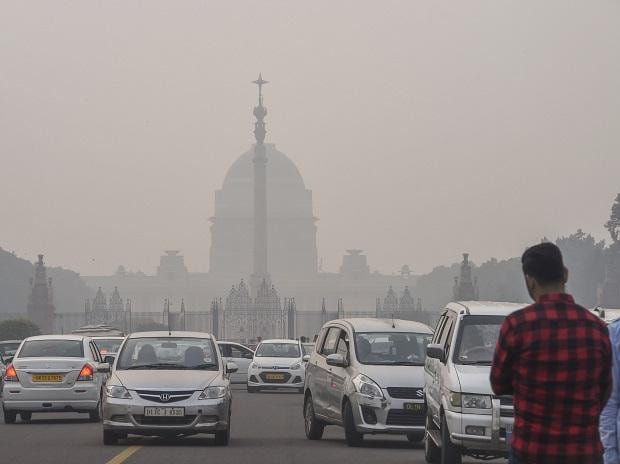
Not just health, Delhi’s air is also toxic for economy facing a slowdown

India’s losses from air pollution increased more than four times to $560 billion between 1990 and 2013, according to the World Bank
Air pollution, air quality
Flight disruptions, fewer tourists, lost work hours and missed school days have come to portray India’s struggles with toxic air quality in its capital city, and the intangible costs may be adding up for an economy grappling with a sharp slowdown.
India’s losses from air pollution increased more than four times to $560 billion between 1990 and 2013, according to the World Bank, which attributed the economic burden to the rising costs of public health-care and workforce disruption. Air Pollution is now being counted among the hidden costs like repelling top corporate talent, according to analysts and industry lobby groups.
“This feeds into the broader economic environment,” said Hemant Shivakumar, a New Delhi-based senior analyst at Control Risks that advises clients on political and security risks. “If the air pollution escalates year after year and there’s no response then it’s likely to send investors a different message.”
Prime Minister Narendra Modi’s government deployed 300 field teams to curb pollution after it reached record levels earlier this month, as winds carried smoke from farm stubble burning in areas around New Delhi. Despite the measures and the state government imposing restrictions on use of private vehicles, pollution levels remain a cause for concern in the capital city of what was until recently the world’s fastest-growing major economy…

Sunday, 17 November 2019

Congress must lead Parliament charge against govt over economy: Chidambaram

Govt has ‘utterly mismanaged’ economy, says Congress leader.

Senior Congress leader and former finance minister P Chidambaram after being produced in the Rouse Avenue Court in connection with the INX Media corruption case, in New Delhi. Photo: PTI
The Congress must lead the Opposition in Parliament to expose the government’s “utter mismanagement” of the economy, said senior party leader P Chidambaram on Monday.
Chidambaram is jailed in Tihar Prisons in Delhi after investigating agencies arrested him on August 21 for alleged corruption and money laundering during his term as India’s finance minister. His family published his comments on Twitter on his behalf. “When Parliament opens today, Congress must lead the Opposition to expose the utter mismanagement of the economy.” “Which aspect of the economy is doing well? Not one,” he said.
“The government seems knowledge proof and refuses to accept valid criticism and genuine advice.” Congress party’s Ghulam Nabi Azad, who is Leader of Opposition in Rajya Sabha, has said that Chidambaram should be allowed to attend Parliament. Parliament’s Winter Session is expected to see the Opposition and government sparring over issues like the economic slowdown, situation in Kashmir and the Citizenship (amendment) Bill.

Modi govt’s doctrine of governance behind economic slowdown: Manmohan Singh

India’s large economy can not be directed at will or managed by managing colourful headlines, wrote the former PM
Former PM Manmohan Singh will release the study on Monday
Former Prime Minister Manmohan Singh has said India’s economic slowdown is the result of ‘profound fear and distrust’ among people who act as agents of economic growth. The tearing of our social fabric of trust is the fountainhead of our current economic malaise, he said.
Singh, who was the Prime Minister of India between 2004-14, has blamed the Modi government for “rupturing” the country’s social fabric through “mala fide unless proven otherwise” doctrine of governance. Citing that nominal GDP growth is at a 15-year low, unemployment is at a 45-year high, household consumption is at a four-decade low, and bad loans in banks are at an all-time high, the senior Congress leader said “these are mere manifestations of a deeper underlying malaise that plagues the nation’s economy today.”
“Many industrialists tell me that they live in fear of harassment by government authorities. Bankers are reluctant to make new loans, for fear of retribution. Entrepreneurs are hesitant to put up fresh projects, for fear of failure attributed to ulterior motives,” the senior Congress leader said in a piece he wrote for The Hindu newspaper.
Singh said policymakers in government and other institutions are scared to speak the truth or engage in intellectually honest policy discussions. Singh claimed that people’s trust in independent institutions has been “severely eroded” and there is a lack of a support system for people to seek refuge against “unlawful tax harassment or unfair regulations.”
He said the present government’s suspicion that every industrialist, banker, policymaker, regulator, entrepreneur and citizen is out to defraud the government has led to a complete breakdown of trust in our society. “This has halted economic development, with bankers unable to lend, industrialists unable to invest and policymakers unable to act,” he added…

Thursday, 7 November 2019

Demonetisation, 3 years on: A look at impact on key sectors of the economy

With three years of data available to back or reject the various assertions and assumptions, Business Standard looks at the Modi govt’s most disruptive economic measure, the ‘note ban’
demonetisation
On November 8, 2016, Prime Minister Narendra Modi announced to the nation that Rs 500 and Rs 1,000 currency notes — 86 per cent of all currency notes in circulation in value — would cease to be legal tender. The stated objectives were unearthing black money, cracking down on counterfeit currency, and choking terror financing.
Unsurprisingly, there were strong reactions both in favour of and against the unprecedented move, which would come to be known as ‘demonetisation’ or ‘note ban’. While some hailed it as a courageous step against impropriety that was hurting the economy, others saw the move itself as disastrous for the economy.
In the months that followed, even as reports suggested that the government had not come any close to achieving its stated objectives, the government was seen patting itself on the back for the country’s move towards becoming a ‘cashless’ economy, or, as the PM said, a ‘less-cash’ economy. Many called this an act of ‘moving goal posts’ and rushed to label demonetisation as an economic nightmare. Three years later, we have enough data to analyse and gauge the impact of the note-ban exercise on various important sectors of the economy.
Jobs
According to Labour Bureau’s Sixth Annual Employment-Unemployment Survey, the unemployment rate rose to a four-year high in 2016-17, when the government demonetised old currency notes. In 2017-18, the country’s unemployment rate stood at a 45-year-high of 6.1 per cent, according to the National Sample Survey Office’s (NSSO’s) periodic labour force survey (PLFS). Moreover, demonetisation caused a 2-3-percentage-point reduction in jobs and national economic activity in November and December 2016, according to a research.

Tuesday, 5 November 2019

We will not miss the bus again, next wave of reforms soon: FM Sitharaman

It can be noted that many analysts have been calling for urgent reforms in the factor markets, especially regarding land and labour, to get the economy out of the trough
Nirmala Sitharaman
Finance minister Nirmala Sitharaman on Tuesday said the government will soon use its strong electoral mandate to usher in the next wave of reforms, and not to miss the bus this time.
Without naming the reform measures unsuccessfully attempted by the Modi government in its first term, and in an apparent hint at land acquisition reform attempts by NDA-1, she said government’s efforts last time were thwarted by the poor numbers in the Upper House. It can be noted that many analysts have been calling for urgent reforms in the factor markets, especially regarding land and labour, to get the economy out of the trough, citing the strong political mandate the government enjoys.
“…I am sure we will now show the commitment for reforms happens fast. That is where the mandate given to Modi 2.0 will help,” Nirmala Sitharaman said, speaking at The Indian Express’ ‘Adda’. “We will push forward with those reforms which have missed the bus last time, but won’t miss the bus now,” the minister asserted.
Her comments come on the heels of the BJP failing to improve its tally in the just concluded Maharashtra and Haryana elections despite the party playing the nationalism card to the full. Many pollsters have opined that hard economic realities such as the deepening agrarian crisis and rising joblessness have trumped the nationalism card of the ruling BJP in both the states.

Thursday, 24 October 2019

Goyal lauds PM for ‘path breaking improvements’ in India’s biz environment

India has remarkably improved in ease of doing business, reported World Bank in its ease of doing business 2020 survey
Piyush Goyal will also meet his counterparts from Japan, Singapore, China, Indonesia, Australia, New Zealand, Philippines, Thailand, and Russia
After India jumped 14 positions to be ranked 63rd in the World Bank’s ease of doing business, Union Minister Piyush Goyal on Thursday congratulated Prime Minister Narendra Modi for the “path breaking improvements” in the country’s business environment.
“India has jumped from 77th to 63rd rank in the Ease of Doing Business Rankings released just now by the World Bank. Congratulations to PM @NarendraModi ji for the path breaking improvements in India’s business environment for nation’s prosperity and job creation,” he tweeted. India has remarkably improved in ease of doing business, reported World Bank in its ease of doing business 2020 survey. The country is placed in 63rd position among 190 countries.
According to the report issued by World Bank on Thursday, India appeared among the top 10 improvers for the third time in a row. The Bank lauded New Delhi for a “remarkable reform effort”. “In economies on the list of 10 top improvers, leaders of India and China adopted the Doing Business indicators as a core component of their reform strategies,” said the World Bank.
It also praised Modi’s ‘Make in India’ campaign which focused on attracting foreign investment, boosting the private sector, manufacturing in particular, and enhancing the country’s overall competitiveness…

Thursday, 27 June 2019

Govt’s new move to revive discoms: Install 300 mn smart meters in 3 years

As part of the plan, the federal government is mulling providing subsidies to partially cover the costs
Govt's new move to revive discoms: Install 300 mn smart meters in 3 years
India is thinking about an arrangement to introduce savvy meters in each home and business as a feature of its continuous exertion to pivot the nation’s sickly power part, as indicated by authorities with learning of the circumstance.
The arrangement under thought would require 300 million brilliant meters more than three years, said the general population, who asked not to be recognized as the data isn’t open. The government control service has started talks with producers on providing the meters, which improve productivity by observing and transmitting force use information.
As a feature of the arrangement, the government is pondering giving sponsorships to mostly take care of the costs, one of the authorities said. Primer gauges by the administration put the expense for the smart meters at about Rs 2,000 ($29) each, or $8.7 billion altogether, as per one of the authorities. That is incompletely founded on a desire that costs would be lower than a littler government delicate for 5 million brilliant meters in 2017 at Rs 2,503.  The power service wasn’t quickly ready to react to demands for input.
Broad utilization of brilliant meters could be a gamechanger for sickly Indian dissemination utilities. These merchants lose about one-fifth of their income through different specialized and business reasons including power burglary or wasteful charging and gathering, as indicated by the power service.

Wednesday, 12 June 2019

Reach office on time and avoid working from home, PM Modi tells ministers

Modi also talked about five-year agenda which every ministry has to formulate and an impactful decision needs to be taken in the first 100 days of the government
Narendra Modi
Reach office on time and avoid working from home to set an example for others — these were some of the instructions Prime Minister Narendra Modi gave to the council of ministers on Wednesday. In the first meeting of the council of ministers after the Modi-led dispensation assumed charge last month, Modi also asked senior ministers to hand-hold the new incumbents, sources said after the meeting. Seeking to give more role to ministers of state, the prime minister said important files should be shared with them by the cabinet ministers. This, he said, would enhance productivity.
For ensuring faster approval on files, he said both the cabinet minister and his junior colleague can sit together to clear proposals, the sources said. Emphasising on punctuality, Modi said all the ministers should reach office on time and spend a few minutes discussing latest developments in the ministry with the officials. He further said ministers should come to office on a regular basis and avoid working from home.
At the same time they should keep meeting party MPs and general public on a regular basis and can start by meeting parliamentarians from their respective states, while suggesting that there is not much difference between a minister and an MP. Modi also talked about five-year agenda which every ministry has to formulate and an impactful decision needs to be taken in the first 100 days of the government.
The meeting of council of ministers was a regular feature in the previous tenure of the Modi government. He used to brief them about government’s various welfare schemes and how to make people aware about them. Modi used to review the performances of key ministries and sectors. The Union Cabinet will also meet Wednesday ahead of the council of ministers’ meeting..

Tuesday, 12 March 2019

Govt warning: Twitter execs to be jailed if offensive content isn’t removed

A parliamentary panel last month asked micro-blogging site Twitter to engage more with the Election Commission of India (ECI) ahead of general elections and address issues on a “real-time” basis.
Twitter Inc Photo: Reuters
Latest News: Top Twitter executives could not only face financial penalties but also face upto seven years in jail if they fail to remove content and accounts that are ‘objectionable and inflammatory,” Times of India reported quoting an unnamed official from the ministry of information technology.
Twitter has been asked to comply with the provisions under the Indian IT Act or else it would face action under Section 69A of the IT Act which gives the government power to seek the blocking of content or accounts that carry information seen as detrimental to the sovereignty and integrity of the country, or has potential to create public disorder. The warning from the IT ministry comes just as the micro-blogging site faced the heat from a parliamentary standing committee over perceived biases in blocking accounts ahead of elections.
As India heads for national elections, social media giants like Facebook and Twitter have been asked to not undermine or influence the political process. In fact earlier this week, Twitter went live with its ‘Ads Transparency Centre’ for India, that would allow people to view details of political advertisements in the country, including advertiser spends and impressions data.
A parliamentary panel last month asked micro-blogging site Twitter to engage more with the Election Commission of India (ECI) ahead of general elections and address issues on a “real-time” basis.The Twitter officials were told that there should not be any “international interference” in the Lok Sabha polls.

14th BRICS summit to review current global issues, reach key agreements

  At the   14th BRICS summit   which is to be hosted by China in a virtual mode on 23-24 June, the member nations will review the current gl...