Showing posts with label pollution. Show all posts

Monday, 18 November 2019

Not just health, Delhi’s air is also toxic for economy facing a slowdown

India’s losses from air pollution increased more than four times to $560 billion between 1990 and 2013, according to the World Bank
Air pollution, air quality
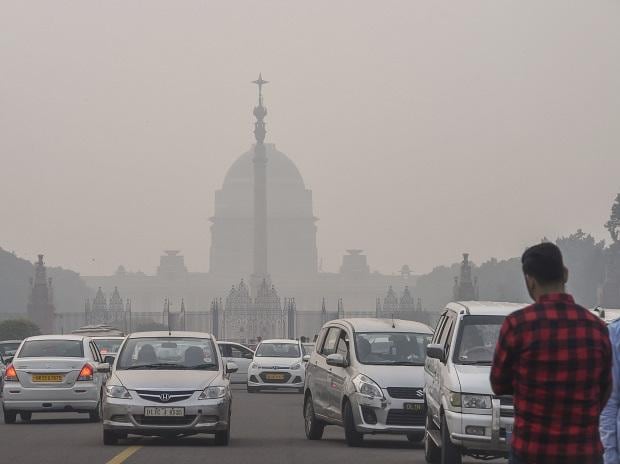
Flight disruptions, fewer tourists, lost work hours and missed school days have come to portray India’s struggles with toxic air quality in its capital city, and the intangible costs may be adding up for an economy grappling with a sharp slowdown.
India’s losses from air pollution increased more than four times to $560 billion between 1990 and 2013, according to the World Bank, which attributed the economic burden to the rising costs of public health-care and workforce disruption. Air Pollution is now being counted among the hidden costs like repelling top corporate talent, according to analysts and industry lobby groups.
“This feeds into the broader economic environment,” said Hemant Shivakumar, a New Delhi-based senior analyst at Control Risks that advises clients on political and security risks. “If the air pollution escalates year after year and there’s no response then it’s likely to send investors a different message.”
Prime Minister Narendra Modi’s government deployed 300 field teams to curb pollution after it reached record levels earlier this month, as winds carried smoke from farm stubble burning in areas around New Delhi. Despite the measures and the state government imposing restrictions on use of private vehicles, pollution levels remain a cause for concern in the capital city of what was until recently the world’s fastest-growing major economy…

Wednesday, 11 October 2017

Firecracker ban: If the SC move reduces air pollution, how will we know?


Firecrackers are undoubtedly a threat to environment and our health, but it may not be possible to accurately measure how effective this ban will be 

1507529757-8532

The Supreme Court of India recently banned the sale and stocking of firecrackers in the National Capital Regionuntil November 1, barely 10 days before Diwali. Will the move have an impact on Delhi's air? And if it will, how will it be gauged? Siddharth Singh demystifies the order and its implication for Business Standard.

economy today: In banning the sale and stocking of firecrackers in Delhi-NCR, the Supreme Court cited studies that showed firecrackers led to a spike in pollution, which is hardly unobvious. That something must be done about air pollution in Delhi is a forgone conclusion – after all, between 10,000 and 30,000 people are estimated to die every year because of it.

After news of the firecracker ban spread, the usual cycle of brouhaha ensued, with culture warriors perceiving it as an attack on the Hindu faith and demanding concessions from other religions. The absurdness of this argument aside, they also cited – correctly – that pollution is not merely caused by firecrackers on Diwali.

In fact, much of the pollution comes from road dust, agri residue burning, electricity production and road transport. The effort on these other fronts has unfortunately been incremental and slow. On the other hand, the firecracker ban impacts the celebration of an important religious festival in India. Therefore, air pollution levels before and after the ban will be observed closely by all....READ MORE


Like bursting crackers on Diwali? Know the extent to which they pollute air

SC banned sale of firecrackers across NCR ahead of Diwali over concerns of growing air pollution in what is now the world's 11th most polluted city, according to WHO
1507699783-9347 
Popular firecrackers, such as fuljhadis (sparklers), snake tablet, anar (flower-pot), pul pul (string sparkler), ladi or laad (strings of 1,000 crackers) and chakri (spinning firecracker) emit particulate matter (PM) 2.5 in levels 200 to 2,000 times the safety limit recommended by the World Health Organization (WHO), IndiaSpend reported on October 29, 2016.
The ban generated opposition, as this tweet from writer Chetan Bhagat illustrated.
Diwali is 1 day, 0.27% of year. pollution comes from 99.6% days of poor planning and regulation. Fix that. Not make 1 religion feel guilty. 
— Chetan Bhagat (@chetan_bhagat) October 9, 2017 
Some saw it an issue of religious freedom, as this tweet from Tripura Governor Tathagata Roy indicated. 
कभी दही हांडी,आज पटाखा ,कल को हो सकता है प्रदूषण का हवाला देकर मोमबत्ती और अवार्ड वापसी गैंग हिंदुओ की चिता जलाने पर भी याचिका डाल दे ! 
— Tathagata Roy (@tathagata2) October 10, 2017 
(First Dahi handi and now firecrackers, maybe next time the ‘candle marching’ and ‘awards wapsi’ gang will cite the excuse of pollution and file a petition against lighting of pyre by Hindus.) 
Some ridiculed the narrative to make it about preserving religious customs, as this tweet from Abhijeet showed. 
Tweet from 1818: "Sati burning is part of our culture. Why are these ppl, with the help of outsiders are destroying our Hindu religion?" 
— Abhijeet (@abhic4ever) October 10, 2017 
Others, such as Puducherry lieutenant governor Kiran Bedi welcomed the ban.
Feeling very relieved for a noise and smoke free Diwali. 
No doubt hurts business of crackers but good health does not come without a price 
— Kiran Bedi (@thekiranbedi) October 9, 2017 
The Supreme Court Firecracker ban was pronounced on October 8, 2017, across the national capital region ahead of Diwali (until October 31, 2017) over concerns of growing air pollution in what is now the world’s 11th-most polluted city, according to the WHO....read more

Monday, 13 February 2017

UP has a water crisis but why are voters indifferent to it?

As parties promise to clean up the Ganga and Yamuna, why is clean water not an electoral issue?

1445253838-89551390
"Yes, Ganga and Yamuna have turned into drains. But no candidate is talking about this, nor is any voter asking,” says Abhishek Srivastava, as he buys a wallet in Agra’s Sadar Bazar. “Why not?” “I don’t know. Voters only echo the points raised by candidates during the campaign.”

Over 140 million people are eligible to vote as UP ELECTIONS 2017 — the land of the Ganga and the Yamuna — gets set to elect a new state government. The ongoing campaign is characterised by bitterness, sarcasm and extravagant promises of laptops to each student. Opinion polls show a tight race between the Bharatiya Janata Party that rules India, the state’s ruling Samajwadi Party which is in alliance with the Congress, and the Bahujan Samaj Party, with around 40% of voters still saying they are undecided. Polling will be in five phases in February and March.

Agra will go to the polls in the first phase on February 11. Looking outside the shop where he is choosing his wallet, Srivastava points to a stagnant open drain with its stink and cloud of mosquitoes, and says, “No one raised the issue of such drains even in the municipality polls. Do you think they will do it in the state assembly polls? No way.”

Sadar Bazar is less than a kilometre from the Taj Mahal, and behind that the Yamuna, which is literally a drain downstream of Delhi — around 200 kilometres to the north — till the Chambal joins the river 200 km further downstream of Agra.

Widespread apathy

Everybody agrees that the poison affects drinking water and irrigation. Still, the apathy is mirrored in town after town of western Uttar Pradesh, all in that fertile belt between the Ganga and the Yamuna.

Gokul Ram, who plies a cycle rickshaw in Hathras, says, “It’s the same everywhere. My village is in eastern Uttar Pradesh, near Sonebhadra. There the ash flying from a power station has made the soil infertile. Here you can’t get any clean water to drink unless you buy a bottle, and we don’t have the money for that. The water in the wells is yellow, and it stinks.”

Has he heard anybody talking about it during the campaign? “No.” Why not? “I don’t know.”

There’s a heartening example of philanthropy in the Khurja town centre. Coordinated by the district administration, there is a place for donating and collecting warm clothes. But within 100 metres, on the road leading to the town’s poorer neighbourhood inhabited mostly by Dalits and Muslims, there’s the omnipresent open garbage dump with wallowing pigs.

Butcher Akhlaq Qureshi has his shop right in front of the dump. “I don’t have clean water even to wash the meat,” he says. “One of the candidates was holding a meeting in our neighbourhood. I asked him if he would provide at least one tap for us. He did promise. Let us see.” | READ MORE....

14th BRICS summit to review current global issues, reach key agreements

  At the   14th BRICS summit   which is to be hosted by China in a virtual mode on 23-24 June, the member nations will review the current gl...