Showing posts with label AIR POLLUTION. Show all posts

Monday, 18 November 2019

Not just health, Delhi’s air is also toxic for economy facing a slowdown

India’s losses from air pollution increased more than four times to $560 billion between 1990 and 2013, according to the World Bank
Air pollution, air quality
Flight disruptions, fewer tourists, lost work hours and missed school days have come to portray India’s struggles with toxic air quality in its capital city, and the intangible costs may be adding up for an economy grappling with a sharp slowdown.
India’s losses from air pollution increased more than four times to $560 billion between 1990 and 2013, according to the World Bank, which attributed the economic burden to the rising costs of public health-care and workforce disruption. Air Pollution is now being counted among the hidden costs like repelling top corporate talent, according to analysts and industry lobby groups.
“This feeds into the broader economic environment,” said Hemant Shivakumar, a New Delhi-based senior analyst at Control Risks that advises clients on political and security risks. “If the air pollution escalates year after year and there’s no response then it’s likely to send investors a different message.”
Prime Minister Narendra Modi’s government deployed 300 field teams to curb pollution after it reached record levels earlier this month, as winds carried smoke from farm stubble burning in areas around New Delhi. Despite the measures and the state government imposing restrictions on use of private vehicles, pollution levels remain a cause for concern in the capital city of what was until recently the world’s fastest-growing major economy…

Wednesday, 6 November 2019

Tourists turn their back on Delhi as air pollution reaches record levels

Rising pollution levels is an added problem for Prime Minister Narendra Modi, who is trying to reverse an economic slowdown as he seeks to lure investors to the South Asia nation
air pollution, delhi polution, stubble burning, delhi air, air, environment
Business travelers and tourists are avoiding New Delhi, as air pollution in India’s capital reached record levels, travel agents said.
Booking inquiries for hotels and flights to New Delhi have slumped since the festival of Diwali on Oct. 27, said Sharat Dhall, chief operating officer of the business-to-consumer segment at Yatra Online Inc. Bursting of firecrackers as part of the festivities worsened pollution caused by farm stubble burning in areas around the capital city.
Business travelers are looking to reschedule their visits to a later date, Dhall said in an email, adding that tourists are preferring Himalayan hill stations and destinations in the state of Rajasthan, home to the Thar desert, over New Delhi, famous for the 12th-century Qutab Minar and the Red Fort, built in the 17th century.
Pollution levels in New Delhi surged to more than three times of what’s considered hazardous over the weekend, increasing the risk of stroke, heart disease and lung cancer. While both provincial and federal governments have taken steps, including limiting private vehicles usage and shuttering factories, they have been unable to stop farmers from burning crop stubble — smoke from which is the main reason for air becoming a lethal cocktail at this time of the year.
Bookings and travel searches for New Delhi from key international areas including Singapore, Thailand and Qatar have fallen 44 per cent, according to travel website Ixigo. On the other hand, bookings and queries from New Delhi to other destinations have increased 25 per cent, Ixigo said. Last-minute bookings from Delhi to other metros like Mumbai and Bangalore have also surged 20 per cent…

Tuesday, 5 November 2019

Relief for Delhi-NCR as air quality improves to ‘very poor’ category

Gurgaon, Faridabad, Noida and Ghaziabad too recorded ‘very poor’ overall air quality
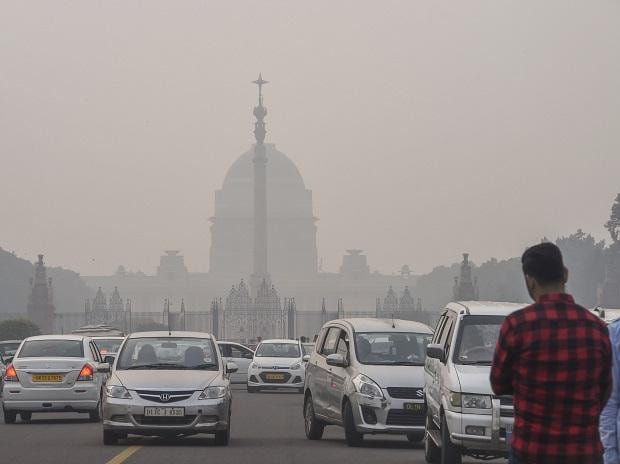
A view of Rajpath road engulfed in haze, in New Delhi (Photo: PTI)
In a major relief for the residents of Delhi-NCR, the air quality on Wednesday morning further improved. The air quality index in the national capital dropped from yesterday’s 365 to 356 at 6:30 am. The Ministry of Earth Sciences’ air quality monitor, SAFAR, said, “The AQI is back to ‘very poor’ category after rapidly recovering from ‘severe’ largely due to faster boundary layer winds (40 kmph).”
Gurgaon, Faridabad, Noida and Ghaziabad too recorded ‘very poor’ overall air quality.
An AQI between 0-50 is considered good, 51-100 satisfactory, 101-200 moderate, 201-300 poor, 301-400 very poor, and 401-500 severe. Above 500 is severe-plus emergency category.
The India Meteorological Department said winds gusting up to 25 kmph were flushing out pollutants faster.
“There are good chances of rains in northwest India on Wednesday night and Thursday due to a western disturbance. The precipitation will cover Delhi-NCR, Jammu and Kashmir, Himachal Pradesh, Uttarakhand, Punjab, Haryana, Rajasthan and western Uttar Pradesh,” head of IMD’s regional weather forecasting centre of Kuldeep Srivastava, said. Taking a grim view of the surge in pollution levels, the Supreme Court on Monday slammed authorities for failing to curb pollution in Delhi-NCR and said they have left people to die.
Passing a slew of other directions to prevent the rise in air pollution levels, it imposed a fine of Rs 1 lakh on anyone carrying out construction and demolition activity in Delhi-NCR, and a fine of Rs 5,000 on offenders involved in garbage or waste burning. The Bench said it had “no sympathy for farmers indulging in it (stubble burning) as they are putting lives of others at risk”…

Monday, 4 March 2019

7 of top 10 most polluted cities in the world are in India; Gurgaon on top

The index measures the presence of fine particulate matter known as PM2.5, a pollutant that can fester deep in the lungs and bloodstream of human beings
Delhi Pollution, Air Pollution
Latest News: Seven of the top 10 most polluted cities in the world are in India, according to a new study showing South Asia’s battle with deteriorating air quality and the economic toll it’s expected to take worldwide.
Gurugram, located southwest of India’s capital New Delhi, led all cities in pollution levels in 2018, even as its score improved from the previous year, according to data released by IQAir AirVisual and Greenpeace. Three other Indian cities joined Faisalabad, Pakistan, in the top five. The index measures the presence of fine particulate matter known as PM2.5, a pollutant that can fester deep in the lungs and bloodstream of human beings.
“This has enormous impacts, on our health and on our wallets,” Yeb Sano, executive director of Greenpeace Southeast Asia, said in a statement released with the figures. “In addition to human lives lost, there’s an estimated cost of $225 billion in lost labor, and trillions in medical costs.”
India, the world’s fastest-growing major economy, makes up 22 of the top 30 most polluted cities, with five in China, two in Pakistan and one in Bangladesh. India racks up health-care costs and productivity losses from pollution of as much as 8.5 percent of gross domestic product, according to the World Bank…
Read Full Source On Air Pollution

Wednesday, 19 December 2018

Air pollution could be making us less intelligent, especially men

Repeatedly inhaling nanoparticles found in air pollution may have a number of negative effects on the brain, including chronic inflammation of the brain’s nerve cells
air pollution, delhi, smog
Health News: Not only is air pollution bad for our lungs and heart, it turns out it could actually be making us less intelligent, too. A recent study found that in elderly people living in China, long-term exposure to air pollution may hinder cognitive performance (things like our ability to pay attention, to recall past knowledge and generate new information) in verbal and maths tests. As people age, the link between air pollution and their mental decline becomes stronger. The study also found men and less educated people were especially at risk, though the reason why is currently unknown.
We already have compelling evidence that air pollution – especially the tiniest, invisible particulates in pollution – damages the brain in both humans and animals. Traffic pollution is associated with dementia, delinquent behaviour in adolescents, and stunted brain development in children who attend highly polluted schools.
In animals, mice exposed to urban air pollution for four months showed reduced brain function and inflammatory responses in major brain regions. This meant the brain tissues changed in response to the harmful stimuli produced by the pollution. We don’t yet know which aspects of the air pollution particulate “cocktail” (such as the size, number or composition of particles) contribute most to reported brain deterioration. However, there’s evidence that nanoscale pollution particles might be one cause.

Click Here – Business Standard OR BS

Friday, 3 August 2018

Toxic air to blame for lung cancer; no longer just a smoker’s disease

Currently, lung cancer is responsible for five deaths per 1,000 in India and seven per 1,000 in Delhi
Air pollution in India
Smokers and non-smokers now represent an equal number of lung cancer patients, according to a study carried out by the Lung Care Foundation, a not-for-profit organisation focused on improving lung health in India.
An analysis of 150 patients at Sir Ganga Ram Hospital (SGRH), New Delhi, found that close to 50 per cent of patients with lung cancer–the type of cancer responsible for the highest number of cancer deaths nationwide–had never smoked, and yet had developed the pulmonary disease.
Health professionals in India now believe there is strong evidence that points to the role of air pollution in the increasing incidence of lung cancer amongst the young and female populations.
“This is the first time I have seen this 1:1 ratio of smokers to non-smokers suffering from lung cancer”, Arvind Kumar, chairman, centre for chest surgery, Sir Ganga Ram Hospital, New Delhi, told IndiaSpend. “Looking at this data, the obvious reason that comes to mind is air pollution, which contains smoke and PM 2.5.”
PM 2.5 is particulate matter less than 2.5 microns in size, or 30 times finer than a human hair, which, when inhaled deeply into the lungs is known to cause lung cancer, cardiovascular and respiratory diseases. Outdoor pollution was classified as a cancer-causing agent in 2013 by the International Agency for Research on Cancer (IARC), a part of the World Health Organization.

News Source : BS

Tuesday, 8 May 2018

Not living in a polluted area, still falling sick? Here are 4 reasons why

For someone living in polluted New Delhi, for example, those 20,000 breaths include the equivalent of around 20 grains of table salt worth of particulate matter deposited in their lungs each day
Air Pollution


Not a day seems to go by without a story of an “airpocalypse,” usually somewhere in a developing nation. It’s hard not to empathize with the people in the smoggy images of New Delhi or Ulaanbataar or Kathmandu, often wearing masks, walking to school or work through soupy cloudiness.
Last year, a study found that more than 8 million people per year die early from air pollution exposure. This amounts to more deaths than diarrheal disease, tuberculosis and HIV/AIDS combined.
As a researcher in air pollution and its health effects, I know that even if you don’t live in these places, air pollution likely still affects your quality of life. Here’s what you need to know.

1. What exactly is air pollution?

Air pollution is a general term that usually describes a mixture of different chemicals that circulate in the air.
Invisible gases, like ozone or carbon monoxide, and tiny particles or droplets of liquids mix together in the atmosphere. Each molecule is impossible to see with the naked eye, but when trillions gather together, you can see them as haze.

These chemicals are almost always mixed together in varied amounts. Scientists do not yet understand how these different mixtures affect us. Each person responds differently to air pollution exposure – some people have few effects, while others, such as kids with asthma, might become very ill.

What’s more, air pollution mixtures in a given location change over time. Changes can occur quickly over a few hours or gradually over months.

Short-term increases in air pollution from, for example, heavy traffic in rush hour, can make us sick. Such pollution occurs year-round. But seasonal pollutants, such as ozone, usually occur only in the warmest and sunniest parts of year. What’s more, the amount of ozone in air also goes up and down through the day – generally highest in the afternoons and lowest in the early mornings.

These variations can make it quite difficult for environmental health scientists and epidemiologists to know precisely how air pollution can affect humans.

2. Where does air pollution come from?

You might imagine air pollution as smoke pouring out of a factory chimney or the tailpipe of a car.
While these are important sources of air pollution, there are many others. Air pollution includes chemicals humans put into the atmosphere and chemicals released by natural events. For example, forest fires are a large source of air pollutants that affect many communities. Dust that’s picked up by wind can also contribute to poor air quality.

Ronald Reagan famously said that “trees cause more pollution than automobiles do.” While this myth has been debunked, he was right in at least some ways. Trees do release certain gases, such as volatile organic carbon, that are ingredients in air pollution chemistry. This, when mixed together with emissions from cars and industry, leads to increases in other types of pollution, such as ozone.

There isn’t much that scientists can, or should, do about tree emissions. Public health researchers like myself focus most on the ingredients from human activities – from burning petroleum to emissions controls on industrial facilities – because these are sources located close to where people live and work.

There are also many chemical reactions that occur in the air itself. These reactions create what are known as secondary pollutants, some of which are quite toxic.

Finally, it’s important to realize that air pollution knows no boundaries. If a pollutant is emitted in one location, it very easily moves across borders – both regional and national – to different places. New Delhi, for example, experiences seasonal pollution, thanks to extensive burning of agricultural fields some 200 miles away.

New Delhi is an extreme example. But, even if you live in a less polluted environment, pollutants emitted elsewhere often travel to where other people live and work, as seen in recent wildfires in California.
CLICK HERE : HEALTH NEWS

Tuesday, 7 November 2017

Living in a gas chamber: Delhi's air to worsen in coming days; schools shut

At the severe level, even healthy people will be affected while those who have existing diseases will be severely impacted

delhi-smog

Delhi air pollution  hit a dangerous level on Tuesday, putting residents at risk, forcing the closure of schools, and bringing calls from doctors for the city’s half marathon to be canceled.

Delhi’s Chief Minister Arvind Kejriwal said the city had once become a “gas chamber”. Schools for younger children were ordered shut on Wednesday and all outdoor activity at high schools suspended.
A thick fog that hung over the sprawling city worsened conditions. Residents complained of smarting eyes and irritation in the throat.

The air quality index, which measures the concentration of poisonous particulate matter in the air, hit the “severe” level of 451 on a scale where the maximum reading is 500 and where anything above 100 is considered unhealthy by the Central Pollution Control Board.

At the severe level, even healthy people will be affected while those who have existing diseases will be severely impacted, it said.

In some parts of Delhi, the air quality was so poor that it was beyond the maximum level, according to the US Embassy’s real-time air quality index. It stood at 999 for RK Puram area beyond which no readings are available.

That level is equal to smoking 50 cigarettes a day, Dr. Arvind Kumar, chairman for chest surgery at Sir Ganga Ram hospital, said.

“We are in a state of medical emergency, schools should be shut, we need to bring these levels down. We are all shortening our lives.”

The Indian Medical Association urged Delhi’s biggest running race, due on Nov. 19, to be called off to protect runners and volunteers from exposure to high levels of deadly particulate matter that lodge deep in the lungs.

It said the air quality is particularly poor early in the day when the race will be run.

The air quality index measures concentrations of PM 2.5, PM 10, ozone, nitrogen dioxide and sulfur dioxide among other indicators.

Emergency Measures

The air quality is likely to worsen in the next few days as a northwesterly wind is expected to bring toxic smoke from the neighboring states of Punjab and Haryana where farmers burn crop stubble before the new planting season.

Delhi’s deputy Chief Minister Manish Sisodia said emergency measures such as banning the entry of trucks into the capital and suspension of construction activity will kick in, if the pollution level rose further....READ MORE


Friday, 20 October 2017

Bad air, water kills: At 2.5 mn, India tops list for pollution-linked deaths

India recorded the most number of premature deaths because of pollution in 2015 at 2.51 million lives lost, followed by China at 1.8 million deaths, a recent study has revealed


1500358605-1989


health news: India recorded the most number of premature deaths because of pollution in 2015 at 2.51 million lives lost, followed by China at 1.8 million deaths, a recent study has revealed. The findings coincide with the festival of Diwali, which has been synonymous with smoke-choked air due to the rampant bursting of firecrackers across the country.

Citing The Lancet Commission on Pollution and Health, a two-year initiative seeking to highlight the issue, Reuters reported that India saw the greatest number of pollution-related early deaths in 2015. "People in poorer countries - like construction workers in New Delhi - are more exposed to air pollution and less able to protect themselves from exposure, as they walk, bike or ride the bus to workplaces that may also be polluted," Karti Sandilya, one of the authors of the commission's report, told the news agency.


According to The Lancet's study, diseases caused by pollution were responsible for an estimated 9 million premature deaths, 16 per cent of all deaths worldwide, in 2015. This number was three times more than deaths from AIDS, tuberculosis, and malaria combined and 15 times more than from all wars and other forms of violence....Read more


Thursday, 19 October 2017

Diwali: Cracker ban goes up in smoke as Delhi air quality turns 'very poor'


A 'very poor' air quality index essentially means that people may suffer from respiratory illnesses on a prolonged exposure to such air

 1507699783-9347

The festive fervour gripped the nation on Thursday as people celebrated Diwali, often referred to as 'the festival of lights by lighting diyas (earthen lamps), paying obeisance to Goddess Lakshmi, distributing sweets. However, a quiet and promising evening gave way to thick haze and noise as Delhi celebrated Diwali, dashing the hopes of cracker-free festivities, following a Supreme Court ban on the sale of firecrackers in the National Capital Region (NCR).

ALSO READ: From PM Modi in Kashmir to Yogi in Ayodhya: How leaders celebrated Diwali

The cracker-bursting was relatively subdued as compared to previous years. However, the revelers in the adjoining townships of Delhi such as Noida, Gurgaon and Faridabad paid little heed to the apex court's writ and environmentalists' concerns.

Real-time pollution data alarming

The online indicators of the pollution monitoring stations in the city glowed red, indicating a 'very poor' air quality as the volume of ultrafine particulates PM 2.5 and PM 10, which enter the respiratory system and manage to reach the bloodstream, sharply rose from around 7 pm.

At 10 pm, in Mandir Marg in Delhi, the PM 2.5 concentration was 390 units against the prescribed 60 units, while PM 10 was 480 against the prescribed 100...Read More


14th BRICS summit to review current global issues, reach key agreements

  At the   14th BRICS summit   which is to be hosted by China in a virtual mode on 23-24 June, the member nations will review the current gl...
