Showing posts with label DELHI FIRECRACKER BAN. Show all posts

Wednesday, 18 October 2017

Smokeless Diwali: Delhi, there is something foul in the air, don’t make it worse

A ban is rarely a great solution, but we must recognize that no other agency is upholding our right to breath clean air.
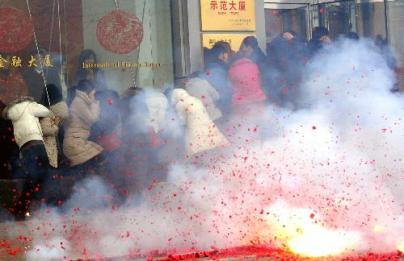
U137P200T1D304646F12DT20100220024625

economy news: Go outside and get some fresh air. Go for a walk, it will clear your mind.” Fresh air and a relaxing walk are simple pleasures unavailable to residents of Delhi/NCR. Walking, running or cycling here might cause more damage to your health than any good.

Why do you say this?

Because on an average day in Delhi/NCR PM2.5 pollution is between 150-400 micrograms per cubic metre. This means the ‘baseline’ or ‘everyday’ pollution in the NCR due to essential or routine economic activities, in and around Delhi, is 2 to 4 times above the danger mark. Transportation, factories, coal-fired power production, waste burning, unending construction work, slash and burn agriculture in neighbouring states, and local climate effects are the major reasons. This has been the case for the last 5-10 years. It is a problem because PM2.5 levels above 60-100 micrograms per cubic metre are considered unsafe by the WHO.
What does PM2.5 do?
Such poor air quality is a contributor to chronic year-long complaints of cough, sniffling, irritability in the eyes, headaches, fatigue, asthma, bronchitis, and skin allergies. Common ailments in Delhi/NCR. These high levels of PM2.5, over longer periods, increase the risk of serious breathing disorders, developmental disorders in children, cardiovascular issues, and neurological problems. Shocking, but not unexpected, is the fact that 40 percent of children in the NCR have critically low lung function. Almost every day in Delhi is an attack on our health that we regretfully ignore.

If there are so many factors, why are people focusing on air pollution due to Diwali firecrackers?

Last year air pollution (PM2.5 and PM10) levels in the NCR were 14-16 times above the safe limit on the day after Diwali. Such levels have never been recorded in an Indian city before. It was a public health emergency for Delhi/NCR. Testing for breathing disorders went up by 10-20 times. Schools were shut. The number of sick days increased dramatically. If regular days in Delhi are a dose of hazardous air, last November, the day after Diwali, was a quite simply poison.

We can handle 14-16 times pollution for one day of celebration, okay?

llution are ‘anti-human’. Doctors don’t know if our bodies can cope with such pollution. According to Dr Arvind Kumar, one of India’s lead chest surgeons,....Readmore…

Tuesday, 17 October 2017

Firecracker ban: Over 1,200 kgs of crackers seized, 29 arrested in Delhi

Special teams have been deployed in districts to monitor the situation

A closed firecracker shop  at Sadar Bazar in New Delhi. Photo: Sanjay K Sharma


Over 1,200 kg of firecrackers have been seized and 29 people arrested by police as part of a drive being carried out after the Supreme Court order temporarily banning the sale of firecrackers.
After the Supreme Court order, Delhi Police commissioner Amulya Patnaik had directed the deputy commissioners of police of the 13 police districts to ensure that crackers are not sold in the city.
Special teams have been deployed in districts to monitor the situation.

ALSO READ: Firecracker ban in Delhi-NCR: Why it is hard to thank Supreme Court

In the crackdown, following the Supreme Court order, the police have seized 1,241 kilogrammes of firecrackers and registered 29 FIRs and arrested 29 people, said Madhur Verma, PRO, Delhi Police.(economy news)

According to the data, eight cases have been registered in the north district against the people found selling firecrackers, the maximum among all the districts.

Police have seized 368 kilogrammes of firecrackers from the southwest district, the maximum among all districts with Rohini a close second at 344.5 kg.

Two Delhi Police personnel posted at the Mangolpuri police station in the outer district were suspended for allegedly failing to curb the sale of firecrackers in their beat areas.

Read Full story 


Wednesday, 11 October 2017

Firecracker ban: If the SC move reduces air pollution, how will we know?


Firecrackers are undoubtedly a threat to environment and our health, but it may not be possible to accurately measure how effective this ban will be 

1507529757-8532

The Supreme Court of India recently banned the sale and stocking of firecrackers in the National Capital Regionuntil November 1, barely 10 days before Diwali. Will the move have an impact on Delhi's air? And if it will, how will it be gauged? Siddharth Singh demystifies the order and its implication for Business Standard.

economy today: In banning the sale and stocking of firecrackers in Delhi-NCR, the Supreme Court cited studies that showed firecrackers led to a spike in pollution, which is hardly unobvious. That something must be done about air pollution in Delhi is a forgone conclusion – after all, between 10,000 and 30,000 people are estimated to die every year because of it.

After news of the firecracker ban spread, the usual cycle of brouhaha ensued, with culture warriors perceiving it as an attack on the Hindu faith and demanding concessions from other religions. The absurdness of this argument aside, they also cited – correctly – that pollution is not merely caused by firecrackers on Diwali.

In fact, much of the pollution comes from road dust, agri residue burning, electricity production and road transport. The effort on these other fronts has unfortunately been incremental and slow. On the other hand, the firecracker ban impacts the celebration of an important religious festival in India. Therefore, air pollution levels before and after the ban will be observed closely by all....READ MORE


14th BRICS summit to review current global issues, reach key agreements

  At the   14th BRICS summit   which is to be hosted by China in a virtual mode on 23-24 June, the member nations will review the current gl...