Showing posts with label INFECTION. Show all posts

Friday, 24 July 2020

Coronavirus protein redesigned in lab, may enable stable vaccine production

Scientists have redesigned a key protein from coronavirus which it uses to enter and infect human cells, an innovation that may lead to faster and more stable production of vaccines

vaccine, pharma, coronavirus, medicine, drugs, medical research, covid, lab
Scientists have redesigned a key protein from the novel coronavirus which it uses to enter and infect human cells, an innovation that may lead to much faster and more stable production of vaccines against COVID-19. According to the researchers, including those from the University of Texas at Austin in the US, most COVID-19 vaccine candidates train the human immune system to recognise a key protein on the surface of the novel coronavirus SARS-CoV-2 called the spike (S) protein to fight infection.
In the current study, published in the journal Science, the scientists designed a new version of this protein which can be produced up to 10 times more in cells than that of an earlier synthetic S protein already in use in multiple COVID-19 vaccines. “Depending on the type of vaccine, this improved version of the protein could reduce the size of each dose or speed up vaccine production,” said study senior author Jason McLellan from the University of Texas at Austin. “Either way, it could mean more patients have access to vaccines faster,” McLellan said.


The new protein, dubbed HexaPro, is also more stable than the team’s earlier version of the S protein, which according to the scientists should make it easier to store and transport. They said the new S protein also keeps its shape under heat stress, during storage at room temperature, and through multiple freeze-thaws — qualities that are desirable in a robust vaccine.

Tuesday, 21 April 2020

After Ghaziabad, movement between Delhi and Noida banned; advisory to media

The decision was taken on the basis of a report by the health department in Noida, which stated that several people who tested positive for coronavirus had links to Delhi
A medic sitting inside the mobile COVID-19 testing van collects swab sample of Chandni Mahal residents, after the area was identified as coronavirus hotspot, during the nationwide lockdown, in New Delhi. Photo: PTI
A day after the district administration sealed the border between Ghaziabad and Delhi, the Gautam Buddh Nagar administration banned the movement between Noida and Delhi, except for those involved in Covid-19-related services and goods transportation, from Tuesday night. Media personnel will be exempted, it said, adding that the process for issuing passes to them is being worked out.


The decision was taken on the basis of a report by the health department in Noida, which stated that several people who tested positive for coronavirus had links to Delhi, an official order stated. “It is clear from the report of the Health Department that there is a possibility of infection from people travelling between Delhi and Gautam Buddh Nagar. Hence, in larger public interest, movement between Delhi and Gautam Buddh Nagar is being completely banned until further orders,” District Magistrate (DM) Suhas L Y said in an order. He also shared the information on Twitter, where he said the move was “in larger public interest” and a “preventive measure to fight Covid-19”, while urging people to cooperate. However, certain categories of people were exempted from the ban, according to the order…Read Here

Wednesday, 19 September 2018

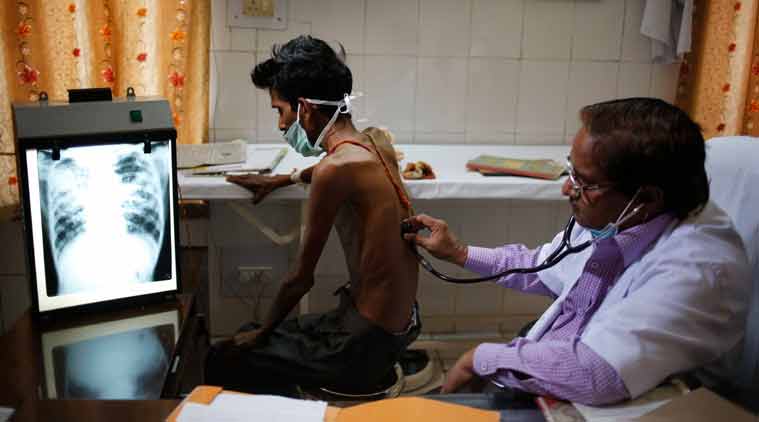
TB remains world’s deadliest infectious disease: WHO

Tuberculosis (TB) remains the world’s deadliest infectious disease although global efforts have averted an estimated 54 million tuberculosis (TB) deaths since 2000, the World Health Organization (WHO) warned on Tuesday.
Image result for TB remains world's deadliest infectious disease: WHO
BS | WHO, in its latest 2018 Global TB Report, says countries are still not doing enough to end TB by 2030 and calls for an unprecedented mobilization of national and international commitments. It urges for decisive action from nearly 50 heads of state and government who are expected to gather next week for the first-ever UN High-level Meeting on TB, Xinhua news agency reported.
The report finds that overall, TB deaths have decreased over the past year, with an estimated 10 million people having developed TB and 1.6 million deaths, including among 300,000 HIV-positive people, in 2017. The number of new cases is falling by two percent per year.
However, underreporting and under-diagnosis of TB cases remains a major challenge. Of the 10 million people who fell ill with TB in 2017, only 6.4 million were officially recorded by national reporting systems, leaving 3.6 million people undiagnosed, or detected but not reported.
Ten countries accounted for 80 percent of this gap, according to the report, with India, Indonesia and Nigeria topping the list. Less than half of the estimated one million children with TB were reported in 2017, making it a much higher gap in detection than that in adults.
>>Thank You<<

Monday, 6 August 2018

Humoral response corresponds to production of antibodies

When the body is continuously exposed to pathogens, the immune system notably mounts what is known as a ‘humoral response’, which corresponds to the production of antibodies that can help fight infections and provide long-term protection.
Health-Insurance
In a new study, the lab of Jacques Fellay at EPFL, working with the Pasteur Institute in Paris, has examined the humoral responses of 1,000 healthy people to common infections and vaccines.
The scientists measured antibody responses to fifteen antigens (molecules that trigger humoral responses) from twelve infectious agents: cytomegalovirus, Epstein-Barr virus, herpes simplex virus 1 and 2, varicella zoster virus, influenza A virus, measles, mumps, rubella, and hepatitis B virus, Helicobacter pylori and Toxoplasma gondii.
In order to assess the importance of non-genetic factors, the researchers looked at the impact of numerous demographic variables. They identified age and sex as the most important determinants of humoral response, with older individuals and women showing stronger antibody responses against most antigens.

Article Source : BS

14th BRICS summit to review current global issues, reach key agreements

  At the   14th BRICS summit   which is to be hosted by China in a virtual mode on 23-24 June, the member nations will review the current gl...