Showing posts with label WORLD HEALTH ORGANIZATION. Show all posts

Monday, 20 December 2021

Covid-19: WHO sounds warning over fast-spreading Omicron variant

 Says Omicron is evading some immune responses; China must share more data on virus origins

Omicron could cause up to 75,000 deaths in UK by April end, study warns

The Omicron variant of the coronavirus is spreading faster than the Delta variant and is causing infections in people already vaccinated or who have recovered from the COVID-19 disease, the head of the World Health Organization (WHO) said on Monday. WHO chief scientist Soumya Swaminathan added it would be “unwise” to conclude from early evidence that Omicron was a milder variant that previous ones.

“… with the numbers going up, all health systems are going to be under strain,” Soumya Swaminathan told Geneva-based journalists. The variant is successfully evading some immune responses, she said, meaning that the booster programmes being rolled out in many countries ought to be targeted towards people with weaker immune systems.

“There is now consistent evidence that Omicron is spreading significantly faster than the Delta variant,” WHO director-general Tedros Adhanom Ghebreyesus told the briefing. “And it is more likely people vaccinated or recovered from COVID-19 could be infected or re-infected,” Tedros said.

Thursday, 10 September 2020

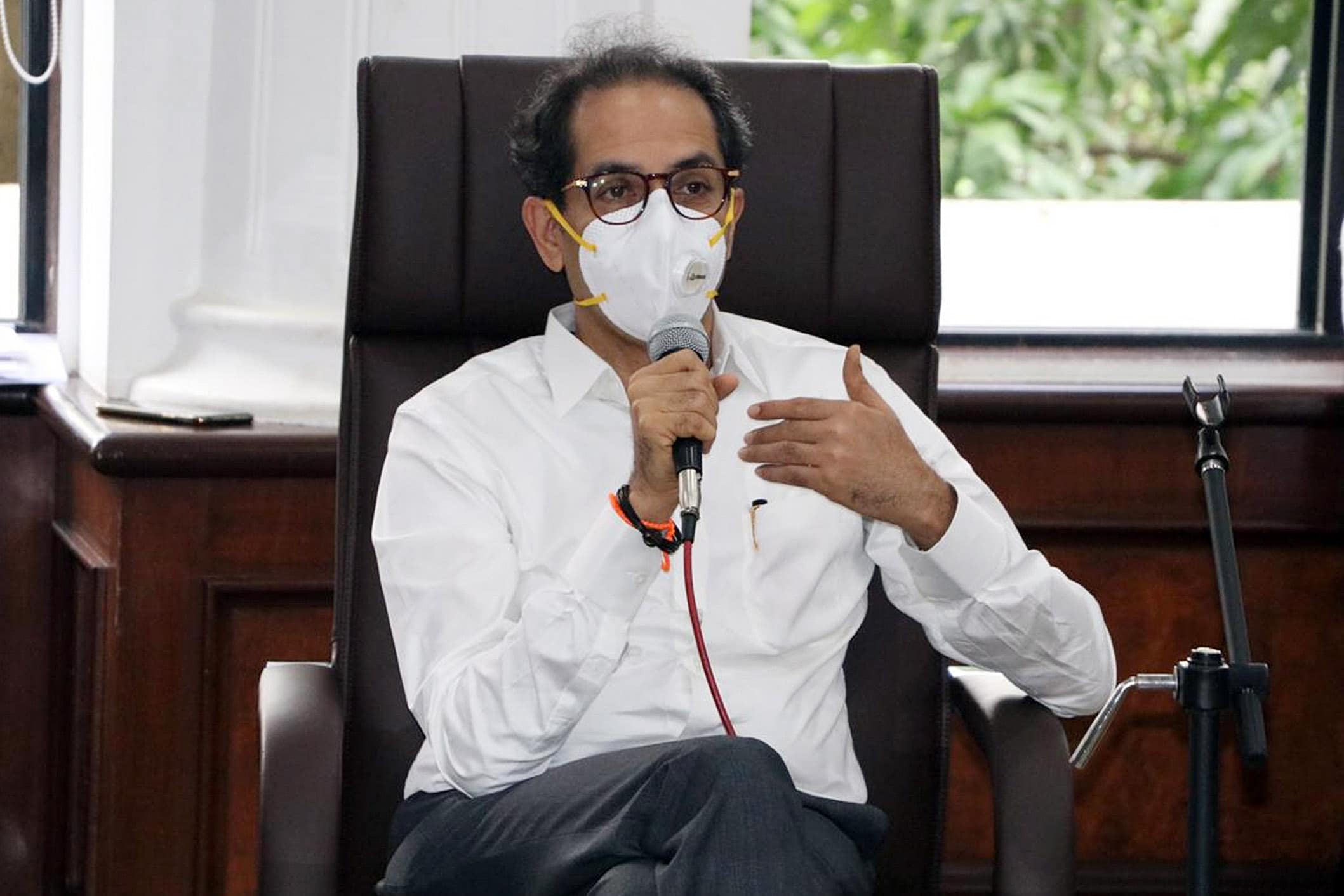
Covid-19: Hospitals to get 80% oxygen cylinders, says Uddhav Thackeray

Uddhav Thackeray has said the state government has decided to provide 80% oxygen cylinders to hospitals and 20% to industries
Uddhav Thackeray
Maharashtra Chief Minister Uddhav Thackeray has said that in view of the WHO’s warning that COVID-19 cases will be on the rise in the coming days, the state government has decided to provide 80 per cent oxygen cylinders to hospitals and 20 per cent to industries.
He also said that although there were only a handful of testing laboratories in the state when the outbreak began, their number has now grown to 550. Uddhav Thackeray said this while inaugurating a testing laboratory and six COVID Care centres in Navi Mumbai on Thursday.
“Considering the warning given by the World Health Organisation (WHO) that the number of COVID-19 cases will rise in the coming days, the state government has decided to provide 80 per cent oxygen cylinders to hospitals and the remaining 20 per cent to industries,” an official release quoted him as saying.


“This distribution of oxygen cylinders will be done through a centralised system,” he said. The state government is creating a large number of health facilities to tackle the pandemic, he said.”But despite the excellent quality of medical facilities, people are skeptical about them. Therefore, the agencies should make efforts to increase the credibility in the minds of people towards the facilities,” Thackeray said….

Monday, 7 September 2020

India in talks to join COVAX vaccine allocation scheme, says WHO official

The WHO and the GAVI vaccine alliance are leading the COVAX facility, aimed at helping buy and distribute vaccination shots against the novel coronavirus fairly around the world
The United States played a pivotal role in helping to create the WHO in 1948. Just over 70 years later, President Trump is withdrawing the country from the agency amid the COVID-19 pandemic. Martial Trezzini/EPA
The World Health Organization is in talks with India about joining the “COVAX” global vaccine allocation plan, a senior WHO adviser said on Monday. “India is certainly eligible, like all countries in the world, to be part of the COVAX facility and discussions are ongoing in that regard,” Bruce Aylward told a briefing in Geneva. “We would welcome Indian participation …India has extensive experience (with vaccines).”


The WHO and the GAVI vaccine alliance are leading the COVAX facility, aimed at helping buy and distribute vaccination shots against the novel coronavirus fairly around the world. But some countries that have secured their own supplies through bilateral deals, including the United States, have said they will not join COVAX.

Sunday, 16 August 2020

Malaysia detects new Covid-19 strain that’s 10 times more infectious

The mutation called D614G was found in at least three of the 45 cases in a cluster that started from a restaurant owner returning from India and breaching his 14-day home quarantine
Malaysia detects new Covid-19 strain that's 10 times more infectious
Malaysia has detected a strain of the new coronavirus that’s been found to be 10 times more infectious. The mutation called D614G was found in at least three of the 45 cases in a cluster that started from a restaurant owner returning from India and breaching his 14-day home quarantine. The man has since been sentenced to five months in prison and fined. The strain was also found in another cluster involving people returning from the Philippines.
Fauci says new mutation may speed the spread of coronavirus
The strain could mean that existing studies on corona vaccines may be incomplete or ineffective against the mutation, said Director-General of Health Noor Hisham Abdullah.


The mutation has become the predominant variant in Europe and the U.S., with the World Health Organization saying there’s no evidence the strain leads to a more severe disease. A paper published in Cell Press said the mutation is unlikely to have a major impact on the efficacy of vaccines currently being developed. “People need to be wary and take greater precautions because this strain has now been found in Malaysia,” Noor Hisham wrote in a Facebook post on Sunday. “The people’s cooperation is very needed so that we can together break the chain of infection from any mutation.”..

Friday, 10 July 2020

Indoor airborne spread of Covid-19 under certain conditions possible: WHO

In a change to its previous thinking, WHO noted that studies evaluating C-19 outbreaks in restaurants, choir practices and fitness classes suggested the virus might have been spread in air
Around ten thousand beds ready at Bengaluru International Exhibition Centre (BIEC) for Covid-19 Care Centre, in Bengaluru.
The World Health Organisation is acknowledging the possibility that Covid-19 might be spread in the air under certain conditions after more than 200 scientists urged the agency to do so. In an open letter published this week in a journal, two scientists from Australia and the US wrote that studies have shown beyond any reasonable doubt that viruses are released during exhalation, talking and coughing in microdroplets small enough to remain aloft in the air.
The researchers, along with more than 200 others, appealed for national and international authorities, including WHO, to adopt more stringent protective measures. WHO has long dismissed the possibility that the coronavirus is spread in the air except for certain risky medical procedures, such as when patients are first put on breathing machines.

In a change to its previous thinking, WHO noted on Thursday that studies evaluating COVID-19 outbreaks in restaurants, choir practices and fitness classes suggested the virus might have been spread in the air. Airborne spread "particularly in specific indoor locations, such as crowded and inadequately ventilated spaces over a prolonged period of time with infected persons cannot be ruled out, WHO said.

Tuesday, 16 June 2020

WHO waits for China to share info on new cases; notes 100,000 cases daily

Tedros noted that it took over two months to reach 100,000 reported cases now that is a daily norm
Coronavirus, Brazil, Covid-19
The emergencies chief of the World Health Organization said he fully expects China to share the genetic sequences from the resurgence of coronavirus that have recently hit Beijing, even though they have not yet done so. Chinese officials said that their examination of the virus shows it originated in Europe, but they have not yet shared the sequences with WHO or the global scientific community.
“We fully expect our colleagues in China will share that information,” said Dr. Michael Ryan at a press briefing on Monday. Ryan said the finding that this virus genome may represent a strain commonly transmitting in Europe is significant but that verifying the hypothesis requires the sequences be shared.
Ryan said the new cluster of cases in China was of particular concern given that Beijing had gone 50 days without a new case, but expressed confidence Chinese authorities would be able to contain it. In a story published earlier this month, the Associated Press found China delayed sharing critical virus information with WHO for more than a week after three government labs had decoded the information.


The emergencies chief of the World Health Organization said he fully expects China to share the genetic sequences from the resurgence of coronavirus that have recently hit Beijing, even though they have not yet done so. Chinese officials said that their examination of the virus shows it originated in Europe, but they have not yet shared the sequences with WHO or the global scientific community.

Tuesday, 2 June 2020

Covid-19 has not changed in terms of transmissibility, severity: WHO expert

The statement came in the wake of the recent media reports, citing Alberto Zangrillo, the head of the San Raffaele Hospital in Italy’s Milan, that the novel coronavirus was losing its potency
Airlines, coronavirus
There is no evidence that the novel coronavirus has changed both in terms of the transmissibility and the severity of the disease, said Maria Van Kerkhove, Covid-19 technical lead at the World Health Organization.
The statement came in the wake of the recent media reports, citing Alberto Zangrillo, the head of the San Raffaele Hospital in Italy’s Milan, that the novel coronavirus was losing its potency, while the fatality risk was decreasing. According to the doctor, a test run over the past 10 days showed that a viral load in quantitative terms was much less compared to the one carried out a month or two months ago.


“In terms of the transmissibility, that has not changed. In terms of the severity that has not changed,” Van Kerkhove said.Meanwhile, WHO Director-General Tedros Adhanom Ghebreyesus warned that the world is “losing its ability” to use critically important antimicrobial medicines. Speaking at a virtual press conference on Monday, the WHO chief said that the Covid-19 pandemic has led to an increased use of antibiotics, which ultimately will lead to higher bacterial resistance rates, news agency IANS reported…Read More

Thursday, 23 April 2020

Gilead’s experimental Covid-19 drug remdesivir fails first trial: Reports

Researchers studied 237 patients, giving the drug to 158 and comparing their progress with the remaining 79
A medic collects a swab sample of a man from a new swab testing cabin at Podar hospital in Worli during a nationwide lockdown in the wake of coronavirus pandemic, in Mumbai. Photo: PTI
Gilead Sciences Inc’s experimental coronavirus drug failed its first randomised clinical trial, the Financial Times reported on Thursday, citing draft documents published accidentally by the World Health Organization.
Trading in the shares of the company was halted after they fell 6%. The Chinese trial showed the antiviral remdesivir did not improve patients’ condition or reduce the pathogen’s presence in the bloodstream, the report on.ft.com/2VumJIA said.
Researchers studied 237 patients, giving the drug to 158 and comparing their progress with the remaining 79. The drug also showed significant side effects in some, which meant 18 patients were taken off it, according to the Financial Times.
Interest in Gilead’s drug had been high as there are currently no approved treatments or preventive vaccines for Covid-19, and doctors are desperate for anything that might alter the course of the disease that attacks the lungs and can shut down other organs in extremely severe cases.


The company is testing the drug in multiple trials and highly anticipated trial results from a study involving 400 patients hospitalized with severe cases of the illness are expected later this month. Remdesivir, which previously failed as a treatment for Ebola, is being tried against Covid-19 because it is designed to disable the mechanism by which certain viruses, including the new coronavirus, make copies of themselves and potentially overwhelm their host’s immune system.

Tuesday, 31 March 2020

From ventilators to testing kits, IITs step up to fight Covid-19 outbreak

IIT Guwahati, which is set to get a Technology Innovation Hub at the campus, has developed a mask in line with World Health Organization guidelines, and plans to 3D print about 100 of these
coronavirus, test
IITs across the country have joined the fight against Covid-19, activating their incubation centres to develop solutions that could help contain the virus. While some researchers are developing prototypes for ventilators to overcome their shortage, others have teamed up to develop testing kits.
A team of innovators from IIT Kanpur’s incubator company Nocca Robotics has developed a ventilator prototype, currently in the testing phase. “Our next step is to test the prototype and get it validated with the doctors to fine-tune the design, which will take at least two more weeks. Once the testing is over, we will begin mass-scale manufacturing,” said Abhay Karandikar, director of IIT Kanpur.

Given that almost all components are locally sourced, the price will be much less compared to imported ones that cost over ~4 lakh, he added. IIT Guwahati, which is set to get a Technology Innovation Hub at the campus, has developed a mask in line with World Health Organization guidelines, and plans to 3D print about 100 of these. A team of researchers at the campus is also trying to develop a vaccine. It is currently analysing the sequence of the virus from samples collected from Kerala and China. Besides, IIT Guwahati students have also developed sanitisers on a World Health Organization (WHO) formulation…Read More

Friday, 27 March 2020

US overtakes China with 82,000 Covid-19 cases; toll crosses 2,000 in Iran

It is, however, important to note that the US has been testing people at a much larger scale, when compared with other countries that have been affected by the coronavirus pandemic
Semi trucks drive by a freeway sign along Interstate 5 that urges people to stay at home due to the COVID-19 outbreak on their way toward Los Angles. Photo: PTI
United States has now surpassed China in the number of Covid-19 cases around the world, with at least 82,404 people are known to have been infected with the deadly coronavirus, the Johns Hopkins University real-time Covid-19 tracker said on Thursday. It is, however, important to note that the US has been testing people at a much larger scale, when compared with other countries that have been affected by the coronavirus pandemic.
“We now have 370,000 tests that have been done. The majority of those — over 220,000 in the last eight days, which, those of you who have been tracking the South Korea numbers, put us equivalent to what they did in eight weeks that we did in eight days,” Dr Deborah Birx, the White House’s coronavirus response coordinator, told reporters on Thursday. Although the US has surpassed China’s 81,782 mark, the Covid-19-related death toll in the country is still lower than China, with 1,178 Americans having died as opposed to the 3,291 Chinese fatalities. At least 160 million Americans have been ordered to stay home as schools are closed, restaurants and bars have been closed in hope of the curtail spread of the lethal virus, The New York Times reported.


New York City is among the worst-hit cities as the number of confirmed Covid-19 cases in the city has reached 38,000 and 281 have died. On Wednesday, US Senate leaders and Trump Administration had reached an agreement regarding a $2 trillion package to rescue the economy from the coronavirus wrath, paving the way for swift passage of the legislation from both the chambers of Congress. Meanwhile, the number of coronavirus-related deaths worldwide exceeded 20,000, according to the World Health Organization (WHO)

US overtakes China with 82,000 Covid-19 cases; toll crosses 2,000 in Iran

It is, however, important to note that the US has been testing people at a much larger scale, when compared with other countries that have been affected by the coronavirus pandemic
Semi trucks drive by a freeway sign along Interstate 5 that urges people to stay at home due to the COVID-19 outbreak on their way toward Los Angles. Photo: PTI
United States has now surpassed China in the number of Covid-19 cases around the world, with at least 82,404 people are known to have been infected with the deadly coronavirus, the Johns Hopkins University real-time Covid-19 tracker said on Thursday. It is, however, important to note that the US has been testing people at a much larger scale, when compared with other countries that have been affected by the coronavirus pandemic.
“We now have 370,000 tests that have been done. The majority of those — over 220,000 in the last eight days, which, those of you who have been tracking the South Korea numbers, put us equivalent to what they did in eight weeks that we did in eight days,” Dr Deborah Birx, the White House’s coronavirus response coordinator, told reporters on Thursday. Although the US has surpassed China’s 81,782 mark, the Covid-19-related death toll in the country is still lower than China, with 1,178 Americans having died as opposed to the 3,291 Chinese fatalities. At least 160 million Americans have been ordered to stay home as schools are closed, restaurants and bars have been closed in hope of the curtail spread of the lethal virus, The New York Times reported.


New York City is among the worst-hit cities as the number of confirmed Covid-19 cases in the city has reached 38,000 and 281 have died. On Wednesday, US Senate leaders and Trump Administration had reached an agreement regarding a $2 trillion package to rescue the economy from the coronavirus wrath, paving the way for swift passage of the legislation from both the chambers of Congress. Meanwhile, the number of coronavirus-related deaths worldwide exceeded 20,000, according to the World Health Organization (WHO)

Coronavirus impact: GDP likely to fall to a three-decade low, say analysts

Total loss in output is estimated to be around Rs 6 trillion based on estimated GDP at current prices for FY20
gdp

With the nation under a lockdown because of the coronavirus disease (COVID-19) outbreak, analysts suggest that the impact on various Indian industries could cost the economy around 3 per cent of GDP. There has been around 40 per cent decline in economic activity after the lockdown, as only essential manufacturing (food & pharma) and services (grocery trade, health & public services) are functioning. This, analysts say, could shave-off 1.5 per cent from India’s projected economic growth in financial year 2020-21 (FY21).
India’s GDP growth at constant prices is now likely to be at a three-decade low of 3.5 per cent in FY21. In January, World Bank lowered India’s GDP growth to 5 per cent in FY21 from earlier estimates of 6 per cent. The calculation is based on industry or activity-based gross value added for FY20 as presented by Central Statistics Office (CSO). Total loss in output is estimated to be around Rs 6 trillion based on estimated GDP at current prices for FY20. According to CSO, India’s GDP was expected to grow at 7.5 per cent at current prices in FY20 to Rs 204 trillion. “The base case scenario is a minimum 30-35 per cent decline in economic activity with many estimates putting loss at around 50 per cent. Anyhow we are staring at a significant downgrade in GDP growth estimate for June 20 quarter (Q1FY21) and FY21,” says Devendra Pant head economist India Ratings.


For example, in the manufacturing sector, output is expected to decline by about 70 per cent as only food-processing, and drugs and pharma industries are allowed to operate while other segments, such as engineering and metals, have shut operations. Food, beverages and tobacco, however, only account for 10 per cent of manufacturing output. Machinery and equipment — which includes automobiles, consumer durables and capital goods — is the biggest component of manufacturing, and accounted for around 20 per cent of the sector in FY19, and 3.7 per cent share in overall GDP. Overall, manufacturing accounted for 16.1 per cent of country’s GDP in FY19…Read More

Tuesday, 17 March 2020

Coronavirus global death toll exceeds 7,400; cases now at 183,579 worldwide

Latest updates on coronavirus from around the globe in bullet points
coronavirus
In December 2019, an outbreak of a coronavirus (officially known as – COVID-19) in China killed over 7,965 people across the globe and infected over 198,229. The virus has spread to 157 countries. In India, 137 confirmed cases have been reported so far. A 68-year-old woman from Delhi, 69-year-old man from Mumbai and a 76-year-old man from Karnataka has been confirmed dead in the country from the virus.
What is coronavirus?
Coronaviruses are a large group of viruses that are common among animals. In rare cases, they can be transmitted from animals to humans. The spikes protruding from the virus’s membrane look like the sun’s corona. It is from this that the virus gets the name ‘coronavirus’. It causes illnesses of the respiratory tract, ranging from the common cold to severe conditions like SARS. According to the World Health Organisation (WHO), a novel coronavirus (nCoV) is a new strain that has not been previously identified in humans.
  • White House seeks $850-bn stimulus
  • Fed unveils emergency lending
  • San Francisco shuts down
  • 183,579 cases worldwide, over 7,400 dead
  • 1st death reported in Pakistan; cases surge to 212
  • 135 deaths in Iran, raising total to 988
  • 2,000 new cases in Spain as infections top 11,000, says govt
  • WHO confirms two positive cases among its staff
  • T20 World Cup to go ahead as scheduled, says ICC
  • Euro 2020 Soccer Tournament postponed by a year
  • US, China accuse each other of coronavirus fear-mongering
  • 80,881 confirmed cases in China, rest of the world at 94,000
  • Pfizer, BioNTech to co-develop potential coronavirus vaccine
  • UK govt says ‘reasonable’ estimate is that 55,000 could have COVID-19
  • US stocks rebound: Dow Jones jumps 1,000 pts intra-day
  • Alphabet’s Verily tests 20 people on first day
  • China approves coronavirus vaccine for clinical trials
  • Spanish football coach, 21, dies of coronavirus

Thursday, 12 March 2020

Coronavirus outbreak can now be classified as a pandemic, says WHO

WHO chief Tedros Adhanom Ghebreyesus said he was troubled by the spread and severity of the outbreak, along with a lack of action taken to combat it.
Coronavirus
The new coronavirus episode would now be able to be portrayed as a pandemic, the leader of the World Health Organization declared Wednesday. WHO boss Tedros Adhanom Ghebreyesus said he was disturbed by the spread and seriousness of the episode, alongside an absence of activity taken to battle it.”WHO has been surveying this episode nonstop and we’re profoundly concerned, both by the disturbing degrees of spread and seriousness, and by the disturbing degrees of inaction,” he told a news gathering in Geneva.
“We have in this way made the appraisal that COVID-19 can be portrayed as a pandemic.” The quantity of cases in more than 100 nations around the globe has ascended to more than 124,000, with more than 4,500 passings, remembering a hop for fatalities in Iran and Italy specifically, as per an AFP count. China remains the most exceedingly awful influenced nation with in excess of 80,000 affirmed cases and more than 3,000 passings. Tedros said that in the course of recent weeks, the quantity of cases outside China had expanded 13-overlay and the quantity of influenced nations had significantly increased. He said he anticipated the quantity of cases and passings would develop in the coming days and weeks.
“Pandemic isn’t a word to utilize softly or recklessly,” he told correspondents, however he focused on that “depicting the circumstance as a pandemic doesn’t change WHO’s evaluation of the risk presented by the infection.”It should not be taken by countries as a signal to give up on efforts to contain the virus with methods like contact-tracing, he said.

Tuesday, 3 March 2020

The ground reality of coronavirus in China: What the WHO has found?

The report noted that the younger you are, the less likely you are to be infected and the less likely you are to fall seriously ill if you do get infected
coronavirus
The highly infectious Coronavirus disease (Covid-19) is spreading very fast and has caused 3,164 deaths across the world so far, and there have been over 92,000 confirmed cases. In India, the total number of confirmed cases rose to 21 on Tuesday. Recently, the World Health Organization sent a team of international experts to China to investigate the ground realities in the country where the outbreak first began before spreading globally. Here are some important facts that the team found out:
Spread of the virus: Contrary to the popular opinion, transmission of virus through the air over long distances is not one of the main causes of spread. Most of the infected were either infected at home or in the early phase of the outbreak in Wuhan when most hospitals are unaware about the disease. Around 78-85 per cent cases were caused by an infection within the family by droplets and other carriers of infection in close contact with an infected person. Symptoms: The most common symptoms found among the infected are fever, and dry cough, exhaustion, expectoration of mucus when coughing, shortness of breath, and several others. Coronavirus deaths are strongly influenced by age, pre-existing conditions, gender, and especially the response of the health care system.
Healthcare facilities: The findings by the WHO team revealed some disturbing facts about the healthcare system in China and other countries. 20 per cent of infected people in China needed hospital treatment for weeks. China has hospital beds to treat only 0.4 per cent of the population at the same time – other developed countries have between 0.1 per cent and 1.3 per cent and most of these beds are already occupied with people who have other diseases…

Thursday, 30 January 2020

WHO declares international emergency over novel coronavirus outbreak

Top airlines including Air France, British Airways and Lufthansa have suspended or cut back services to China
coronavirus
The UN health agency on Thursday declared an international emergency over the deadly novel coronavirus from China — a rarely used designation that could lead to improved international co-ordination in tackling the disease. “Our greatest concern is the potential for the virus to spread to countries with weaker health systems,” World Health Organization (WHO) chief Tedros Adhanom Ghebreyesus said as he declared a “public health emergency of international concern”.
“This is not a vote of no confidence in China,” he said, emphasising repeatedly that the measure was intended to help other countries less able to cope and praising the Chinese government for taking swift action to tackle the outbreak. “We must all act together now to limit further spread…. We can only stop it together,” said Tedros, who travelled to China this week and met with President Xi Jinping.
Tedros also said there was “no reason” for any of the international travel or trade restrictions announced in recent days, such as flight suspensions, border closures and quarantine for apparently healthy travellers. Top airlines including Air France, British Airways and Lufthansa have suspended or cut back services to China…Keep Reading

Thursday, 20 June 2019

After 128 encephalitis deaths, Bihar’s poorest prefer health to jobs, roads

Investment in public health was preferred to job creation programmes and road building by 73% and 79% of respondents, respectively
encephalitis, Bihar
As 128 children died of encephalitis in Bihar over 19 days to June 21, 2019, a new study reports that the state’s rural population prefers government investment in public healthcare over roads, jobs and cash transfers.
In a survey conducted by the Brookings Institution, an American research group, in an administrative block of Bihar, 3,800 respondents–comprising the poor, less-educated and disadvantaged caste groups–were asked to make a choice: an incremental (and hypothetical) budget for their block to be transferred directly to them as direct cash transfers (DCT), or budgetary allocations for better welfare services.
Only 13% wanted the funds to come their way via DCT. The majority (86%) wanted it to be invested in public healthcare (the remaining 1% had no opinion on the matter). Approximately 63% of respondents wanted the budget to be spent on new roads rather than the DCT scheme, the study found. Investment in public health was preferred to job creation programmes and road building by 73% and 79% of respondents, respectively.
“It would appear from these responses that some of the poorest citizens of one of the most economically underdeveloped parts of India prioritise public health well above job creation programmes and roads, with cash coming last,” said Stuti Khemani, one of the report’s co-authors and a senior economist at the World Bank’s Development Research Group.
Poor, third most populous state, Bihar gets 1% of transfer funds
The central government launched the Direct Benefit Transfer (DBT) programme on January 1, 2013, with the aim of “reforming Government delivery system by re-engineering the existing process in welfare schemes for simpler and faster flow of information/funds, and to ensure accurate targeting of the beneficiaries, de-duplication and reduction of fraud”.
This flow of funds to the public takes place through two modes, cash (DCT) or kind. During 2018-19, an estimated Rs 2,14,092 crore ($30.7 billion) was transferred to approximately 590 million beneficiaries in the country, and accounted for 65% of the total DBT provided by the central government…
Click Here: encephalitis deaths

Wednesday, 19 September 2018

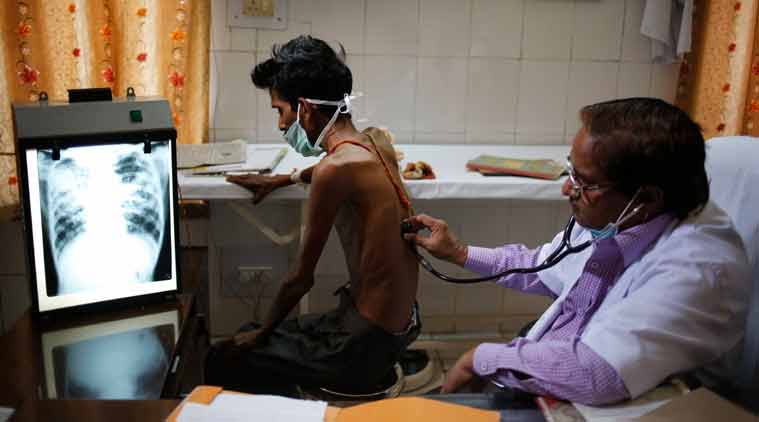
TB remains world’s deadliest infectious disease: WHO

Tuberculosis (TB) remains the world’s deadliest infectious disease although global efforts have averted an estimated 54 million tuberculosis (TB) deaths since 2000, the World Health Organization (WHO) warned on Tuesday.
Image result for TB remains world's deadliest infectious disease: WHO
BS | WHO, in its latest 2018 Global TB Report, says countries are still not doing enough to end TB by 2030 and calls for an unprecedented mobilization of national and international commitments. It urges for decisive action from nearly 50 heads of state and government who are expected to gather next week for the first-ever UN High-level Meeting on TB, Xinhua news agency reported.
The report finds that overall, TB deaths have decreased over the past year, with an estimated 10 million people having developed TB and 1.6 million deaths, including among 300,000 HIV-positive people, in 2017. The number of new cases is falling by two percent per year.
However, underreporting and under-diagnosis of TB cases remains a major challenge. Of the 10 million people who fell ill with TB in 2017, only 6.4 million were officially recorded by national reporting systems, leaving 3.6 million people undiagnosed, or detected but not reported.
Ten countries accounted for 80 percent of this gap, according to the report, with India, Indonesia and Nigeria topping the list. Less than half of the estimated one million children with TB were reported in 2017, making it a much higher gap in detection than that in adults.
>>Thank You<<

Monday, 7 May 2018

A simple solution to the biggest but unheard health crisis -- eyeglasses

More than a billion people around the world need eyeglasses but don't have them, researchers say

eyesight


Health News: Shivam Kumar’s failing eyesight was manageable at first. To better see the chalkboard, the 12-year-old moved to the front of the classroom, but in time, the indignities piled up.
Increasingly blurry vision forced him to give up flying kites and then cricket, after he was repeatedly whacked by balls he could no longer see. The constant squinting gave him headaches, and he came to dread walking home from school.

“Sometimes I don’t see a motorbike until it’s almost in my face,” he said.

As his grades flagged, so did his dreams of becoming a pilot. “You can’t fly a plane if you’re blind,” 
he noted glumly.

The fix for Shivam’s declining vision, it turns out, was remarkably simple.

He needed glasses.

More than a billion people around the world need eyeglasses but don’t have them, researchers say, an affliction long overlooked on lists of public health priorities. Some estimates put that figure closer to 2.5 billion people. They include thousands of nearsighted Nigerian truck drivers who strain to see pedestrians darting across the road and middle-aged coffee farmers in Bolivia whose inability to see objects up close makes it hard to spot ripe beans for harvest.

Then there are the tens of millions of children like Shivam across the world whose families cannot afford an eye exam or the prescription eyeglasses that would help them excel in school.

“Many of these kids are classified as poor learners or just dumb and therefore don’t progress at school,” said Kovin Naidoo, global director of Our Children’s Vision, an organization that provides free or inexpensive eyeglasses across Africa. “That just adds another hurdle to countries struggling to break the cycle of poverty.”

In an era when millions of people still perish from preventable or treatable illness, many major donors devote their largess to combating killers like AIDS, malaria and tuberculosis. In 2015, only $37 million was spent on delivering eyeglasses to people in the developing world, less than one percent of resources devoted to global health issues, according to EYElliance, a nonprofit group trying to raise money and bring attention to the problem of uncorrected vision.

So far, the group’s own fund-raising has yielded only a few million dollars, according to its organizers. It has enlisted Ellen Johnson Sirleaf, the former Liberian president, Elaine L. Chao, the transportation secretary for the United States and Paul Polman, the chief executive of Unilever, among others, in an attempt to catapult the issue onto global development wish lists. They contend that an investment in improving sight would pay off. The World Health Organization has estimated the problem costs the global economy more than $200 billion annually in lost productivity.

“Lack of access to eye care prevents billions of people around the world from achieving their 
potential, and is a major barrier to economic and human progress,” said Madeleine K. Albright, the former secretary of state who is also involved in the group.

Hubert Sagnieres, the chief executive of Essilor, a French eyeglass company and a partner in the fund-raising campaign, said he often confronts ambivalence when pitching the cause to big-name philanthropists.

In an interview, he recalled a recent conversation with Bill Gates, whose foundation has spent tens of billions of dollars battling infectious diseases in the developing world. He said he reminded Mr. Gates of his own childhood nearsightedness, noting that without glasses, he might have faltered in school and perhaps never gone on to start Microsoft. Mr. Gates, he said, politely demurred, saying he had other priorities. A spokeswoman for the Gates Foundation declined to comment.

The initiative’s backers point out that responding to the world’s vision crisis does not require the invention of new drugs or solving nettlesome issues like distributing refrigerated vaccines in countries with poor infrastructure. Factories in Thailand, China and the Philippines can manufacture so-called readers for less than 50 cents a pair; prescription glasses that correct nearsightedness can be produced for $1.50.

But money alone won’t easily solve systemic challenges faced by countries like Uganda, which has just 45 eye doctors for a nation of 41 million. In rural India, glasses are seen as a sign of infirmity, and in many places, a hindrance for young women seeking to get married. Until last year, Liberia did not have a single eye clinic.

READ MORE ABOUT HEALTH CRISIS

14th BRICS summit to review current global issues, reach key agreements

  At the   14th BRICS summit   which is to be hosted by China in a virtual mode on 23-24 June, the member nations will review the current gl...