Showing posts with label World Health Organisation. Show all posts

Wednesday, 11 May 2022

Cipla looks to invest more in mRNA tech; holds discussions with firms

 Speaking to Business Standard, Samina Hamied, executive vice chairperson, Cipla, says one must invest in research and development (R&D) to feed the commercial growth engines

After taking the lead in having a strong Covid-19 portfolio during the pandemic, Cipla is now gearing up for the next stage of growth in terms of innovation and expanding its presence in newer domains. The Mumbai-based firm has held discussions with mRNA technology companies over the last eight months as it looks to invest in a few of them. “We have been talking to mRNA technology owners in the past eight months. We are at a stage when we might invest in a few mRNA companies. The best way is to invest in such technology companies and then grow them in-house,” said Umang …

Thursday, 10 September 2020

Covid-19: Hospitals to get 80% oxygen cylinders, says Uddhav Thackeray

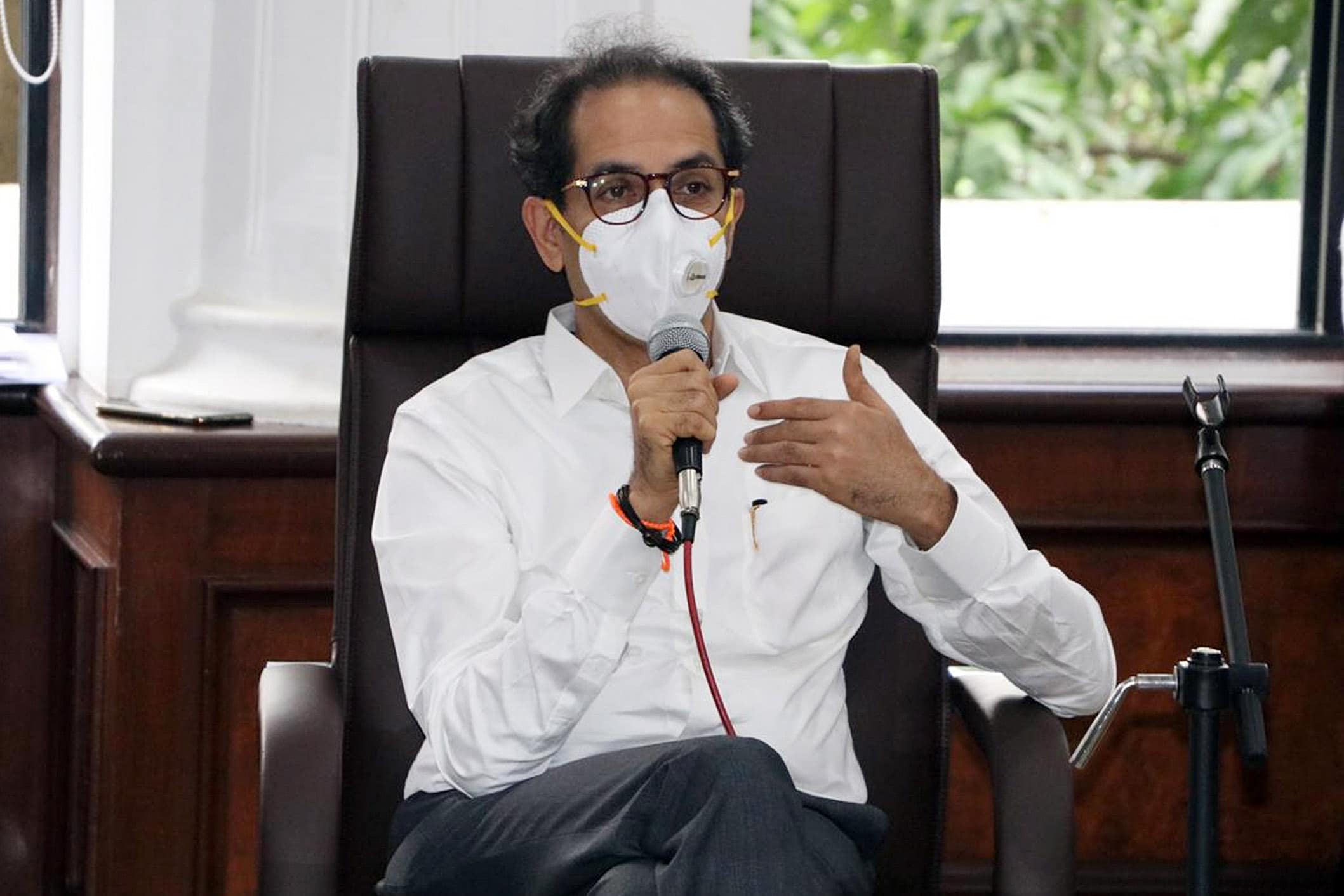
Uddhav Thackeray has said the state government has decided to provide 80% oxygen cylinders to hospitals and 20% to industries
Uddhav Thackeray
Maharashtra Chief Minister Uddhav Thackeray has said that in view of the WHO’s warning that COVID-19 cases will be on the rise in the coming days, the state government has decided to provide 80 per cent oxygen cylinders to hospitals and 20 per cent to industries.
He also said that although there were only a handful of testing laboratories in the state when the outbreak began, their number has now grown to 550. Uddhav Thackeray said this while inaugurating a testing laboratory and six COVID Care centres in Navi Mumbai on Thursday.
“Considering the warning given by the World Health Organisation (WHO) that the number of COVID-19 cases will rise in the coming days, the state government has decided to provide 80 per cent oxygen cylinders to hospitals and the remaining 20 per cent to industries,” an official release quoted him as saying.


“This distribution of oxygen cylinders will be done through a centralised system,” he said. The state government is creating a large number of health facilities to tackle the pandemic, he said.”But despite the excellent quality of medical facilities, people are skeptical about them. Therefore, the agencies should make efforts to increase the credibility in the minds of people towards the facilities,” Thackeray said….

Monday, 17 August 2020

Covid vaccine is first step. It’ll take years to manufacture and distribute

One estimate puts global vaccine production capacity at up to 6.4 billion doses per year, though this is based on single-dose influenza vaccines.
Coronavirus, vaccine, covid, drugs, tests, clinical trials
The world is hoping a safe and effective Covid-19 vaccine will soon become available. So far, more than 160 candidate vaccines are in development. Some 31 of these have entered human clinical trials. One of them is Russia’s “Sputnik V”, which was granted approval by the country’s health ministry last week. But the World Health Organisation (WHO) and a large number of international experts have urged Russia to conduct more testing to ensure the vaccine’s safety before using it.
But even if this candidate and others are proven to be safe and effective, developing the vaccine is just the first step. Some of the biggest challenges in getting everyone vaccinated still lie ahead.
Challenge 1: manufacturing the vaccine
The first major challenge after a vaccine is developed is to produce enough of it to start vaccination programs. One estimate puts global vaccine production capacity at up to 6.4 billion doses per year, though this is based on single-dose influenza vaccines.


But some of the Covid-19 vaccines currently in development require two or three injections. This means, if the same technology for Covid-19 vaccines is required as for influenza vaccines, global production is severely reduced….

Monday, 3 August 2020

Covid-19 pandemic 'once in a century', but still 'in our hands': WHO

WHO Director-General Tedros Adhanom Ghebreyesus said at a virtual press conference that the world has never seen anything like this pandemic for decades
Coronavirus, Healthcare worker
The chief of the World Health Organization (WHO) said that the COVID-19 pandemic is “a once-in-a-century health crisis,” but it is still “in our hands.” WHO Director-General Tedros Adhanom Ghebreyesus said at a virtual press conference on Monday that the world has never seen anything like this pandemic for decades, and its effects might last for decades more, Xinhua news agency reported.
“Since we started probably recording, this is the first ever coronavirus-caused pandemic which has two dangerous combinations: it moves fast, and at the same time it’s a killer,” the WHO chief explained. However, he noted, although the crisis is very severe, there are still solutions and hopes. “I’m not saying there is no solution now. Whatever happens in the next few months or years, I also believe that it’s in our hands,” he said.


“Since the outbreak started, many countries have shown that it can be controlled, or serious transmission can be suppressed,” Tedros said, adding that he has mentioned many such countries in the past, including Spain, Italy, China and South Korea.

Wednesday, 8 July 2020

Covid-19 crisis: WHO acknowledges 'emerging evidence' of airborne spread

A comprehensive package of intervention is required to stop transmission (of the virus)," said Benedetta Allegranzi, technical lead, WHO infection prevention and control hub and task force
CISF officer, coronavirus, covid
The World Health Organization (WHO) on Tuesday said it is looking into claims of airborne transmission coronavirus in poorly ventilated closed settings and will soon issue a scientific brief on the issue. “We acknowledge that there is emerging evidence in this field… We have to be open to this evidence and understand its implication — regarding the modes of transmission and precautions that need to be taken.

A comprehensive package of intervention is required to stop transmission (of the virus),” said Benedetta Allegranzi, technical lead, WHO infection prevention and control hub and task force, in Geneva. In an open letter 239 scientists across 32 countries said that novel coronavirus in smaller particles in air could infect people.

Sunday, 10 May 2020

WHO denies report claiming China pressurised it to withhold Covid-19 info

German weekly Der Spiegel reported that Xi asked Tedros during the call to hold back information about human-to-human transmission of the virus and delay declaring a pandemic
WHO chief Tedros Adhanom Ghebreyesus | Photo: Twitter/ DrTedros
The World Health Organisation has dismissed a media report saying that it withheld information about Covid-19 following pressure from China, and termed it as ‘false allegation’. The UN agency said in a statement late Saturday that a German magazine’s report about a telephone conversation between WHO chief Tedros Adhanom Ghebreyesus and Chinese President Xi Jinping on January 21 was unfounded and untrue.
ALSO READ: Coronavirus LIVE
Weekly Der Spiegel reported that Xi asked Tedros during the call to hold back information about human-to-human transmission of the virus and delay declaring a pandemic. The magazine quoted Germany’s foreign intelligence agency, BND, which declined to comment on Sunday. Der Spiegel also claimed that the BND concluded up to six weeks of time to fight the outbreak had been lost due to China’s information policy.


WHO said Tedros and Xi have never spoken by phone and added that such inaccurate reports distract and detract from efforts to end the Covid-19 pandemic. It added that China confirmed human-to-human transmission of the new coronavirus on January 20. WHO officials issued a statement two days later saying there was evidence of human-to-human transmission in Wuhan, but more investigation was necessary.

Sunday, 26 April 2020

Give priority to coronavirus, but focus on malaria, polio too: WHO

The global number of those infected with coronavirus has increased by almost 85,000 in the past 24 hours, climbing to 2,804,796 Covid-19 cases
Don't move focus from malaria, polio while treating Covid-19: WHO cautions
Despite the severe strain on public health systems due to the Covid-19 pandemic, countries around the world must also focus on other health emergencies like malaria or polio, the World Health Organisation (WHO) said on Sunday.
“Public health systems are coming under severe strain as the COVID-19 pandemic continues. Countries must also continue to focus on other health emergencies and make progress against diseases such as malaria or poliomyelitis (polio),” WHO said in its daily coronavirus situation report. The global number of those infected with coronavirus has increased by almost 85,000 in the past 24 hours, climbing to 2,804,796 Covid-19 cases.
Europe is still leading the count with 1,341,851 confirmed cases and 122,218 deaths, followed by the Americas with 1,094,846 cases and 56,063 fatalities. Like Europe, the hardest-hit continent is planning to ease the lockdown norms, the WHO “has published key considerations for the gradual easing of the lockdown restrictions introduced by many countries in response to the spread of Covid-19 across the region.”
“The transition out of lockdown is set to be a complex and uncertain phase. Challenges and circumstances vary from country to country and there is no one-size-fits-all approach. It is vital that countries clearly communicate this to the public to build trust and ensure that people observe restrictions specific to their situation,” WHO said…Read More

Wednesday, 15 April 2020

Trump blames WHO for ‘covering up’ Covid-19 spread; stops US funding

The Trump administration has accused WHO of taking side with China in the coronavirus outbreak that has brought America’s economy to a standstill
Donald trump
US President Donald Trump on Tuesday halted America’s funding of the World Health Organisation, while ordering a review to assess the institution’s role in “severely mismanaging and covering up” the spread of the deadly coronavirus. The novel coronavirus, which originated from Wuhan City of central China’s Hubei province in November, has so far killed at least 119,000 people globally, including more than 25,000 in the United States, according to Johns Hopkins University.
“Today I am instructing my administration to halt funding of the World Health Organisation while a review is conducted to assess the World Health Organisation’s role in severely mismanaging and covering up the spread of the coronavirus. Everybody knows what has gone on there,” Trump told reporters at his daily White House news conference on the pandemic.


The Trump administration has accused WHO of taking side with China in the coronavirus outbreak that has brought America’s economy to a standstill. American taxpayers provide between $400 million and $500 million per year to the WHO, in contrast, China contributes roughly $40 million a year and even less, he said…

Monday, 3 February 2020

Coronavirus: China opens hospital built from scratch in under two weeks

The World Health Organisation has declared the crisis a global health emergency, and the first death outside China was confirmed in the Philippines on Sunday
Coronavirus patients arrived on Tuesday at a Chinese field hospital built from scratch in under two weeks at the frontline of the outbreak, state media said, following a round-the-clock construction marathon that became a national social media sensation. The 1,000-bed facility was built to relieve hospitals swamped with patients in Wuhan, the city in Hubei province at the epicentre of the national health emergency that has killed more in China than the 2003 SARS outbreak.
Fifty patients arrived at the military-run facility, the state-backed China Daily reported, with images showing workers in protective suits pushing people in wheelchairs up a ramp and into the pre-fabricated structure. The virus has killed more than 400 people and infected a further 20,000, nearly all of them in Hubei, and spread to two-dozen countries since it emerged in December at a market that sold wild animals in the city.
The World Health Organisation has declared the crisis a global health emergency, and the first death outside China was confirmed in the Philippines on Sunday. As reports surfaced of bed shortages in hospitals in Wuhan, construction began on Huoshenshan — “Fire God Mountain” in Chinese — on Friday January 24. Workers toiled day and night amid a forest of earthmovers and trucks carting materials around the site, southwest of the centre of the city of 11 million…

Friday, 12 July 2019

A dangerous habit, man with oxygen tank and the story of India’s toxic air

In this, the third part, we bring you the story of a nation’s toxic air, a dangerous habit and a man being slowly claimed by a disease killing more Indians than ever before
Air pollution in Delhi | Photo: Dalip Kumar
More than 34 years, as India’s economy extended and prospered, Raj Iyer was progressing, going in any event 14 days a month as an expert with not-for-profit and government organizations.
His vagrant, satisfying life changed 11 years back when he more than once felt shy of breath and was in the long run determined to have interminable obstructive aspiratory malady (COPD), which had crippled his lungs and his capacity to relax.
Smoking 60 cigarettes every day for a long time was most likely the prompt reason, albeit compounding air pollution may have assumed a job. “I realized my manifestations were of a respiratory sickness however I didn’t have any acquaintance with it was COPD,” said Iyer. “I surely didn’t have even an inkling how terrible it gets or that it is hopeless.”
Today, Iyer is 69, and his once far reaching life has contracted to a room in his home in Bengaluru’s eastern Pai Layout, where he lives with his essential guardians, his 34-year-old child and 27-year-old little girl in-law, whose lives, as we clarify later, are surrounded by his sickness. “When I initially got hitched (in 2012), his COPD was not as awful, and he didn’t require ceaseless oxygen support,” said Antara Karthikeyan, Iyer’s little girl in-law and a kindergarten educator.
As the COPD advanced, Iyer required oxygen support, various hospitalisations in light of shortness of breath brought about by abnormal amounts of carbon dioxide- – which is harmful to the body and collects when COPD influences capacity of the lungs to oust carbon dioxide- – and fell much of the time because of his debilitating bones…

Thursday, 25 April 2019

WHO says maximum one-hour screen time per day for kids under 5: Key points

Infants under 1 year old should not be exposed to electronic screens and that children between the ages of 2 and 4 should not have more than one hour of “sedentary screen time’.
children, study, books, students
Current Affairs: Young children should not spend more than an hour a day watching television and videos or playing computer games and infants less than one year old should not be exposed to electronic screens at all, the World Health Organization (WHO) said on Wednesday.
Limiting, and in some cases eliminating, screen time for children under the age of 5 will result in healthier adults, said WHO, adding that quality sedentary time spent in interactive non-screen-based activities with a caregiver, such as reading, storytelling, singing and puzzles, is very important for child development..
Physically active and good sleep key for kids under 5
The United Nations agency, issuing its first such guidelines, said under-fives should also be physically active and get adequate sleep to help develop good lifelong habits and prevent obesity and other diseases in later life.
Kids between the age of 1 and 3 should spend 3 hours a day doing physical activity
In its guidelines to member states, the WHO said children between one and four years old should spend at least three hours in a variety of physical activities spread throughout the day.
No screen time for children below the age of 1
Infants under one should interact in floor-based play and avoid all screens, it said. Being inactive is fueling a rise in the numbers of obese or overweight people worldwide, the WHO said. Excessive weight can lead to premature death from heart disease, diabetes, hypertension and some forms of cancer…

14th BRICS summit to review current global issues, reach key agreements

  At the   14th BRICS summit   which is to be hosted by China in a virtual mode on 23-24 June, the member nations will review the current gl...