Showing posts with label ECONOMY. Show all posts

Sunday, 3 April 2022

Cost of living rises in India as companies pass on higher prices

 Companies from the Indian units of Unilever Plc and Suzuki Motor Corp. to homegrown JSW Steel Ltd. are raising prices in response to the global supply squeeze

Indian manufacturers are running out of capacity to absorb rising input costs, with an increasing number passing it along to consumers in an economy already grappling with Asia’s third-fastest inflation and an uneven recovery. Companies from the Indian units of Unilever Plc and Suzuki Motor Corp. to homegrown JSW Steel Ltd. are raising prices in response to the global supply squeeze made worse by the surge in energy costs following Russia’s invasion of Ukraine. Higher retail fuel prices are also threatening to hurt demand just as the economy returned to its first full-year of growth after the pandemic-induced 6.6% contraction in the fiscal year ended March 2021.

Companies passing on costs will add to inflationary pressures, but the consumer price-targeting RBI has maintained that the current spike is supply driven and best dealt with by the government. Policy makers, who will meet this week to decide on interest rates, have signaled they may revise their 4.5% inflation forecast for fiscal 2023 but do little else to tighten settings for fear of hurting growth momentum.

“While not acknowledged by the central bank yet, there is telltale evidence of inflation likely being much higher,” said Kunal Kundu, an economist with Societe Generale GSC Pvt. That “can further imperil consumer confidence.” Consumers are key to the country’s economic recovery, with private consumption accounting for some 60% of India’s gross domestic product. To foster demand, the central bank will likely keep borrowing costs lower for longer.

Wednesday, 19 August 2020

Justin Trudeau names Chrystia Freeland Canada’s new finance minister

Freeland, considered a pragmatic minister who handled the renegotiation of the North American free trade agreement with Mexico and the U.S., would be the first woman to hold the role
Chrystia Freeland
Justin Trudeau named Chrystia Freeland as Canada’s finance minister, according to a source familiar with the matter, replacing Bill Morneau, who resigned Monday evening. Freeland, considered a pragmatic minister who handled the renegotiation of the North American free trade agreement with Mexico and the U.S., would be the first woman to hold the role.
“The choice of Deputy Prime Minister Chrystia Freeland will reassure financial markets, given her prominent stature and seniority,” Doug Porter, chief economist at Bank of Montreal, said in an email. “Given that this is clearly not a ‘placeholder’ candidate, and as someone who can be expected to stand her ground on key issues, her choice will provide some confidence.”


Freeland’s appointment was reported first by CTV News. The Canadian dollar rose against its U.S. counterpart, climbing 0.5% to C$1.3156 at 8:43 a.m. Toronto time, though it was lower versus most other major currencies. Government bond yields were little changed. Morneau announced his resignation at a press conference in Ottawa after a rift with Trudeau proved impossible to repair. He said he told the prime minister earlier Monday that he doesn’t intend to run in the next election.

Tuesday, 5 May 2020

Covid-19 impact: India services PMI falls to lowest ever in April

India’s services activity collapses as coronavirus palayses global economy -PMI
company, firms, jobs, employees, services
India’s services activity suffered a shock collapse in April as the coronavirus lockdown crippled global demand, causing a historic spike in layoffs and reinforcing fears of a deep recession in Asia’s third-largest economy, a private survey showed. The grim result for the industry, the engine of economic growth and jobs, underlined the pandemic’s sweeping impact across India as authorities extended a nationwide lockdown, in effect since March 28, until May 17.
The Nikkei/IHS Markit Services Purchasing Managers’ Index plunged to an eye-popping 5.4 in April from March’s 49.3, an unprecedented contraction since the survey first began over 14 years ago. It also shattered a Reuters poll forecast of 40 and was way off the 50-level separating growth from contraction, with the single-digit outcome marking by far the most extreme result among major economies. “The extreme slide in the headline index, which fell by over 40 points, shows us that the strict lockdown measures have led to the sector essentially grinding to a complete standstill,” Joe Hayes, an economist at IHS Markit, said in a release.


The steep downturn in activity underlined the widespread havoc wrought by the pandemic worldwide, with many fearing the worst global recession since the 1930s. All of the survey’s key gauges plummeted. An index measuring foreign demand for services ceased to an unprecedented 0.0, while an overall demand index also fell to an historic low and firms laid off workers at the quickest clip ever…Read More

Tuesday, 17 March 2020

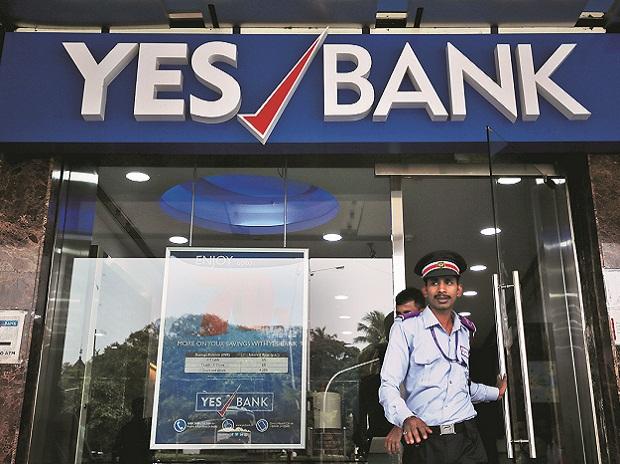
All banking services to resume from evening; ATMs have cash: YES Bank

On March 5, the RBI had imposed a moratorium on YES Bank, restricting withdrawals to Rs 50,000 per depositor till April 3 in view of its poor financial health due to bad loans
YES Bank
YES Bank, on which the Reserve Bank of India (RBI) had imposed a moratorium, will resume normal operations from 6 pm on Wednesday. On Tuesday, administrator of the troubled private sector lender, Prashant Kumar, said that YES Bank will resume normal operations from 6 pm on March 18 and it has no liquidity problem. “Our customers will be able to enjoy all the services available before the moratorium. There is absolutely no issue on the liquidity side from YES Bank. All our ATMs are full of cash,” he had said at a press conference. Kumar had also said there is no need to worry about deposits. “Complete normalcy will be restored. All branches and employees are ready. If there is too much rush of depositors, the bank branches will remain open on weekends as well,” he had added.
On March 5, the RBI had imposed a moratorium on YES Bank, restricting withdrawals to Rs 50,000 per depositor till April 3 in view of its poor financial health due to bad loans. “Only one-third of our customers have withdrawn Rs 50,000 during the moratorium. The customer feedback is that they do not feel the need to withdraw money from the bank. We have had higher inflows than outflows in the last few days,” Kumar had stated.
At the same press meet, State Bank of India (SBI) chairman Rajnish Kumar said that the lender is free to sell shares but assured that not one share will be sold in the next three years.”We are not against retail shareholders. We are all here to protect them,” he had said.The SBI has announced an investment of Rs 7,250 crore in YES Bank through the acquisition of 725 crore shares at Rs 10 each. SBI’s shareholding in YES Bank after reconstruction will be within the 49 per cent limit.

Sunday, 23 February 2020

Australia govt says climate change targets can’t risk economy, jobs

Australia may continue to be an exporter of thermal coal in 2050, according to Anthony Albanese, leader of the main opposition Labour Party, that’s targeting net zero emissions by that date.
australia
Australia’s government will work to set new long-term plans on reducing greenhouse gas emissions ahead of a key global summit this year, though signaled it won’t pursue policies that pose risks to jobs or growth. Prime Minister Scott Morrison, who has faced pressure over his climate and energy strategy in the wake of Australia’s deadly wildfires, has criticized opponents for pledging to target net zero emissions by 2050 without detailing how they’ll safeguard economic expansion.
“If we make the wrong decisions, not only would we be harming the Australian economy, harming Australian workers, we would also be harming the global environment,” Finance Minister Mathias Cormann said in an interview on Sky News. Australia’s plans will need to account for the production of materials including liquefied natural gas, which is exported to markets like China or Japan and typically displaces more polluting energy sources, Cormann said. “We know that that helps reduce global emissions by more,” he said.
Following the fires, Morrison, who won a national election in May and won’t face a new poll until late 2022, has appeared to signal he’ll resist any quick shift to more extensive cuts to carbon emissions. His Liberal-National coalition government also remains cautious over the impact on a coal sector that employs about 50,000 workers, according to the Minerals Council of Australia, an industry group…

Wednesday, 19 February 2020

Former PM Manmohan Singh says Modi govt doesn’t acknowledge slowdown

Singh said while an annual gross domestic product growth of 8 per cent was achievable; it required a rethinking about the role of fiscal policy, and bolder tax reforms.
Former prime minister Manmohan Singh
Former prime minister Manmohan Singh on Wednesday slammed the economic policies of his successor Narendra Modi, saying the government was not acknowledging that there was a slowdown, and that there was a need to rethink the reform process afresh to deal with the country’s challenges.
“Today we have a government which does not acknowledge that there is a word as slowdown. And I feel this is not good for our economy. If you do not recognise the problems that you face, you are not likely to find credible answers to take corrective actions measures and that is the real danger,” Manmohan Singh said at the launch of a book authored by former planning commission deputy chairman Montek Singh Ahluwalia. “And therefore, as Montek has also pointed out in his book, the (target of) $5-trillion economy by 2024-25 is wishful thinking. Also, there’s no reason to expect that farmers’ incomes can be doubled in three year period.”
Singh said while an annual gross domestic product growth of 8 per cent was achievable; it required a rethinking about the role of fiscal policy, and bolder tax reforms. “As Montek says (in the book) if you look at the real fiscal picture, the real fiscal deficit of states and Centre combined is as high as 9 per cent and that’s not good for satisfying our ambition of having a dynamic economy, growing at the rate of 8-10 per cent,” Singh said…

Monday, 30 December 2019

Govt may breach fiscal deficit target; need for stimulus rises: Report

The government has set a 3.3 per cent fiscal deficit target for the current fiscal.
Govt may breach fiscal deficit target in FY20; expenditure to go up: Report
The government might breach the fiscal deficit target this financial year amid drop in the revenue mobilisation and expected additional expenditure by the government, says a report. According to Dun & Bradstreet’s Economy Forecast, the need for fiscal stimulus has increased even as the government finances remain “strained”.
“We expect that the drop in the revenue mobilisation of the government and likelihood of additional expenditure by the government might breach the fiscal deficit target in FY20,” Dun & Bradstreet India Chief Economist Arun Singh said. The government has set a 3.3 per cent fiscal deficit target for the current fiscal.
Singh further added that given the resources constraints, increase in fiscal deficit might lead to crowding out of private investments. According to the report, corporate liabilities are already higher. The balance-sheets of corporates, government, banks and households remain constrained or weak and revenue collection will play an important role.
“Revenue collection will thus be important for the government to implement a fiscal stimulus. To do that, tax reforms are needed. GST should be simplified further, and direct tax collections should increase,” Singh said. As per the report, the index of industrial production is likely to remain subdued in the short to medium term amid slowdown in demand, lackluster investment and weak exports….

Monday, 2 December 2019

$14 bn loans to builders under severe stress, may result in default: Report

“Over 62% or about $58 billion of the total loan advances ($93 billion) to Indian real estate by banks and NBFCs/HFCs is currently completely stress-free,” Anarock said in a statement
Brookfield in talks with Aditya Birla to buy its Real Estate Fund 1 assets
Loans worth $14 billion provided to real estate firms by banks, NBFCs and housing finance companies (HFCs) are under “severe stress” and facing issues of debt servicing, according to a report.
“Over 62% or about $58 billion of the total loan advances ($93 billion) to Indian real estate by banks and NBFCs/HFCs is currently completely stress-free,” Anarock said in a statement. Another 22% (about $21 billion) is under some pressure but can potentially be resolved. The stress on this segment is largely on recovery of interest and not on principal amount.
“$14 billion (or merely 16 per cent) of overall lending to Indian real estate is under ‘severe’ stress, meaning that there has been high leveraging by the concerned developers who have either limited or extremely poor visibility of debt servicing due to a combination of factors,” the consultant said.
HFCs accounted for the largest share of total realty loans equalling 38 per cent, followed by banks at nearly 34 per cent share while NBFCs (non-banking financial companies) have 28 per cent share (including loans given under trusteeships).
“Of these, banks and HFCs are much better placed with 70 per cent and 65 per cent of their lending book in a comfortable position. However, it also comes as no surprise that nearly 58 per cent of the total NBFC (non-banking financial company) lending is on a watchlist,” it said…Read More

Wednesday, 16 October 2019

A long list of economic problems await Hong Kong. How they can be fixed

Many in the city question the political will of Hong Kong’s government officials to take bold, aggressive action in a range of policy areas
Carrie Lam. Photo: Bloomberg
Past Hong Kong’s present political strife, a considerable rundown of monetary issues anticipate the city’s present and future rulers. Carrie Lam, Hong Kong’s CEO, on Wednesday uncovered in excess of 220 activities in lodging, land supply and vocation support, in an acknowledgment that monetary arrangement has a task to carry out in lightening a portion of the city’s disappointments. She additionally recognized that Hong Kong entered a downturn in the second from last quarter and cautioned of a “phenomenal” financial test.
That is a beginning, however onlookers state the long-standing development model – as a low-charge, low-guideline entrepot for money and exchange – has turned into a component in the political turmoil, as opposed to the fundamental arrangement.
Immense salary imbalance, markets constrained by insiders and a spiraling average cost for basic items – particularly of lodging – are at this point signs of Hong Kong‘s image of private enterprise, close by the “world’s freest economy” name perpetually granted by The Heritage Foundation, a preservationist inclining U.S. arrangement gathering.
From utilizing the city’s monetary capability to breaking the strength of aggregates and increasing the expectation of open offices, there exists a scope of proposition from business analysts and different specialists for a path forward. In certain regions, the administration is now pushing forward. In others, a principal move – and the political accord to make it – is required....

Thursday, 22 August 2019

Now, you can allow up to Rs 2,000 of recurring payments via digital wallets


RBI has permitted processing of e-mandate on credit and debit cards, besides prepaid payment instruments, including wallets like Paytm, PhonePe and Amazon Pay for recurring payments of up to Rs 2,000
credit card
The Reserve Bank on Wednesday permitted processing of e-mandate on credit and debit cards for recurring transactions (merchant payments) with a cap of Rs 2,000. The RBI has been receiving requests from industry stakeholders to allow processing of e-mandate on cards for recurring transactions with Additional Factor of Authentication (AFA) during e-mandate registration and first transaction.
“…it has been decided to permit processing of e-mandate on cards for recurring transactions (merchant payments) with AFA during e-mandate registration, modification and revocation, as also for the first transaction, and simple / automatic subsequent successive transactions,” the Resrve Bank of India said in a circular.
This, the RBI said, has been done keeping in view the changing payment needs and the requirement to balance the safety and security of card transactions with customer convenience. The maximum permissible limit for a transaction under the e-mandate facility on cards would be Rs 2,000.
The RBI added that no charges should be levied or recovered from the cardholder for availing the e-mandate facility on cards for recurring transactions. The direction is applicable for transactions performed using all types of cards debit, credit and Prepaid Payment Instruments (PPIs), including wallets.

Thursday, 6 June 2019

PM Modi to head two new Cabinet committees on economy, employment

Apart from Modi, Home Minister Amit Shah, finance minister Nirmala Sitharaman and Commerce and Railways Minister Piyush Goyal are members of both the committees
File photo of Narendra Modi taking oath in 2014.
To address the challenges of slowing economic growth and inadequate job creation, Prime Minister Narendra Modi on Wednesday constituted two Cabinet committees — one on investment and growth and another on employment and skill development. The PM will chair both the committees. A formal notification from the Cabinet Secretariat is expected on Thursday.
Apart from Modi, Home Minister Amit Shah, finance minister Nirmala Sitharaman and Commerce and Railways Minister Piyush Goyal are members of both the committees. The fifth member of the Cabinet committee on investment and growth is Road Transport and Highways Minister Nitin Gadkari.
PM Modi to head two new Cabinet committees on economy, unemployment The government of India’s (transaction of business) rules, 1961, empower the Prime Minister to set up, add, reduce or modify the numbers and functions of cabinet committees. The PM did not create any new cabinet committee in his first term, but did scrap four by a cabinet secretariat order of June 26, 2014. Currently, there are eight Cabinet committees. These are on appointments, accommodation, security, economic affairs, investment, parliamentary affairs, political affairs and skill development. The last new cabinet committee — on skill development — was created by the Congress-led UPA government on June 10, 2013.
The four cabinet committees Modi scrapped in his first term as PM, on June 26, 2014, were those on management of natural calamities, prices, WTO matters and Unique Identification Authority of India. Some of their functions were subsumed in the existing cabinet committees, particularly the cabinet committee on economic affairs. Gadkari, who is also the cabinet minister of Micro, Small and Medium Enterprises (MSMEs) — a key ministry in the Bharatiya Janata Party (BJP)’s 2019 Lok Sabha poll manifesto to boost job growth — is not in the 10-member Cabinet Committee on Employment and Skill Development formed on Wednesday.

Monday, 28 January 2019

Rs 177-cr GST fraud: Man arrested in Gujarat for issuing fake tax invoices

The accused allegedly obtained GST registration, GST identity cards, login-password, SIM cards, bank accounts and online passwords in the name of dummy owners
Photo: Shutterstock
Current Affairs: A man has been arrested for allegedly issuing fake invoices to claim Rs 177.64-crore input tax credit, the Central GST department said Saturday. The man, identified as Ehsas Ali Saiyad, a resident of Vadodara, was the mastermind of a scam involving issuing of fake invoices, said the office of the Central GST and Central Excise Commissionerate in a release in Gandhinagar.The 29-year-old allegedly floated 66 fake companies with as many dummy owners in whose name he issued tax invoices to claim input tax credit (ITC), it said.
The accused obtained GST registration, GST identity cards, login-password, SIM cards, bank accounts and online passwords in the name of these dummy owners, said the commissionerate. “The accused would issue fake bills in the name of the entities created by him. He issued tax invoice of taxable value of Rs 1,210 crore to claim input tax credit of Rs 177.64 crore,” it said.
He was arrested under provisions of the CGST Act and further investigation was on, said the release.Under Goods and Services Tax, input credit is the tax benefit manufacturers get for the GST they pay on purchase of goods. Unscrupulous elements use fake bills to claim higher ITC.
Contain Source by Business Standard or BS

Tuesday, 25 September 2018

Next cold war coming? Depends on how China chooses to respond to US tariffs

Could the US and China really be on the verge of the kind of geopolitical stalemate that dominated the second half of the 20th century?
US China trade war, US , China, tariff hike, donald trump, Chinese goods, wto, world trade organisation,  US tariff hikes, global trade war, American goods
President Donald Trump is making good on his pledge to escalate the trade war with China by imposing tariffs on US$200 billion of Chinese goods. The Chinese government, for its part, is already retaliating with new taxes on $60 billion of American imports.
If you’re curious why China’s sanctions don’t match Trump’s, there’s an easy explanation. As a number of commentators have correctly pointed out, Beijing is running out of American products to target. Americans bought $375 billion more stuff from China than the Chinese bought from the US last year, which means Trump has a lot more to punish.| International News 
That’s because China has many other ways to retaliate, such as dumping its considerable holdings of US debt or making it harder for Trump to get a nuclear deal with North Korea. In these and other areas, Beijing has enormous leverage. This has led some to suggest that the trade war may soon turn into a “new cold war.”
Could the US and China really be on the verge of the kind of geopolitical stalemate that dominated the second half of the 20th century? Much will depend on how China responds to the latest tariffs. I believe that this response could take four forms.
Cooler (BS) heads
First, China could choose to de-escalate the confrontation. This could be done quickly by negotiating some resolution with the Trump administration – though the president’s terms for ending the trade war remain unclear.
Alternatively, China could let the conflict simmer by keeping the fight in the trade arena, allowing it to continue to retaliate while appearing “reasonable.” This approach would avoid any major embarrassment for China while kicking the dispute down the road in the hope that the November elections, or the 2020 presidential elections, will soften American policy. In fact, China has already said that it won’t negotiate until after the midterms.

Keep Reading = Business Standard

Friday, 31 August 2018

Rupee slumps to 71-mark first time ever, drops 26 paise against US dollar

Forex dealers said besides robust month-end demand for the American currency from oil importers, dollar's strength against its rival currencies on expectations of rising interest rates amid lingering

 rupee falls


The rupee slumped to a fresh record low of 71 against the dollar for the first time ever by falling 26 paise on persistent demand for the US currency amid rising crude prices.

At the Interbank Foreign Exchange (Forex) market, the local currency opened lower at 70.95 a dollar and slipped further to hit its lifetime low of 71 from its previous close of 70.74.

Forex dealers said besides robust month-end demand for the American currency from oil importers, dollar's strength against its rival currencies on expectations of rising interest rates amid lingering Sino-US trade tensions, weighed on the domestic currency.

On Thursday, the rupee slid further by 15 paise to close at a fresh lifetime low of 70.74 to the dollar due to strong demand for the greenback from oil importers and surging crude oil prices stoking inflation fears.

Growing fears about rising inflation in amid high global crude oil prices and consistent outflow of foreign funds from the domestic equity market also weighed on the domestic currency.

Read More : BS

Wednesday, 29 August 2018

99.3% of demonetised notes are back; Rs 15.31 trillion returned, says RBI


500- and 1000-rupee notes worth Rs 15.41 trillion were demonetised


Demonetisation: Flawed in planning, not in principle


Demonetisation : As many as 99.3 per cent of the old 500 and 1,000 rupee notes, that was banned overnight in November 2016, have been returned, the Reserve Bank of India said in its annual report.

Of the Rs 15.41 trillion worth 500 and 1,000 rupee notes in circulation before November 8, 2016, notes worth Rs 15.31 trillion have been returned.

The "humungous task of processing and verification of specified bank notes (SBNs) was successfully achieved," it said.

The SBNs received were verified, counted and processed in the sophisticated high-speed currency verification and processing system (CVPS) for accuracy and genuineness and then shredded, it added.

SBNs refer to the demonetised old 500 and 1,000 rupee.

RBI said the processing of SBNs has since been completed. "The total SBNs returned from circulation is Rs 15,310.73 billion".

News Source : BS

Monday, 11 September 2017

Rising food cost may push August retail inflation to 5-month high: Reuters poll

 But rising price to complicate RBI's policy path as economic growth cooled to a three-year low in Q2
 vegetables, inflation, mandi

India's retail inflation is expected to have picked up to a five-month high in August, largely driven by higher food costs, a Reuters poll showed, easing pressure on the Reserve Bank of India (RBI) to cut interest rates again after poor growth data.

Consumer prices were forecast up at 3.20 per cent in August from a year ago, jumping from July's 2.36 per cent, according to the poll taken September 5-8 of nearly 40 economists.
Forecasts for the data, scheduled to be released on September 12 at 1200 GMT, ranged from 2.50 per cent to 3.55 per cent.(economy news)

If the consensus is met, it would be the highest since April, but below the RBI's medium-term target of 4.0 per cent for the tenth consecutive month.

Tushar Arora, economist at HDFC Bank, said food prices continue to rise in August, mainly driven up by "unfavorable weather conditions and supply chain constraints."

Food and beverage inflation, which accounts for nearly 50 per cent of the consumer price index basket was expected to have rebounded in August after prices fell in the three previous months .
Monsoon rains this year have caused damages to crops of some perishable food items and hindered movement of goods.

The resulting hit from a shortage of production and supply of vegetables such as tomatoes and onions - which are basic ingredients in Indian kitchens - suggests inflation will be elevated in coming months....READ MORE

Tuesday, 8 August 2017

US may lose Indian talent, competitive edge due to H-1B clampdown: Report


The brain-gain to India under H-1B outweighs any brain-drain, both countries' economies                                            have gained                                          


Image via Shutterstock    


Clampdown on H-1B programme will make it difficult for the US IT sector to attract open talent from countries like India and America might lose its competitive edge, a top American think-tank has said.

As the Trump administration is carrying out a review of the non-immigrant visas, the Center for Global Development (CGD) in a report said that H-1B visa, the most sought after by Indian IT professionals, is beneficial for both India and the US.

"It is really important to make sure that the I-T sectors from both countries are allowed to attract the right kind of people, because they really allow for innovation and growth in both the countries," Gaurav Khanna, fellow at the CGD and co- author of the research paper, said.

The report titled 'The IT Boom and Other Unintended Consequences of Chasing the American Dream' takes an in-depth look at how the H-1B visa programme affects both the US and Indian economies.

"Both the economies have really benefited from the H-1B programme," he told PTI.


"What our paper is really trying to stress, is that on average the US is better off because of the H-1B programme. So clamping down on the H-1B programme will basically not allow the US IT sector to attract the open talent from places like India. The US might then lose its competitive edge in IT production," he warned, adding that IT companies might move to countries like Canada in the event of large scale clampdown on H-1B visas.


Khanna said the research has shown that India has been a beneficiary of brain-gain, rather than brain drain due to the visa programme....(READ MORE)


Demonetisation effect: Advance tax collections up 42%, returns filed up 25%

Returns filed by this date stood at 28.3 mn against 22.7 mn in corresponding period of 2016-17

Demonetisation effect: Advance tax collections up 42%, returns filed up 25%


The effect of demonetisation was clearly seen in the growth of returns and taxes paid by individuals by 5, the extended deadline for filing income tax returns.

The number of returns filed by this date stood at 28.3 million against 22.7 million during the corresponding period 2016-2017, registering an increase of 24.7 per cent. The growth in the same period last year was 9.9 per cent.

The growth in returns filed by individuals is 25.3 per cent with 27.9 million having been received up to August five against 22.3 million in the corresponding period of FY 2016-2017.(economy news)

"This clearly shows that a substantial number of new tax payers have been brought into the tax net subsequent to demonetisation," the Central Board of Direct Taxes (CBDT) said in a statement here.

The effect of demonetisation is also clearly visible in the growth in direct tax collections.

Advance tax collections of personal income tax showed a growth of about 41.79 per cent as on August 5 over the corresponding period in FY 2016-2017. Personal income tax under self-assessment tax (SAT) grew at 34.25 per cent over the corresponding period in FY 2016-2017.

"The figures amply demonstrate the positive results of the Government's commitment to fighting the menace of black money. CBDT is committed in its resolve to eradicate tax evasion in a non-intrusive manner and widening of tax base," the statement said.


Thursday, 3 August 2017

Chocolate mithais to attract 5% GST, Centre clarifies

Rates for kulfi, dosa batter, portable toilets spelt out

5b8da3743f591946c360a10ffc3154c9

Sandesh, with or without chocolate, will be taxed at 5 per cent, the government clarified on Thursday along with the goods and services tax (GST) rates for other items, including rakhis, idli-dosa batter and kulfi.
However, ambiguity persisted over whether the tax rate for plastic furniture would be 28 per cent as furniture or 18 per cent as plastic items. The sharp jump in tax on car leasing is also expected to be taken up in the GST Council meeting on Saturday.
“Sandesh, whether or not containing chocolate, will attract 5 per cent GST,” the government clarified on Thursday.

#Economynews 

The clarification comes amid reports that sweet shops have discontinued chocolate barfis and chocolate sandesh. The GST rate on chocolates is 28 per cent and Indian sweets are taxed at 5 per cent. Although milk is exempt in the GST, khoya, or concentrated milk, will attract 5 per cent GST.


1501792368-024
“Sweet shops in Kolkata were in panic over different GST rates based on the types of sweets and ingredients. Now the government has clarified that the GST rate on all Indian sweets is 5 per cent,” said Archit Gupta, founder and chief executive officer of ClearTax.

The GST was implemented on July 1 and subsumed most indirect taxes such as excise duty, service tax and value-added tax.
The government also clarified that kulfi — the Indian frozen dessert — would attract 18 per cent GST, like ice-cream. Besides, idli-dosa batter would attract 18 per cent GST under the food mixes category, it said.


Thursday, 16 March 2017

Ian, Greg Chappell call on Adani to abandon coal mine project in Australia

The letter calls on Adani to invest in renewables instead

1468358837-8158 

#LATEST | Cricket legends Ian and Greg Chappell are among 90 prominent Australians who have signed an open letter calling on Indian energy giant Adani to abandon its controversial coal mine project in Queensland, warning it could damage bilateral ties and even affect sporting links.
The 21.7 billion dollar Carmichael coal mine project, one of the world's largest, to start construction this year after being given the green light by the federal and Queensland state governments.
The project involves dredging 1.1 million cubic metres of spoil near the Great Barrier Reef Marine Park, which will then be disposed off on land.
The letter addressed to Gautam Adani, the company's founder and chairman, cites public opposition, risks to miners' health, climate change and potential impact on the Great Barrier Reef as reasons not to proceed.
"Cricket has a bit to do with the feeling between India and Australia," said Ian Chappell.
"The thought that this [mine] could affect the relationship, hopefully that'll get through."
ALSO READ : 

Rupee hits one-year high of 65.4: Where is it headed?

No stay on Jio free offer; telecom tribunal asks Trai to re-examine issue

Back to School offer: Dell provides laptops at discount for students

The letter calls on Adani to invest in renewables instead, and concludes that it would be a "great shame" were the mine to "damage the image of India in Australia".
Besides the former Australian Test cricket captains, authors Richard Flanagan and Tim Winton, Telstra chair John Mullen and investment banker Mark Burrows have also signed the letter.
The letter is expected to be delivered to Adani's Gujarat headquarters by an Australian community delegation currently visiting India.

14th BRICS summit to review current global issues, reach key agreements

  At the   14th BRICS summit   which is to be hosted by China in a virtual mode on 23-24 June, the member nations will review the current gl...