Showing posts with label TECHNOLOGY. Show all posts

Wednesday, 25 May 2022

Meta onboards Kalaari Capital to scale early-stage startups in India

 Mark Zuckerberg’s Meta announced a partnership with VC fund Kalaari Capital to upskill and scale young, invested businesses in India by providing them with timely business skilling support.

Mark Zuckerberg‘s Meta (formerly Facebook) on Wednesday announced a partnership with VC fund Kalaari Capital to upskill and scale young, invested businesses in India by providing them with timely business skilling support. The partnership is a part of Meta’s ‘VC Brand Incubator Initiative’ for the growth of micro, small and medium businesses in the country.

“As part of this initiative, Meta has partnered with India’s largest VC funds. We are thrilled to now partner with Kalaari Capital that has been instrumental in the growth journey of many startups,” said Ajit Mohan, VP and MD at Meta in India. Kalaari Capital is an early-stage, technology-focused venture capital firm based in Bengaluru. “As startups scale, they need to leverage several tools and platforms like Meta to support their growth,” said Vani Kola, Founder and Managing Director, Kalaari Capital.

Tuesday, 21 December 2021

World could be entering worst part of pandemic: Bill Gates on Omicron surge

 Microsoft co-founder Bill Gates has warned against the rising Omicron cases around the world, saying that the world could be entering the worst part of the pandemic

Bill Gates

Microsoft co-founder Bill Gates has warned against the rising Omicron cases around the world, saying that the world could be entering the worst part of the pandemic as the variant will result in the “worst surge” the world has seen so far.

In a series of tweets, Bill Gates said he has cancelled most of his holiday plans after his close friends have been infected with the Omicron variant. “Omicron is spreading faster than any virus in history. It will soon be in every country in the world,” he said. Noting that the “big unknown” is how lethal the variant is, Gates claimed: “Even if it’s only half as severe as delta, it will be the worst surge we have seen so far because it’s so infectious.”

He advised people to take booster shots of the COVID-19 vaccine, saying it gives the best protection. “In the meantime, we all have to look out for each other, especially the most vulnerable, whether they live down the street or in another country. That means wearing masks, avoiding big indoor gatherings, and getting vaccinated. Getting a booster gives the best protection,” he tweeted….

Tuesday, 28 July 2020

Covid masks thwarting facial recognition tech, will investigate: US agency

Even the best commercial facial recognition systems have error rates as high as 50% when trying to identify masked faces, says study
Frankfurt:  A woman working for the regional public transport company offers face masks in the main train station in Frankfurt, Germany, Monday, April 27, 2020. AP/PTI
Technology News: Having a tough time recognising your neighbours behind their pandemic masks? Computers are finding it more difficult, too. A preliminary study published by a US agency on Monday found that even the best commercial facial recognition systems have error rates as high as 50% when trying to identify masked faces. The mask problem is why Apple earlier this year made it easier for iPhone owners to unlock their phones without Face ID. It could also be thwarting attempts by authorities to identify individual people at Black Lives Matter protests and other gatherings.
The National Institute of Standards and Technology says it is launching an investigation to better understand how facial recognition performs on covered faces. Its preliminary study examined only those algorithms created before the pandemic, but its next step is to look at how accuracy could improve as commercial providers adapt their technology to an era when so many people are wearing masks.


NIST, which is a part of the Commerce Department, is working with the US Customs and Border Protection and the Department of Homeland Security’s science office to study the problem. It tested the software by drawing digital masks onto the faces in a trove of border crossing photographs, and then compared those photos against another database of unmasked people seeking visas and other immigration benefits. The agency says it scanned 6.2 million images of about 1 million people using 89 algorithms supplied by tech firms and academic labs.

Tuesday, 15 October 2019

Spectrum price reform in the works: Telecom minister Ravi Shankar Prasad

Telecom operators, battling financial stress, have for long voiced their protest against high base price of 5G spectrum
Ravi Shankar Prasad, Aditya Birla Group Chairman Kumar Mangalam Birla,Rakesh Bharti Mittal, Bharti Enterprises, India Mobile Congress 2019
Inaugurating the annual India Mobile Congress on Monday, Telecom Minister Ravi Shankar Prasad said the Centre was considering “pricing reforms in the sector”, possibly hinting at making the upcoming spectrum auction, especially in the 5G band, more attractive to the industry. Telecom operators, battling financial stress, have for long voiced their protest against the high base price of 5G spectrum. Most telcos are planning not to bid for 5G unless the government reviews the price.
The three-day telecom summit, which got off to a slow start, was marked by the absence of industry majors including Bharti’s Sunil Mittal and Reliance’s Mukesh Ambani. The two business rivals had shared the dais at the event last year and had turned heads with their contrasting comments on the telecom sector.
Prasad, while addressing stakeholders, said the government was in the process of taking reform steps in spectrum pricing as well, cheering the industry. Signalling a need for change, Vodafone Idea Chairman Kumar Mangalam Birla said, “We seek an enabling regulatory environment so that we can make the necessary investment in this sector.”
Bharti Enterprises Co-Vice Chairman and Managing Director Rakesh Bharti Mittal pointed out that the industry wanted spectrum at the right price. “We need large quantities of spectrum at the right price as the prices set by Trai (Telecom Regulatory Authortiy of India) are seven times higher than the global prices,” Mittal said…

Wednesday, 19 June 2019

US ban on Huawei presents Nokia, Ericsson with a huge opportunity

The Chinese supplier’s supremacy is being challenged by its Nordic rivals
Huawei
In the course of recent decades, China’s Huawei Technologies Co. has come to rule the worldwide telecom hardware showcase, winning contracts with a blend of refined innovation and alluring costs. Its ascent crushed Europe’s Nokia Oyj and Ericsson AB, which reacted by eliminating positions and making acquisitions. Presently, with Huawei at the focal point of a US-China exchange war, the tide is changing.
Nokia and Ericsson—savage opponents themselves—have as of late wrested outstanding long haul bargains from Huawei to manufacture 5G remote systems, to empower everything from self-sufficient autos to robot medical procedure. Investigators state more could come their way as Huawei ponders a U.S. fare restriction and limitations from different governments worried that its gear could empower Chinese secret activities.
“Huawei will, for a long time to come, face a more extensive haze of doubt,” said John Butler, an investigator at Bloomberg Intelligence in New York. “Nokia and Ericsson are very much situated to profit.” In May, the European organizations both won 5G contracts from SoftBank Group Corp’s. Japanese telecom unit, supplanting Huawei and Chinese companion ZTE Corp. Ericsson marked a comparative settlement in March with Denmark’s greatest telephone organization, TDC A/S, which had worked with Huawei since 2013 to modernize and deal with its system.
Different bearers, expecting government controls on Huawei, have begun expelling its gear from delicate pieces of their frameworks. BT Group Plc is removing Huawei from its system center, and Vodafone Group Plc has suspended center gear buys from Huawei for its European systems. Deutsche Telekom AG, which has Huawei all through its 4G framework, is reconsidering its buying procedure.
As many telephone organizations—incorporating those in Canada, Germany and France—plan to pick 5G providers in the coming months,Cisco Systems Inc. andSamsung Electronics Co. are likewise competing for arrangements. Be that as it may, the key recipients of Huawei’s challenges are probably going to be the two Europeans, which contend straightforwardly with the Chinese organization in providing radio-get to arrange gear.

Monday, 13 August 2018

Pocophone brand is Xiaomi’s answer to OnePlus, Samsung in premium segment

The Poco brand is expected to add a touch of premium to the portfolio of parent Xiaomi, known mostly for its budget and midrange smartphones
Xiaomi, Poco, Pocophone F1
Poco, the newly announced sub-brand of Chinese smartphone manufacturer Xiaomi, is gearing up to make its India debut soon with the launch of a smartphone, likely to be named the Pocophone F1. The Poco brand is expected to add a touch of premium to the portfolio of parent Xiaomi, known mostly for its budget and midrange smartphones.
In a recent media interaction, Xiaomi India Managing Director Manu Kumar Jain said that the company had been working on a premium smartphone, which would not be from the company’s existing portfolio but a new offering designed specifically for Indian consumers. The phone is said to have premium looks, features and specifications. However, as informed by Jain, it will be a device for masses, and therefore, a reasonable price tag.
Jai Mani, head of products at Xiaomi, and the mind behind Poco, recently posted a tweet detailing information about the new brand. According to Mani, Poco is a project initiated with support from the Xiaomi team to make powerful smartphones. It is a small outfit that will create premium products and use Xiaomi’s resources such as supply chain, operations and service infrastructure to deliver the final products.
He added, “the pace of innovation in smartphone industry has slowed down, while prices are creeping up with flagship smartphones now past the $1000 mark. We set out to build something to buck this trend.”

Article Source : BS

Tuesday, 24 July 2018

Honor 9N India launch today: Watch live stream, know expected price, specs

The Honor 9N would sport an optimised notch-based screen and 2.5D curved glass design with 12-layer Nano coating on the back for a mirror-like effect
Honor 9N, Honor 9i
Honor, the online subsidiary of Chinese smartphone manufacturer Huawei, is all set to launch the Honor 9N in India on July 24. The Flipkart-exclusive smartphone would sport an optimised notch-based screen and 2.5D curved glass design with 12-layer Nano coating on the back for a mirror-like effect.
The Honor 9N is reported to be a renamed version of the Honor 9i, launched in China some time ago. In terms of specifications and features, the Honor 9N is expected to sport a 5.84-inch fullHD+ notch-based screen stretched in a 19:9 aspect ratio. The phone would be powered by Kirin 659 system-on-chip (SoC), paired with 4 GB of RAM and 64 GB of internal storage. This is the same processor that has been used in most of Honor’s budget smartphones, including the Honor 9 Lite, Honor 7X and Honor 9i (Indian version).
However, the Honor 9N processor might support Huawei’s recently announced GPU Turbo technology, which the company claims to boost graphic performance by up to 60 per cent and processor efficiency by 30 per cent.

Article Source : BS


Monday, 16 July 2018

Online frauds: Ten tips to protect yourself from the ever-evolving threat

As we become increasingly dependent on online financial transactions, here are a few ways to help you avoid losing your hard-earned money to fraudsters
Hacking
Economic Affairs Secretary Subhash Chandra Garg recently said that India’s digital economy was expected to touch the $1-trillion mark by 2022. As the scope of the country’s digital economy widens – as with every technological advancement – the increasing use of digital transactions also brings the high risk of online frauds.
Unsurprisingly, therefore, as a recently released survey revealed, nearly one in four Indians has directly experienced fraud at least once while transacting online. The report suggested that greater digital convenience was linked to higher fraud exposure – presenting a problem for both consumers and businesses.
Here are a few tips that could help you make safe transactions online:
1. Use smart apps: As reported by Business Standard a few months earlier, fintech players are coming up with counter-measures to prevent online and banking frauds. There are several apps available now that allow people to enable and disable their debit and credit card usage. Apart from this, these apps also provides other safety features, such as:
* Blocking transactions above a certain value
* Restricting channels where the card could be used – e-commerce websites, ATMs, POS terminals, or foreign transactions, among others
2. Block you card immediately if you lose it: In case your card is stolen or misplaced, you should immediately get the card blocked by contacting your bank. The fastest way to contact your bank is through its mobile banking app.
3. Be vigilant when using the card: Experts advise that you should never let your card out of sight when using it at a shop or restaurant. Have it swiped in your presence, as there is always the risk of your data being stolen using a skimmer.
4. Enable international transaction option only when abroad: Two-factor authentication is not required abroad, making it easier for fraudsters to misuse your card. Once a hacker has obtained your card details, such as the name, card number, expiry date and CVV, he can misuse it easily.
Therefore, it is advised that you disable the international transaction option on your card when you are in the country. This can be done through the bank’s net banking channel.
5. Avoid paying online on little-known websites: However professional and genuine an e-commerce website might look, one should avoid making online payments on little-known ones. “Shoppers need to be diligent while shopping online on websites that are not established. The simplest way to check their credentials is to do a generic search by typing the name of the website. If others have been tricked, you will come across buyers’ grievances,” Prashant Mali, an advocate and international cyber law and cyber security expert, told Business Standard.(Article Source : BS)

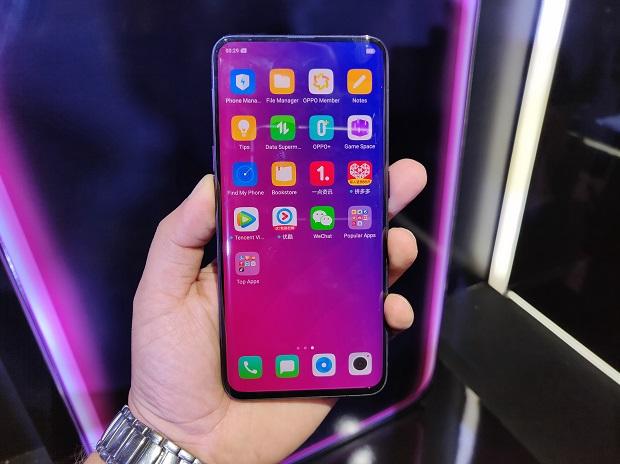
Oppo Find X earns people’s votes as innovative smartphone: Know poll result

In a poll on the day of launch we asked for our readers for their opinion about the phone, and they said they saw the Oppo Find X as an innovative smartphone and not a marketing gimmick”

1531398648-4157
Chinese smartphone manufacturer Oppo on July 12 launched the Oppo Find X in India. The phone is one of its kind and comes with a motorised mechanical pop-up module, which hosts front camera, earpiece, sensors on the front and rear camera, along with LED flash on the back. In a poll run on the day of launch, we asked for our readers to give their opinion about the phone, and their mandate has been in favour of the Oppo Find X. They see the device as an innovative smartphone rather than a marketing gimmick.
The Find X sports a new design in comparison to the current-generation flagship smartphones. The phone features a curved arc glass-based design with a 6.42-inch AMOLED screen in 19.5:9 aspect ratio on the front, stretchingt from edge to edge on three sides, and leaving a negligible chin at the bottom. The all-screen design is achieved by moving the earpiece, selfie camera and sensors to the pop-up mechanic module (stealth design), which comes out from the top. The module also sports the dual camera set-up on its back, along with LED flash, that leaves the phone’s back with only the Oppo logo and the Find X moniker.
Interestingly, there is no fingerprint scanner and the phone relies on the front camera as a biometric tool to unlock the phone. (Click Here : Technology News)
The front camera, along with a host of sensors such as a flood illuminator, an infrared camera, a ranging sensor and a dot projector, uses Oppo’s 3D structured light face recognition technology to unlock the phone. According to the company’s claim, the sensors used in the phone project over 15,000 recognition spots on a human face, thereby building a complete 3D facial model of the user to accurately recognise the face and unlock the device. This is a somewhat similar set-up first seen in the Apple iPhone X. However, Oppo managed to implement it without using a notch-based screen.
In terms of camera, the Oppo Find X sports a 25-megapixel selfie sensor and 16MP+20MP dual lenses on the back. Both the front and rear cameras use AI technology for scene selection and to improve the output. The cameras also feature a 3D lighting technique for portraits with background bokeh effect.
Oppo Find X software
The phone features gesture-based ColorOS 5.1 operating system, which is a custom ROM built on the Google Android Oreo. The operating system allows system-wide integration of Google Assistant, which enables voice command-based operations to look up information, schedule appointments, make phone calls, play music, listen to weather forecasts and find locations.
Oppo Find X specifications
The Find X is powered by Qualcomm Snapdragon 845 SoC, paired with 8GB of RAM and 256GB of ROM. The phone is powered by a 3,730 mAH battery, which supports Oppo’s VOOC flash charging technology that, the company claims, provides up to two hours of talk time in five minutes of charging.(Source : BS)

Monday, 2 July 2018

OnePlus 6 Red edition announced at Rs 39,999; sale starts from July 16

The OnePlus 6 Red edition will be available only in 8GB RAM and 128GB internal storage configuration. It will go on sale on Amazon India starting from July 16
OnePlus 6 red edition 
Chinese smartphone manufacturer OnePlus on June 2 introduced the OnePlus 6 red colour edition. Although, the phone comes in three RAM and storage configurations – 6GB/64GB, 8GB/128GB and 8GB/256GB – the red edition will be available only in 8GB RAM and 128GB internal storage configuration. Priced at Rs 39,999, the phone will go on sale at Amazon India from July 16.
“We believe power and attitude can be both elegant and humble, and we have strived to achieve this with the OnePlus 6 Red Edition. We worked to avoid an overly bright red colour, while still capturing a sense of self-confidence and positivity. Achieving the amber-like effect took several months to refine and perfect,” said OnePlus CEO Pete Lau in a statement.
The OnePlus 6 sports a 6.28-inch 19:9 aspect ratio notch-based screen. Just like its predecessor, the phone’s screen is of AMOLED breed with fullHD+ resolution. The phone boots Android Oreo-based OxygenOS 5.1 operating system, which also supports gesture-based on-screen navigation. The phone is powered by Qualcomm Snapdragon 845 system-on-chip (SoC), which is an octacore processor paired with Adreno graphic processing unit.
In terms of imaging, the phone sports dual camera set-up on the back featuring a 16-megapixel primary sensor, paired with 20MP sensors. The primary sensor is assisted with optical image stabilisation and electronic image stabilisation. Both the sensors feature bright f/1.7 aperture for low-light photography.

Click Here : Technology News 

Wednesday, 20 June 2018

Not aware of misuse of user info by device makers, says Facebook

The company explained that the purpose of these partnerships “was not to share information but to help the partners develop Facebook-like experiences, particularly on devices and other products
 Facebook
Social networking giant Facebook on Wednesday asserted that it is not aware of “any misuse” of user information including that of Indians, arising out of its agreements with device makers and that these partnerships were limited to creating Facebook-like experiences.
Facebook’s clarifications assume significance as the US social media company had received a notice from India’s IT Ministry seeking an explanation on reports that Facebook had shared information of its users with mobile device makers. “We are not aware of any misuse of Facebook information including Indian users information,” a Facebook spokesperson said in an emailed response.=
The spokesperson was responding to specific queries on whether the company has responded to the government’s notice.
“We appreciate the government of India for giving us an opportunity to respond to the New York Times article on our device-integrated APIs- software which we launched 10 years ago to help get Facebook onto mobile devices,” the spokesperson said. The company explained that the purpose of these partnerships “was not to share information but to help the partners develop Facebook-like experiences, particularly on devices and other products where people otherwise would not have had this access”.

Read More : Technology News

Tuesday, 19 June 2018

Noise Play 2 review: Budget action camera with flagship features, tools

From 4K videos, EIS, wide-angle lens, water resistant casing to an affordable price tag of Rs 9,999, the Noise Play 2 is a great value-for-money proposition in the action camera segment
 Noise Play II
Having visited many exciting places across India, I wondered why I never kept a pictorial record of my visits from the first time I started exploring the unexplored. For action cameras, the GoPro did cross my mind. However, considering the price involved, among other factors, I chose not to go for it. Instead, I started looking for a no-frills and more affordable action camera for amateurs. It was then that I came across Noise Play 2 action camera.
An affordable price tag of Rs 9,999, optional accessory pack with waterproof casing at Rs 3,999, and the strength to record videos in ultraHD (4K) resolution are some of the reasons that went in the Noise Play 2’s favour. I would have loved to take it out on a ride to the mountains, but that will be for later. For now, here is my review of the device while running it in city conditions.
In the beginning, the Noise Play 2’s small frame and cuboidal design made me question its capability. However, soon after setting it up and pairing it with my smartphone using the Noise Play 2 app, I realised how innovative and technologically sound even such little devices could be.
The Noise Play 2 sports a 2-inch LCD touchscreen, which also doubles up as a viewfinder. The screen is good enough for changing settings and viewing saved images and videos. However, due to limited brightness and pixels, it does not do the job of a viewfinder exceptionally well. When paired with a smartphone via in-built Wi-Fi, the camera shows live feed on the smartphone’s screen, which is one way around the limitation. Interestingly, the Noise Play 2 app also allows fetching videos and photos stored in camera wirelessly, thereby easing the transfer process.
Coming to the actual utility of the camera, the Noise Play 2 takes detailed videos in good daylight conditions. The electronic image stabilisation helps reduce wobbles while recording videos, but not enough to make the footage smooth. With supplied optional accessories, mounting the camera on motorbike or helmet is easy.
Keep reading : Technology News

Amazon’s Alexa will now butler at Marriott hotels

The company said the partnership will start this summer at Marriott’s select properties and the service will be available by invitation to other hotel chains
Alexa 
Amazon.com said on Tuesday that it has partnered with Marriott International to help increase guest access to amenities with Alexa, through its voice-controlled device Echo, in an attempt to expand its presence in the hospitality industry.
Alexa for hospitality would assist in providing services ranging from ordering room service to requesting housekeeping or calling the concierge for dinner recommendations without picking up the phone.
The company said the partnership will start this summer at Marriott’s select properties and the service will be available by invitation to other hotel chains.
Several media reports had said that Marriott had tested both Apple’s Siri and Amazon’s Alexa to select what was best suited for its hotels.
Marriott did not comment specifically on Apple, but said it has “great relationships with a number of technology companies and is always open to exploring opportunities to innovate and better the guest experience.”
Amazon has never disclosed the exact sales figure for its Echo devices. However, the company in January said it sold “millions” of Amazon devices and that the Echo Dot device was the best-selling product among Prime members.
The company’s move to tie-up with hotels is another strategy to woo more users for its Echo devices.Amazon Echo owners spend an average of $1,700 a year on Amazon, more than the $1,300 Amazon Prime members are estimated to be spending a year on the e-commerce site, CNBC reported earlier this year, citing a report by Consumer Intelligence Research Partners.

Keep reading  : Technology News 

You can no longer book an Uber cab ride directly from Google Maps app

The ability to book an Uber through Maps allowed users to avoid the official Uber app

 Uber
Google has reportedly killed the ability of direct Uber ride booking from inside Google Maps without giving any reason.
The feature allowing users to book Uber rides through Google Maps was added in January last year, with which users could enter a location, identify their route, check Uber prices and request a ride without leaving the Maps app.
On one Google Maps Help page, Google simply says “you can no longer book Uber rides directly in Google Maps”, Android Police reported late on Monday.
Uber integration was pulled from Google Maps on iOS earlier than on Android, according to the report.
The ability to book an Uber through Maps allowed users to avoid the official Uber app, which has previously been criticised for its aggressive location tracking.

Click Here : Technology

Friday, 15 June 2018

Flipkart's PhonePe ties up with Ola, bets on micro-apps for growth

Through the AutoPay feature, users can link their credit or debit card for an Ola ride in the PhonePe app once, and the ride-fare would automatically be paid at the end of every ride


PhonePe app


Flipkart-owned digital payments firm PhonePe has tied up with homegrown cab aggregator Ola, where users can book a cab or an auto using a micro-app built on its payments platform.

The company has gone live with three such micro-apps, including that of redBus and Metro services, and plans to go live with 5 to 10 more in the ongoing quarter.

“Ola’s scale and reach, topped with our AutoPay feature will enable greater convenience and control to our users while making payments seamless,” said Rahul Chari, co-founder and chief technology officer, PhonePe.


The company, which has built its payments platform primarily on top of the National Payments Corp of India’s Unified Payments Interface (UPI), crossed the 100-million user milestone last month.

Through the AutoPay feature, users can link their credit or debit card for an Ola ride in the PhonePe app once, and the ride-fare would automatically be paid at the end of every ride.

The company has already integrated mobile wallets such as FreeCharge and Jio Money on its platform to give more options to users.

Click Here : Flipkart

Thursday, 7 June 2018

Samsung Galaxy J6 review: A clear winner over the rest in budget segment

Priced at Rs 13,990 for the 3GB/32GB variant, the Galaxy J6 has the potential to take home the best budget smartphone title; it competes with Xiaomi, Asus, Oppo and Honor smartphones


 Samsung Galaxy J6

South Korean electronics major Samsung has an established line-up of budget-centric J-series smartphones. However, amid tough competition from Chinese rivals offering value-for-money propositions in the budget segment, the company has launched a refreshed line-up of the Galaxy J-series, with premium features like 18.5:9 aspect ratio screen, durable polycarbonate body and bright camera.

The Galaxy J6 is the most affordable device among the new crop of Samsung budget smartphones. Interestingly, the phone comes in two RAM and storage configurations – 3GB/32GB and 4GB/64GB – which makes it a suitable rival to Chinese counterparts. The phone features a 5.6-inch super AMOLED screen in a compact polycarbonate body, Samsung Pay Mini for native digital wallet services, and a 3,000 mAh battery.

The Galaxy J6 seems to be a power-packed proposition in the budget smartphone segment, at least in terms of specifications. However, does it perform equally well in real-life conditions? Let’s take a look:

Galaxy J6 design

With the Galaxy J6, Samsung has brought the 18.5:9 aspect ratio screen to its budget segment. The tall design, coupled with a durable polycarbonate body, looks simple but plush. For a 5.6-inch screen-based device, the Galaxy J6 is compact and sits comfortably in hand.

On the front, the device is dominated by the screen with limited bezels around the screen – something in line with what competitors have been offering. On the back, there is a camera with a fingerprint sensor below it, which makes it easier to reach and operate.

The device sports a microUSB port for charging and data transfer, along with a 3.5mm headphone jack at the bottom. The dedicated memory card and dual-SIM slot are placed on the left, along with volume rocker keys and the power switch on the right side.

The right-side-mounted speaker is something that does not go well with the design. Not that it does not look good, but it gets in the way of your index finger while watching multimedia content in the horizontal screen orientation.

Galaxy J6 display

The Galaxy J6 sports a 5.6-inch HD+ super AMOLED 18.5:9 aspect ratio screen. The screen is touted as an ‘Infinity Display’, unveiled in the Samsung Galaxy S8-series. However, the phone neither has a curved screen nor has it a bezel-less front, making one question whether the infinity display is defined by an aspect ratio or a curved screen.

Click Here : Samsung Galaxy J6 review

Vivo X21 review: A worthy mid-range flagship to challenge OnePlus dominance

Priced at Rs 35,990, the Vivo X21 is a premium mid-range device strong in almost all areas; the phone's modest processor seems a downside, but it shows no signs of weakness in real-life scenario


 Vivo X21


After showcasing the prototype of in-display fingerprint sensor technology at the Consumer Electronic Show, 2018, Chinese smartphone maker Vivo on May 29 launched the Vivo X21 with a fingerprint sensor under the display. For a mid-range smartphone, the X21 boasts premium features like dual rear cameras, artificial intelligence capabilities, face-unlock mechanism, Hi-Fi sound with dedicated AMP and modern notch-based screen. These features propel it in the league of mid-range premium smartphones – at least on papers.

Vivo X21 design

The Vivo X21 glass-metal-glass sandwich design looks similar to other mid-range smartphones. The design, especially the frame, looks close to the OnePlus 6, but the front is dominated by a notch-based screen stretching almost edge to edge on three sides and leaving only a thin chin on the bottom. On the back, the reflective glass design with horizontally aligned dual camera set-up on top left is in line with the current trend and looks similar to the Honor 10.

The thin frame that holds the front and back glass feels pointed, something similar to the Nokia 8 Sirocco. While the frame makes it easy to hold and operate the phone, the razor thin volume rocker keys and a power button on the right side of the frame are somewhat uncomfortable to use.

On the bottom, the phone sports an outdated microUSB port for charging and data transfers, coupled with a mono speaker on the right and dual-SIM slot on the left. The left side of the frame is vacant and the top side features a 3.5mm audio output port and secondary microphone.

Overall, the design looks modern, but not refreshing. The metallic frame gives to the convenience to hold the phone with confidence, but the thin volume rocker keys and power button reduce the utility overall.

Click Here  : Vivo X21 review

Monday, 4 June 2018

Facebook violates privacy policy, allows phone makers to access users' data

While the device partnerships allowed Facebook to expand its reach, it let the phone makers offer customers popular features of the social network


Raising fresh concerns about Facebook's privacy protection policies, a New York Times report has exposed how the social network allowed about 60 device makers, including Apple and Samsung, to access personal information of users and their friends.

Even before Facebook apps were widely available on smartphones, Facebook had data-sharing partnerships with the device makers, the report said citing company officials, adding that most of the deals remain in effect.

While the device partnerships allowed Facebook to expand its reach, it let the phone makers offer customers popular features of the social network, such as messaging, "like" buttons and address books.

The deals raise concerns about the company's privacy protections and compliance with a 2011 consent decree with the US Federal Trade Commission (FTC), The Times said.

Facebook, which is already under scrutiny for misuse of millions of its users' data after the Cambridge Analytica data leak scandal became public, reportedly allowed the device companies access to the data of users' friends without their explicit consent.

While Facebook's leaders said that the kind of access exploited by the political consulting firm in 2014 was cut off by the next year as it prohibited developers from collecting information from users' friends.

But the company officials did not disclose that such restrictions were not applicable to makers of cellphones, tablets and other hardware, the report said.

However, Facebook officials denied the device partnerships violated its privacy policies, the FTC agreement and pledges to users.

They said its partnerships were governed by contracts that strictly limited use of the data, including any stored on partners' servers, adding that they knew of no cases where the information had been misused.

"These partnerships work very differently from the way in which app developers use our platform," Ime Archibong, a Facebook vice president was quoted as saying.

Thursday, 31 May 2018

Apple blocked our service updates globally, says Telegram messaging app CEO

Without updates, Telegram would not work properly with the latest version of the iPhone operating system and it was out of compliance with the new European data privacy law

Telegram

Apple has prevented the Telegram messaging service from updating globally ever since Russia banned the service and ordered Apple to remove it from its online store, Telegram's chief executive and founder claimed on Thursday.

Pavel Durov said on his Twitter and Telegram accounts that while the application was available from Apple, Telegram has not been able to deliver technical updates to installed versions of the product anywhere.

He wrote that without updates, Telegram would not work properly with the latest version of the iPhone operating system and it was out of compliance with the new European data privacy law. While Russia makes up 7 per cent of Telegram users, updates for all Telegram users were being restricted, Durov said.

Apple declined repeated requests for comment.

Apple's control over the apps in its store enables it to inspect and approve or disapprove of every new version, including updates that fix minor technical issues. If it does not approve an updated version of the software, it cannot be distributed through the App Store.

"Russia banned Telegram on its territory in April because we refused to provide decryption keys for all our users' communications to Russia's security agencies. We believe we did the only possible thing, preserving the right of our users to privacy in a troubled country," Durov, a pioneer of Russian social media, said on his official Telegram Channel...Read More

Vivo X21 with fingerprint sensor under glass launched: Know price, features

The Vivo X21 in-display fingerprint sensor smartphone will be Flipkart-exclusive and will go on sale starting May 29

Vivo X21 in-display fingerprint sensor 

Vivo, a Chinese mobile phone brand, is one of the first smartphone manufacturer to launch consumer-ready notch screen-based smartphone the Vivo V9 in India. Now, in another first, the company has launched an in-screen fingerprint sensor-based device the Vivo X21. Priced at Rs 35,990, the Flipkart-exclusive smartphone will go on sale starting May 29.

The Vivo X21 is a flagship smartphone with top of the line specifications. The phone sports a vivid fullHD+ super AMOLED 6.28-inch notch-based screen, which has an embedded fingerprint sensor at the lower bottom. The phone boasts premium glass-metal-glass sandwich design, which look plush and in-line with other premium offerings.


Powering the smartphone is a rather modest Qualcomm Snapdragon 660 system-on-chip (SoC), paired with mammoth 6GB of RAM and 128GB of internal storage, expandable up to 256GB using microSD card.

The dual-SIM smartphone boots Android Oreo out of the box covered under company’s customised skin called as the Funtouch OS 4.0. The phone takes its power from 3,200 mAh battery, which supports quick charging. However, instead of USB type-C, the phone uses a microUSB port for charging and data transfers.

In terms of imaging, the Vivo X21 sports a dual camera set-up on the back that featuring a 12-megapixel primary sensor, paired with a 5MP secondary lens. On the front, there is a 12MP selfie camera. Both the front and back camera boasts dual pixel technology for enhanced colour reproduction and low noise in low light conditions.

In the box, the phone comes with quick charger, in-ear headphones, USB cable, SIM ejector pin, phone case and warranty card.

Read  More : Technology News

14th BRICS summit to review current global issues, reach key agreements

  At the   14th BRICS summit   which is to be hosted by China in a virtual mode on 23-24 June, the member nations will review the current gl...