Showing posts with label Companies. Show all posts

Thursday, 28 May 2020

Capgemini COO Thierry Delaporte becomes new Wipro CEO and MD

Neemuchwala will step down as CEO on June 1 while executive chairman Rishad Premji will oversee day-to-day operations of the company until Delaporte takes over on July 6
Thierry Delaporte
IT services major Wipro on Friday said it has appointed Capgemini Group veteran Thierry Delaporte as its Chief Executive Officer and Managing Director, effective July 6, 2020. In January this year, the company had said its CEO and Managing Director Abidali Z Neemuchwala had decided to step down from the company. Abidali Neemuchwala will relinquish his position as CEO and MD on June 1.
Rishad Premji will oversee the day-to-day operations of the company until July 5, Wipro said in a statement. “Until recently, Thierry Delaporte was the Chief Operating Officer of Capgemini Group and a member of its group executive board. During his 25 year career with Capgemini, he held several leadership roles,” it said. He also oversaw Capgemini’s India operations, and led the group’s transformation agenda, conceptualising and driving several strategic programs across various business units, it added.
“Thierry has an exceptional leadership track record, strong international exposure, deep strategic expertise, a unique ability to forge long-standing client relationships, and proven experience of driving transformation and managing technological disruption. We believe that Thierry is the right person to lead Wipro in its next phase of growth,” Rishad Premji, Chairman of Wipro, said.


Delaporte will be based in Paris and will report to Rishad Premji. “I look forward to working closely with Rishad, the board, senior leadership and the hugely talented employees of Wipro to turn a new chapter of growth and build a better tomorrow for all our stakeholders,” Delaporte said…Read More

Tuesday, 10 March 2020

SBI lowers lending rate by up to 15 bps; 10th cut in current fiscal

Overnight and one-month MCLRs have been reduced by 15 basis points to 7.45 per cent each. Three-month MCLR has been revised to 7.50 per cent from 7.65 per cent
SBI
The country’s largest lender State Bank of India (SBI) on Wednesday said it has reduced its marginal cost of fund-based lending rate (MCLR) by up to 15 basis points across various tenors, effective March 10. The bank has reduced its one-year MCLR by 10 basis points to 7.75 per cent from 7.85 per cent earlier, the SBI said.
This is 10th consecutive cut in MCLR by the bank in the current fiscal. Overnight and one-month MCLRs have been reduced by 15 basis points to 7.45 per cent each. Three-month MCLR has been revised to 7.50 per cent from 7.65 per cent. The new two-year and three-year MCLRs stand reduced by 10 basis points to 7.95 per cent and 8.05 per cent, respectively.
On Monday, another state-run lender Union Bank of India had announced cut in its MCLR by 10 basis points across all tenors, effective March 11. This is the ninth consecutive rate cut announced by the Mumbai-based bank, since July 2019. The bank has cut its one-year MCLR to 8 per cent from 8.10 per cent. The overnight MCLR has been revised to 7.55 per cent, while the new one month rate stands at 7.60 per cent, the bank had said.

Tuesday, 18 February 2020

What can India expect from Satya Nadella’s visit as Donald Trump arrives

Microsoft launched its India operations in 1990 and for the past 30 years the company has played a major role in digital transformation of the country
Satya Nadella
With Microsoft CEO Satya Nadella all set to visit India next week — around the same time US President Donald Trump is making his first official visit to this part of the world — the software giant is looking forward to further consolidate its position in the country.
At a time when the Indian government is focused on digital transformation across sectors and modernise its IT infrastructure, Microsoft may take Satya Nadella‘s visit as an opportunity to showcase how it can help government achieve its goals across Cloud, Artificial Intelligence (AI) and Machine Learning (ML), smart cities, industrial automation and robotics etc.
“Government engagement is a major focus for Microsoft top management in India for the past two decades, and all the more now with expanding digital plans and also rising nationalist resistance to global digital and tech companies,” leading tech policy and media consultant Prasanto K. Roy told IANS.
Prime Minister Narendra Modi has on several occasions stressed on the importance of leveraging emerging technologies like AI and ML to solve India’s critical problems.
The National Crime Records Bureau of the Ministry of Home Affairs, for example, is inviting bids from tech companies to build hardware and software infrastructure that can help the country fight crime with automated facial recognition system.

Sunday, 26 January 2020

Govt announces plan to sell entire stake in Air India, sets terms for sale

March 17 is deadline for submissions of initial expressions of interest; any bidder would have to agree to assume roughly $3.26 billion in debt.
Air India, flight, plane, disinvestment, airport
The government said India said on Monday it plans to sell its entire stake in Air India, in a revised push to sell its national carrier after an initial attempt to sell a majority stake in the airline failed to draw a single bid in 2018. A document inviting expressions of interest in Air India, released on Monday, said the government would sell a 100 per cent stake in the carrier, which operates both domestic and international routes.
The document set March 17 as the deadline for submissions of initial expressions of interest and said any bidder would have to agree to assume roughly $3.26 billion in debt, along with other liabilities.

The government said that substantial ownership and effective control of Air India would have to remain vested with an Indian entity following the sale, limiting the scope of any foreign bidders interested in the asset. In 2018, India had tried to sell a 76% stake in Air India and offload about $5.1 billion of its debt, terms that potential buyers at the time viewed as too onerous. Air India, known for its Maharaja mascot, has some of India’s most lucrative international and domestic landing and parking slots that are key for airlines.

Wednesday, 15 January 2020

Huawei likely to conduct trial runs of 5G waves for Airtel, Vodafone

Sources said both Airtel and Vodafone have also joined ZTE, Nokia and Ericsson, apart from Huawei, for conducting the 5G trials
Huawei, 5G
Chinese telecommunications equipment maker Huawei is expected to conduct 5G trials for Bharti Airtel and Vodafone Idea, sources said, as the central government finalises the trial runs before the spectrum auctions. Sources said both Airtel and Vodafone have also joined ZTE, Nokia and Ericsson, apart from Huawei, for conducting the 5G trials. Reliance Jio will rope in South Korean equipment maker Samsung.
State-owned BSNL is also likely to go with ZTE. The firms have submitted applications for 5G trials, industry sources said. The Chinese firm had had come under a cloud after there were allegations that its electronic and telecom devices helped China to spy on US corporations and agencies. The firm has been barred in Australia and Japan, but welcomed in Russia, Turkey and Saudi Arabia.
The central government had even constituted a committee headed by its principal scientific advisor to decide on Huawei’s participation in the 5G trials. The trials would establish use cases in the country as a precursor to the full-fledged launch of 5G services.
However, last month, Telecom Minister Ravi Shankar Prasad had said the government will allocate airwaves to all telecom service providers for conducting trials of super-fast 5G network, and will not bar any equipment suppliers in the trials. The stance had spelt relief for Chinese telecom gear maker Huawei, which rivals western equipment makers such as Ericsson and is facing curbs in the US…

Monday, 23 December 2019

Boeing CEO Muilenburg quits after 737 twin crashes, David Calhoun named CEO

Boeing said the company needed to ‘restore confidence’ and ‘repair relationships with regulators, customers and all other stakeholders.’
Dennis Muilenburg, Boeing
Boeing on Monday replaced its embattled chief executive, Dennis Muilenburg, saying a change was necessary as it attempts to restore its reputation amid the protracted 737 MAX crisis.
Boeing named board Chairman David Calhoun as chief executive and president, saying the company needed to “restore confidence” and “repair relationships with regulators, customers and all other stakeholders.” The company pledged to “operate with a renewed commitment to full transparency, including effective and proactive communication with the FAA, other global regulators and its customers.” The aerospace giant’s financial picture remains clouded following the global grounding of the MAX in March after two deadly crashes.
The move comes a week after Boeing took the monumental step of temporarily shutting down MAX production because of the crisis, which has pushed the aircraft’s return to the skies into 2020. Muilenburg will exit the company immediately but Calhoun, a former General Electric aviation executive, will not take the CEO post until January 13, 2020, while he exits existing commitments, Boeing said in a news release.
During that period, Chief Financial Officer Greg Smith will serve as interim CEO. Muilenburg’s response to the crisis has been increasingly criticized as the MAX grounding has dragged on far longer than initially expected as more disturbing details have dribbled out about the certification of the MAX. He has also been seen as tone deaf and awkward towards families of the 346 people killed in the crashes.

Tuesday, 17 December 2019

Infosys fined $800,000 for worker misclassification, tax fraud in US

California initiated legal actions against Infosys after a compliant was filed by whistleblower Jack ‘Jay’ Palmer, a former Infosys employee
infosys
Infosys, India’s top IT major, has agreed to pay $800,000 to settle allegations of misclassification of foreign workers and tax fraud, officials announced Tuesday. Infosys will pay California $800,000 (nearly Rs 56 crore) to resolve allegations that between 2006 and 2017, approximately 500 Infosys employees were working in the State on Infosys-sponsored B-1 visas rather than H-1B visas, California Attorney General Xavier Becerra said.
This misclassification resulted in Infosys avoiding California payroll taxes such as the unemployment insurance, disability insurance, and employment training taxes. H-1B visas also require employers to pay workers at the local prevailing wage, an official statement said. “Today’s settlement shows that attempting to evade California law doesn’t pay. Infosys brought in workers on the wrong visas in order to underpay them and avoid paying taxes. With this settlement, California has been made whole,” Becca said.
In the settlement, Infosys, however, denied the allegations and asserted of no wrongdoings. In 2017, Infosys had agreed to pay the State of New York $1 million to settle allegations of submitting wrong documents to federal authorities. The Californian settlement that was carried out in November was released to the media on Tuesday…

Thursday, 21 November 2019

NTPC may shell Rs 10,000 crore for Centre’s stake in NEEPCO, THDC: Report

The Centre holds entire 100% stake in NEEPCO and has 75% holding in THDC
The state government holds a 26.85 per cent stake in SJVN, which owns and operates 2 GW of hydro power projects
Country’s largest power producer NTPC may make an aggressive bid of about Rs 10,000 crore to buy out the Centre’s stake in two hydro power producing companies – NEEPCO and THDC, two persons having knowledge of the development said.
The Cabinet Committee on Economic Affairs (CCEA) on Wednesday cleared strategic disinvestment in the two hydroelectric power generating PSUs in favour of NTPC that is looking to expand its operations and boost the renewable portfolio.
One of the persons quoted above said that the thermal power generator may offer close to Rs 10,000 crore though the transaction advisor will come to valuations about the entities later. The portfolio of projects with the NEEPCO and THDC make it a fit case to command good value.
The Centre holds entire 100 per cent stake in NEEPCO that operates close to 1,500 MW of power plants in the northeastern region, and has 75 per cent holding in THDC. The Uttar Pradesh government holds the balance 25 per cent stake in THDC India.
The stake sale would be only disinvestment proposal this year where a state-owned entity would pick up government equity in another public sector undertaking (PSU). In the case of BPCL disinvestment, the government is eyeing a private sector global MNC to take its entire equity….

Thursday, 14 November 2019

Sachin Bansal puts Rs 888 cr in investment vehicle, renames it Navi Tech

Since exiting Flipkart last year, he has invested in start-ups, including Ola, Ather, Vogo, privately and through his investment vehicle BAC Acquisitions
Sachin Bansal
Billionaire entrepreneur Sachin Bansal has infused more money into his investment vehicle BAC Acquisitions and renamed it Navi Technologies, company filings reveal.
The Flipkart co-founder has invested Rs 888.50 crore, approximately $123 million, in Navi Technologies, which was set up as BAC Acquisitions in December 2018. Documents from the Registrar of Companies sourced through Tofler show Sachin Bansal bought 68.3 million shares at Rs 130 apiece over two tranches in October. Of these, 11.5 million shares were bought with cash (approximately Rs 150 crore), which comes as fresh infusion in the company. The rest were issued against financial securities, according to the documents.
“The funds have been infused in Navi Technologies to enable the company to scout for growth opportunities, organic and inorganic, in the broad financial sector space. With funds in the balance sheet, Navi Technologies will be able to move quickly to capture opportunities as they arise,” said a spokesperson of Sachin Bansal, in an emailed response.
The development comes close on the heels of Bansal buying a microfinance, which he now leads. In September, he announced his second innings as an entrepreneur by buying majority shares in Chaitanya Rural Intermediation Development Services, which runs the microfinance institution, Chaitanya India Fin Credit. The company is 10 years old and headquartered in Bengaluru.

Wednesday, 16 October 2019

Flipkart to take on arch-rival Amazon with new food retail unit in India

According to sources, Flipkart is expected to invest about Rs 2,000 crore initially in the business and pump in more funds as required as it scales up supply chain, storage and logistics’
Flipkart amazon
E-commerce giant Flipkart on Tuesday said it is setting up a new local entity – Flipkart Farmermart – that will focus on food retail in India, as it looks to take on arch-rival Amazon in the segment. According to sources, Flipkart is expected to invest about Rs 2,000 crore initially in the business and pump in more funds as required as it scales up supply chain, storage and logistics.
“In line with the Government of India’s FDI policy, which allows 100 per cent foreign direct investment (FDI) in food retail for food produced and manufactured in India, Flipkart is applying for appropriate licenses from the government,” Flipkart Group CEO Kalyan Krishnamurthy said in a statement.
This newly registered local entity ‘Flipkart Farmermart’ will focus on food retail and is an important part of the company’s efforts to boost Indian agriculture as well as food processing industry in the country, he added.
“We’ve secured all internal approvals for the same already. We’re looking forward to invest more deeply in local agri ecosystem, supply chain and working with lakhs of small farmers, Farmer Producers Organisations (FPOs), food processing industry in India, helping multiply farmers’ income and bring affordable, quality food for millions of customers across the country,” Krishnamurthy said…

Friday, 14 June 2019

Govt reduces rate of contribution towards ESI scheme, employers to benefit

Government decision may lead to annual savings to the tune of Rs 9,000 crore for the industry.
employeesThe legislature on Thursday declared lessening the complete rate of commitment made by laborers and businesses towards the Employees’ State Insurance (ESI) plot from 6.5 percent to 4 percent without precedent for more than two decades.
The move is relied upon to profit around 1.3 million businesses who will see a 40 percent decrease in the rate of commitment they make for their representatives, in accordance with the arrangements of the Employees’ State Insurance Act, 1948.
About 4.75 percent of a laborer’s month to month compensation goes towards ESI as the business’ commitment, 1.75 percent of the salary is the representative’s offer at present. Presently, 3.25 percent will be the business’ offer and 0.75 percent the employee’s. This will be viable from July 1, 2019 — a move the legislature said “would profit 36 million workers and 1.28 million managers”.
The move has the endorsement of Labor and Employment Minister Santosh Kumar Gangwar who had given his gesture before he traveled to Switzerland on Tuesday to go to the International Labor Conference. The Employees State Insurance Corporation (ESIC), which oversees the ESI Act, had in February prescribed diminishing the absolute rate of commitment of laborers towards the protection conspire from 6.5 percent to 5 percent. Be that as it may, the work and business service proceeded to diminish the commitment rate to 4 percent.
“The reduced rate of contribution will bring about a substantial relief to workers and it will facilitate further enrolment of workers under the ESI scheme and bring more and more workforce into the formal sector,” the government said in a statement, adding “Similarly, reduction in the share of contribution of employers will reduce the financial liability of the establishments leading to improved viability of these establishments.”

Friday, 31 May 2019

US’ Huawei war moves into academia, scientists banned from reviewing papers

Huawei utilizes around 188,000 individuals around the globe, and a reasonable minority are researchers and architects
The proceeding with war between the US and Huawei Technologies Co. has moved into the universe of thoughts. The Institute of Electrical and Electronics Engineers reported for the current week that researchers partnered with Huawei will never again be allowed to fill in as officials or editors for papers distributed in the private association’s 200-odd diaries.
This is a major ordeal. Diary refs audit submitted articles some time before they see the light of day and offer remarks and suggestions, frequently on whether to distribute. They are presented to work the remainder of the world still can’t seem to see. Ref remarks have for some time been a key piece of the trading of thoughts. Among genuine scholastics, production in a refereed diary is proof that a thought has endure thorough examination.
Huawei utilizes around 188,000 individuals around the globe, and a reasonable minority are researchers and specialists. Presently, because of US limitations on the organization, they can’t approach papers submitted to IEEE’s numerous distributions until they’re distributed. No exploring, no prompting, no altering, no anything — all to keep Huawei from accessing mechanical advances in front of every other person.
In clarifying its choice, IEEE refered to legitimate concerns emerging after the US Commerce Department’s Bureau of Industry and Security not long ago includedHuawei and somewhere in the range of 68 partners to the rundown of elements to whom fares are confined. An extraordinary application is required, and Huawei has been named with the feared “assumption of disavowal.”
The organization of President Donald Trump has been seeking after an enemy of Huawei battle for a few while now, and now China has couple of weapons in its armory to shield the organization from the US assault.(1) But regardless of whether the organization’s charges are valid — and the organization heatedly denies that it essentially spies for the Chinese government — the push to confine the progression of innovation has a 1980s (or 1960s) feel to it.
Think about that last year, with little exhibition, the organization and Congress chose to drop the Militarily Critical Technologies List, a Cold War relic kept up by the Department of Defense. The MCTL, as it was known, when set huge confinements on the exchange of logical skill abroad, however had for some time been permitted to mope and was never again influencing choices to concede fare licenses. By the by, the dropping was a certain affirmation that in an associated world, it’s difficult to avert innovation exchange, notwithstanding when national security is included. Also, to the extent I’ve had the option to decide, the commentariat raised nary a peep..

Monday, 20 May 2019

Huawei may lose access to Google Android OS, apps after Trump blacklist

Huawei will continue to have access to the version of the Android operating system available through the open source license
Exclusive: Google suspends some business with Huawei after Trump blacklist - source
Technology News: Letters in order Inc’s Google has suspended business with Huawei that requires the exchange of equipment and programming items aside from those secured by open source licenses, a source near the issue told Reuters on Sunday, in a hit to the Chinese innovation organization that the US government has looked to boycott far and wide.
Huawei Technologies Co Ltd will quickly lose access to updates to the Android working framework, and the following variant of its cell phones outside of China will likewise lose access to prominent applications and administrations including the Google Play Store and Gmail application.
Subtleties of the particular administrations were all the while being talked about inside at Google, as indicated by the source. Huawei lawyers are likewise concentrating the effect of the US Commerce Department’s activities, a Huawei representative said on Friday. Huawei was not quickly reachable for further remark. Agents of the US Commerce Department did not promptly have remark.
Huawei will keep on approaching the variant of the Android working framework accessible through the open source permit that is uninhibitedly open to any individual who wishes to utilize it. Be that as it may, Google will quit giving any specialized help and joint effort for Android and Google administrations to Huawei going ahead, the source said. On Thursday the Trump organization authoritatively added Huawei to an exchange boycott, quickly sanctioning limitations that will make it incredibly hard for the innovation monster to work with US organizations.

Monday, 13 May 2019

From 15,000 to 5 million: How RIL is planning to digitise kirana stores

Dependence, with a profound impression in more than 10,000 Reliance Retail outlets skillet India, is attempting to make the world’s biggest online-to-disconnected web based business stage in the nation
Kirana store
Most extravagant Indian Mukesh Ambani-drove Reliance Industries’ entrance into internet retailing will help grow the current 15,000 digitized retail locations to more than 5 million by 2023, an investigation of Bank of America Merrill Lynch said. As much as 90 percent of India’s $700 billion retail advertise is sloppy, made up for the most part of neighborhood kirana stores selling perishables and different sundries. These kirana stores are quick to redesign their tech and this is driving a flood of modernization, the examination said.
“This is on the back of developing challenge from present day exchange and internet business,” it said. “GST execution has additionally gone about as an impetus, making further modernization weight as GST consistent bills must be created.”
Dependence, with a profound impression in more than 10,000 Reliance Stores in India, is attempting to make the world’s biggest online-to-disconnected web based business stage in the nation. Dependence is taking a gander at in troducing its Jio MPoS (portable purpose of-offer) gadget at kirana stores to interface neighborhood providers to its fast 4G arrange that can be utilized by its clients to arrange supplies.
It will take on SnapBizz, Nukkad Shops and GoFrugal in this divided MPoS space. While Jio MPoS is accessible at a one-time venture of Rs 3,000, SnapBiz offers a similar machine at a one-time cost of Rs 50,000, the report said. Once charge on Nukkad Shops is Rs 30,000 to Rs 55,000 while GoFrugal offers POS programming at a one-time speculation of Rs 15,000 to Rs 1 lakh. Jio MPoS has no trader rebate rate (MDR) on any charge and offers a dedication program, it stated, including its monetisation technique incorporate product conveyance, publicizing and supply-side collection.
“We accept, with RIL’s entrance, we could see an expansion in dealer versatility, as the value focuses will probably descended (RIL’s present one time store is Rs 3,000) and reach ought to extend. “Combination is likewise a plausibility; as a major player, RIL is entering a generally dispersed market…

Monday, 15 April 2019

Jet pilots appeal to SBI to release Rs 1500 cr, ask PM to save 20,000 jobs

The airline is operating just 6-7 planes, with almost its entire fleet being grounded due to non-payment of rentals to lessors amid severe paucity of cash.
Jet employees are protesting outside office They marched from airport to their office in Mumbai | Photo: Kamlesh Pednekar
Companies News: Jet Airways pilots body, the National Aviator’s Guild, Monday appealed the State Bank of India (SBI) to release Rs 1,500 crore, which was proposed to be infused in the ailing carrier as part of a debt-restructuring plan last month.
The airline is operating just 6-7 planes, with almost its entire fleet being grounded due to non-payment of rentals to lessors amid severe paucity of cash. “We would like to appeal SBI to release Rs 1,500 crore funds for the airline to help it continue operations. We also appeal Prime Minister Narendra Modi to save 20,000 odd jobs at the airline,” National Aviator’s Guild ( NAG) vice president Adim Valiani told reporters at the airline’s headquarter, Siroya Centre, here Monday.
Earlier, the airline’s pilots, engineers and cabin crew members assembled at the headquarters to show their solidarity. The airline’s pilots along with engineers and senior staff were last paid for December, 2018. This apart, the airline has also defaulted on the March salary of other categories of employees as well. Last month, an SBI-led consortium of lenders had taken management control of the airline post a debt-recast deal, following which the lenders had proposed to infuse as much as Rs 1,500 crore to the carrier to keep it afloat till the time it gets a investor.
The Monday meeting with lenders is reportedly expected to take a final decision on the quantum of funds to be infused immediately to avert a possible shut down. A meeting between the airline management and its major lender SBI last Friday could not take a decision on the fund infusion issue…

Wednesday, 10 April 2019

Voda Idea, Airtel, Jio pay spectrum dues of over 10,000 cr in April

The payments are towards the latest installment in deferred spectrum liability for radiowaves bought in the past auctions
Voda Idea, Airtel, Jio pay spectrum dues of over 10,000 cr in April
Companies News: Leading telcos Vodafone Idea, Bharti Airtel and Reliance Jio have paid the government over Rs 10,000 crore in spectrum dues slated for April 10, but debt-ridden Reliance Communications has so far not deposited its outstanding amount of Rs 492 crore, a source said. The payments are towards the latest installment in deferred spectrum liability for radiowaves bought in the past auctions.
The source privy to the development told PTI that the country’s largest telecom operator Vodafone Idea has made payment of over Rs 6,277.1 crore to the Department of Telecom (DoT) towards its spectrum dues. The company, which has put in motion a Rs 25,000-crore rights issue, had paid Rs 3,042.7 crore to the department in March as part of a previous installment.
While Bharti Airtel has made payment of Rs 2,745.8 crore and Reliance Jio paid Rs 1,109.1 crore, the embattled Reliance Communications has not yet made payment of about Rs 492 crore as on the due date. Typically, telecom companies are given a grace period of 10 days after the due date by the DoT to make the stipulated payment.
Bharti Airtel, Vodafone Idea and Reliance Jio did not comment on mails sent to them. Reliance Communications too declined to comment on the issue, but an industry observer noted that RCom has repeatedly written to the DoT, seeking return of excess bank guarantee encashment.The next round of installments for the operators is scheduled for September-October. The government, in March last year, enhanced number of annual installments for spectrum payment from 10 to 16 years to provide relief to the debt-laden telecom sector.
The industry argues that the sector has lost 42 per cent revenue from sales of telecom services on quarterly basis between April-June 2016 and July-September 2018. They have said the debt level on four mobile operators is at around Rs 5 lakh crore, and 60 per cent of the liability is from spectrum payment obligations…

Tuesday, 2 April 2019

SC quashes RBI insolvency circular, relief for power assets worth Rs 2-trn

More than 24 stressed power projects that could have faced insolvency proceedings will now find it hard to get buyers because they are “incomplete”
Empowered Committee suggests pit-stop measures for stressed power units
Companies News: The Supreme Court (SC) on Monday provided a huge relief to thermal power projects worth Rs 2 trillion that were facing the threat of insolvency. The apex court held a 12 February 2018 circular of the Reserve Bank of India (RBI), which ordered banks to classify companies as ‘stressed’ if they default on loans even for a day, to be ‘ultra vires’. The SC said that the circular that applied to numerous defaulting assets in power, sugar, shipping and companies in other sectors to be beyond the RBI’s legal powers. A detailed copy of the judgement is awaited.
The February 12 circular allowed 180 days for the debt resolution of companies with loan accounts over Rs 2,000 crore, failing which the asset would have to be taken to the National Company Law Tribunal (NCLT) for insolvency action. The 180-day deadline got over on 31 August 2018. However, most companies took the legal route to avoid being dragged to NCLT. The last financial year closed with only one power asset successfully completing debt resolution.
Power companies such as Essar Power, GMR Energy, KSK Energy, and Rattan India Power as well as The Association of Power Producers (APP) and Independent Power Producers Association of India had moved the Supreme Court in August last year, challenging the constitutional validity of the RBI circular.
In their submission, the power companies pleaded for relief from the circular as several resolution plans are under implementation. Power companies also said the ‘one size fits all’ approach of the RBI doesn’t suit them as they are governed by different regulations…

Wednesday, 18 July 2018

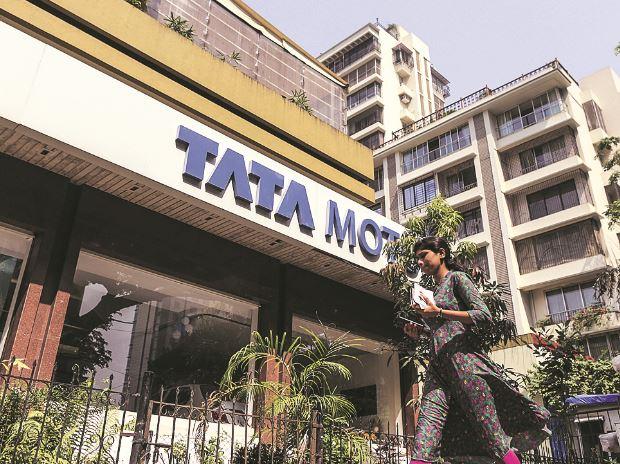
Tata Motors to hike passenger vehicle price by up to 2.2% from August

‘The price hike will be across all models, although quantum will depend upon specific models’
Tata Motors
Tata Motors on Wednesday said it will hike prices of its passenger vehicles across models by up to 2.2 per cent from August to offset increased input costs.
The company, which had increased prices in April by 3 per cent, however, said it expected sales momentum to continue despite the hike.
“We have been working on cost cutting, but the problem of input cost pressure is piling up and we will be taking a price increase on our passenger vehicles by August,” Tata Motors President Passenger Vehicles Business Unit Mayank Pareek told PTI.
He further said the company had taken a price hike in April but the input costs continue to rise, mostly on account of increased commodity prices.
When asked by how much the company will increase the prices, he said, “Roughly it will be 2 per cent to 2.2 per cent.” This will be over and above the 3 per cent increase in April, Pareek added.(READ MORE : TATA MOTORS SHARE PRICE)
“The price hike will be across all models, although quantum will depend upon specific models,” he added.
Tata Motors currently sells a range of vehicles starting from entry level small car Nano to premium SUV Hexa with price ranging from Rs 236,000 to Rs 178,900 (ex-showroom Delhi).
When asked if the proposed price hike will impact sales, he replied in the negative, “What we achieved in quarter one was despite the price hike we undertook in April. So we are confident of maintaining the sales momentum.”
Pareek further said, “In the last 28 months we have been outperforming the market. In this year’s quarter one, while the industry grew 13.1 per cent, we have grown by 52 per cent.(Click Here : BS)

Tuesday, 17 July 2018

Ashok Leyland Q1 profit up by 233% to Rs 3.70 billion, beats estimate

MHCV volumes including exports increased by 54% to 30647 numbers during the quarter, while LCV volumes increased by 33 per cent to 11481 numbers
MFs, growth, investment, income, dividend, markets,
Ashok Leyland has reported a 233 per cent growth in profit to Rs 3.70 billion during the quarter ended June 2018 as compared to Rs 1.11 billion, a year ago, beatingestimates.
Revenues rose by 47 per cent to Rs 62.50 billion as compared to Rs 42.58 billion.
MHCV volumes including exports increased by 54% to 30647 numbers during the quarter, while LCV volumes increased by 33 per cent to 11481 numbers.
Vinod K. Dasari, Managing Director, Ashok Leyland Limited said that the Total Industry Volume registered 84 per cent growth primarily driven by surge in infrastructure spend resulting in higher sale of Tipper and MAVs.

(CLICK HERE : ASHOK LEYLAND SHARE PRICE)

“There was also the impact of base effect. We continued our focus on profitable growth and tight control on working capital, in a market which operated on heavy discounting and credit push.” He further added, “Despite pressure on realization and raw material price increases, I am happy that we continue to post growth with profitability,” said Dasari.
ALL has grown significantly in the Intermediate Commercial Vehicles (ICVs). The LCV and Bus business have also posted significant growth. Exports have also grown by 24 per cent, said Dasari, adding that the company will continue to pursue strategy of de-risking the company from cyclicality even as it pursue superior returns.
Gopal Mahadevan, CFO, Ashok Leyland added, “The compan had seen a double-digit EBITDA margins for 13 of the 14 sequential quarters.”
Net cash in the Balance Sheet is Rs 11.65 billion. Focus on operating costs, product mix, and material cost optimisation will continue, even as the company pursue growth, said Mahadevan.(News Source : BS)

Tuesday, 10 July 2018

Tech Mahindra’s Gurnani earned most, but Wipro’s Neemuchwala took home more

Gurnani earned Rs 1.46 billion in 2017-18, which is 3,150 times the median employee remuneration (MRE) at the company

 CP gurnani
While Tech Mahindra Chief Executive Officer CP Gurnani continues to earn the highest remuneration among IT giants, in gross salary terms most CEOs took home a modest package led by Wipro’s Abidali Neemuchwala.
Gurnani earned Rs 1.46 billion in 2017-18, which is 3,150 times the median employee remuneration (MRE) at the company. However, Gurnani’s remuneration consisted of Rs 1.42 billion in stock options granted to him in 2013 and exercised during the current financial year.
His actual gross salary component was Rs 27.7 million. In fact, Gurnani’s total earning in FY18 declined by 3 per cent compared to the previous year while his actual salary (minus earning from the stock options) grew almost 10 per cent.
During the same period, vice chairman Vineet Nayyar’s remuneration jumped 101 per cent to Rs 401 million. The percentage increase in MRE for Tech Mahindra employees in FY18 was 9.19 per cent, while the fiscal year itself saw the company shedding headcount by a little less than 5,000.
“An increase of 0.22 per cent was given to employees during the year under review. There was an increase of 8 per cent in the remuneration of managerial personnel mainly on account of exercise of stock options granted earlier,” the company said in its annual report.(TECH MAHINDRA SHARE PRICE )
Neemuchwala on the other hand took home Rs 182.3 million during the same period, of which Rs 63 million consisted of gross salary and a little more than Rs 100 million was in the form of stock options. His remuneration which is almost 338 times of the MRE, increased by 34.5 per cent during the year. The MRE of employees across the company increased 3.25 per cent during the financial year from Rs 5,23,000 to Rs 5,40,000.
Even Salil Parekh, who took over as Infosys CEO in the final quarter of the last financial year, earned almost Rs 40 million, 273 times the MRE at the company. His predecessor, Vishal Sikka, earned almost Rs 130 million, of which Rs 60 million was the gross salary before he resigned in August last year. Parekh’s earnings did not include the hefty stock options bestowed upon Sikka. The MRE for Infosys increased six per cent during the year.
TCS has maintained the lowest CEO MRE ratio of 212 with Chief Executive Officer Rajesh Gopinathan taking home Rs 125 million during the year. His gross salary component is the lowest among his peers at Rs 16.24 million. The rather modest earnings also reflect in the mere 0.57 per cent increase in MRE for TCS employees during 2017-18.
While HCL’s annual compensation numbers are not out yet, 2016-17 witnessed a five per cent rise in MRE. The overall slowdown in headcount has helped companies protect margins to some extent. According to estimates by JP Morgan researchers, reduction in employee expense accounted for almost 35- 40 per cent margin gain for Tech Mahindra between December 2016-17 and December 2017-18.
“Companies will need to get other structural margin levers to operate more strongly, given that utilisation may need to moderate from the current peak (85 per cent ex- trainees) and can no longer be relied upon to drive margins,” according to the JP Morgan report released last month.

News Source : BS 

14th BRICS summit to review current global issues, reach key agreements

  At the   14th BRICS summit   which is to be hosted by China in a virtual mode on 23-24 June, the member nations will review the current gl...