Showing posts with label Tata Motors. Show all posts

Thursday, 21 May 2020

RBI cuts repo rate by 40bps to 4%, sees contraction in FY21 GDP growth

Catch all the market updates here
RBI
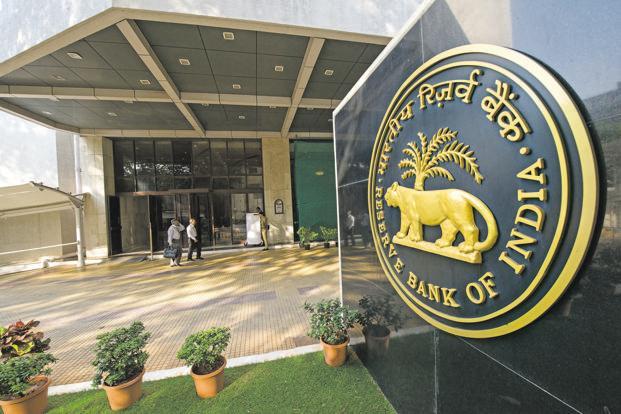
Indian markets declined on Friday even as the Reserve Bank of India (RBI) slashed repo rate by 40 basis points (bps) to 4 per cent and maintained the stance ‘accomodative’. Consequently, reverse repo rate now stands at 3.35 per cent from 3.75 per cent earlier. Moreover, RBI Governor Shaktikanta Das said that the GDP growth in FY21 is expected to be in negative territory. READ MORE
Among headline indices, the S&P BSE Sensex slipped 290 points to around 30,630 levels and the Nifty50 index slipped below the 9,050 level. Infosys gained 2 per cent after the class action lawsuit filed against the company in the US was dismissed. Reliance Industries gained 1 per cent after the conglomerate said that KKR would invest Rs 11,367 crore into Jio Platforms for 2.32 per cent equity stake. READ MORE
The trends among Nifty sectoral indices was mixed. Nifty PSU Bank index, up 1.8 per cent, gained the most.
Results today: A total of 25 companies including Alembic Pharmaceuticals, IDFC First Bank, and UPL, are scheduled to announce their March quarter earnings later in the day.

COMMENT :: VK Vijayakumar, chief investment strategist, Geojit Financial Services


RBI, which has been proactive in recent times, has risen to the occasion by advancing the policy meet to cut policy rates by 40bp. Also, the unequivocal statement that monetary policy will continue to be accommodative till growth revives sends positive signals. The fact that the central bank has refrained from giving a GDP growth figure is a reflection of the complexity in giving projections with the present growth models. Extension of the moratorium announced earlier by another 3 months is a relief. A takeaway from the policy announcement is that the stress in the banking sector will continue..Read More

Wednesday, 7 August 2019

About 350,000 laid off since April as automobile crisis deepens: Report

Within this previously unreported figure, car and motorcycle makers have laid off 15,000 and component manufacturers 100,000, with the remaining job losses at dealers
Cars, Vehicles, automobiles
Slumping sales of cars and motorcycles are triggering massive job cuts in India’s auto sector, with many companies forced to shut down factories for days and axe shifts, multiple sources said. The cull has been so extensive that one senior industry source told Reuters that initial estimates suggest that automakers, parts manufacturers and dealers have laid off about 350,000 workers since April.
Within this previously unreported figure, car and motorcycle makers have laid off 15,000 and component manufacturers 100,000, with the remaining job losses at dealers, many of which have closed, the industry source said. Reuters was able to identify at least five companies that have recently cut or plan to cut hundreds of jobs, mainly from their temporary labour force.
The downturn – regarded by industry executives as the worst suffered by the Indian auto industry – is posing a big challenge for Prime Minister Narendra Modi’s government as it begins its second term at a time when India’s jobless numbers are climbing. To revive the sector, auto executives plan to demand tax cuts and easier access to financing for both dealers and consumers at a meeting with officials from India’s finance ministry scheduled for Wednesday, the senior industry source said..Read More: Automobile Crisis
Advertisements

Thursday, 1 November 2018

What is Jaguar Land Rover doing to get out of the falling sales rut?

Sales in China, where the high-end market is still growing, tanked. JLR has long been a profit center for the whole company
jaguar landrover JLR

Tata Motors Ltd’s Jaguar Land Rover unit can’t seem to get back in the right lane.The Indian automaker’s luxury arm dropped into the red in the quarter ended September 30, posting a pretax loss of 90 million pounds ($116 million), with Ebit margins below breakeven and volumes down. Sales in China, where the high-end market is still growing, tanked. JLR has long been a profit center for the whole company. This time it took the domestic Indian business down with it, reversing recent signs of recovery there.
Not only was JLR’s performance dismal, there were few indications of a brighter future. The maker of Range Rovers and the E-Pace electric SUV ran more than 600 million pounds of negative free cash flow in the quarter, making a 2.3 billion-pound cash burn for the first half of the year – almost double the amount in the same 2017 period. Kenneth Gregor, chief financial officer of the U.K.-based unit, said he expected negative free cash flow for the full year.
To show it’s trying to fix things, JLR announced Project Charge, a two- to three-year plan to boost profitability and cash flow. The aim is to bring in as much as 2.5 billion pounds over the next 18 months. Investment plans were cut from 4.5 billion pounds a year to 4 billion pounds for this year and the next, saving about 1 billion pounds overall – half of the six-month cash burn. In the latest quarter alone, though, total investment outlays were 1 billion pounds. Further reductions will be tough because much of this spending isn’t variable.

Business Standard OR BS   

Wednesday, 18 July 2018

Tata Motors to hike passenger vehicle price by up to 2.2% from August

‘The price hike will be across all models, although quantum will depend upon specific models’
Tata Motors
Tata Motors on Wednesday said it will hike prices of its passenger vehicles across models by up to 2.2 per cent from August to offset increased input costs.
The company, which had increased prices in April by 3 per cent, however, said it expected sales momentum to continue despite the hike.
“We have been working on cost cutting, but the problem of input cost pressure is piling up and we will be taking a price increase on our passenger vehicles by August,” Tata Motors President Passenger Vehicles Business Unit Mayank Pareek told PTI.
He further said the company had taken a price hike in April but the input costs continue to rise, mostly on account of increased commodity prices.
When asked by how much the company will increase the prices, he said, “Roughly it will be 2 per cent to 2.2 per cent.” This will be over and above the 3 per cent increase in April, Pareek added.(READ MORE : TATA MOTORS SHARE PRICE)
“The price hike will be across all models, although quantum will depend upon specific models,” he added.
Tata Motors currently sells a range of vehicles starting from entry level small car Nano to premium SUV Hexa with price ranging from Rs 236,000 to Rs 178,900 (ex-showroom Delhi).
When asked if the proposed price hike will impact sales, he replied in the negative, “What we achieved in quarter one was despite the price hike we undertook in April. So we are confident of maintaining the sales momentum.”
Pareek further said, “In the last 28 months we have been outperforming the market. In this year’s quarter one, while the industry grew 13.1 per cent, we have grown by 52 per cent.(Click Here : BS)

Wednesday, 4 July 2018

Tata Motors hits over 5-year low; stock falls 41% in 2018 on JLR concerns

The stock dipped 5% to Rs 253 in intra-day trade after the CEO of JLR reportedly warned that a hard Brexit would cost 1.2 billion pounds.

JLR's UK and Europe sales dropped 12 per cent and 5.3 per cent, respectively, in 2017-18, against a year ago
Shares of Tata Motors hit an over five-year low of Rs 253 per share, down 5% in intra-day trade, after the CEO of company owned Jaguar Land Rover (JLR), Britain’s biggest carmaker, reportedly warned that a hard Brexit would cost 1.2 billion pounds a year. The stock was trading at its lowest level since April 8, 2013 on the BSE.
“Extra costs and delays in parts deliveries coming from outside the U.K. would cut profit by 1.2 billion pounds a year, Ralf Speth, chief executive officer of the manufacturer owned by Tata Motors Ltd., said late Wednesday in an emailed statement,” the Bloomberg report suggested. 
Thus far in the calendar year 2018, Tata Motors underperformed the market by falling 41%, has seen market capitalisation erosion of Rs 547 billion at Rs 822 billion. On comparison, the S&P BSE Sensex was up 4.7% during the period.
Analysts at Prabhudas Lilladher expect volumes for JLR to be subdued over the next few quarters due to global headwinds and uncertainty over diesel engines, however the brokerage firm believe the management’s aggressive cost reduction efforts would enable JLR to achieve its stated near term EBIT margins of 4-7% over FY19-21.
Overall it seems capex will remain elevated for the next 3 years and hence free cash flow at JLR will remain weak hence constraining valuations. Tata Motor’s more immediate investment case then rests on a faster than- expected turnaround in India business on the back of growth and market share gains in CV business and net debt reduction, according to analysts at JP Morgan.
JLR faces challenging operating conditions given negative sentiment on Diesel in the UK/EU, higher incentives and elevated investment spending partly offset by higher growth in China. The India business (50% of SOTP) is clearly showing signs of improvement but reflation here may not be enough to offset the profitability drag from JLR. While absolute downside on the stock may be limited, a case for reflation may not be there until JLR starts closing the margin gap with luxury OEs. JLR’s model cycle remains exciting, in our view, and higher-than-expected volume could be a positive surprise, it added.
At 10:36 am; Tata Motors was trading 3% lower at Rs 259 on the BSE, as compared to 0.14% decline in the S&P BSE Sensex. A combined 9.48 million equity shares changed hands on the counter on the BSE and NSE so far.

READ MORE ON TATA MOTORS SHARE PRICE

Nano, which was unveiled in January 2008 at the Auto Expo with much expectations of being the people’s car, could not live up to the billing
 Nano
Tata Motors’ small car Nano is inching closer towards the end of its journey with just one unit produced in June, although the company maintained that no decision has been taken yet on stopping its production.
The entry level car, brainchild of Ratan Tata who envisaged giving a safer and affordable alternative to families riding on two-wheelers, sold just three units last month in the domestic market.
In a regulatory filing, Tata Motors said there was no export of Nano in June this year. It had shipped 25 units in the same month last year.
In terms of production, only one unit was produced last month as against 275 units in June 2017.
Domestic sales were at three units in June as against 167 units in the year-ago month.
When contacted for comments on whether the company has taken a decision to stop Nano production, a Tata Motors spokesperson said, “We are well aware that the Nano in its present form cannot continue beyond 2019 and may need fresh investments to survive. No decision has been made yet in this regard.”
The spokesperson further said, “Meanwhile, we continue to produce Nano catering to customer demand in key markets.”
Nano, which was unveiled in January 2008 at the Auto Expo with much expectations of being the people’s car, could not live up to the billing.
The car was launched in the market in March 2009 with an initial price of close to Rs 100,000 for the basic model despite cost escalations, with Ratan Tata insisting that “a promise is a promise”.
However, from the beginning, Nano courted trouble. It was originally planned to be rolled out from Tata Motors‘ proposed plant at Singur in West Bengal, where it faced intense political and farmer protests against land acquisition.
The company had to shift its production to a new plant at Sanand in Gujarat.
Instances of the car catching fire initially after it was launched didn’t help its cause either.
Ratan Tata had admitted that the company made the mistake of promoting the Nano as ‘the cheapest car’.
It become a loss-making model for Tata Motors with ex-Tata Sons chairman Mistry, who was abruptly removed from the post, even went on to claim that the Nano “consistently lost value, peaking at Rs 10 billion”.
Mistry also termed the Nano as one of the “legacy hotspots” and there was “no line of sight to profitability for the Nano, any turnaround strategy”.
He had also claimed that Tata Motors did not stop producing the car due to “emotional reasons”.

READ MORE : TATA MOTORS SHARE PRICE 

Tuesday, 5 June 2018

WhatsApp leak: Sebi to take action against mkt operators of blue-chip firms

The companies may also face censure action by the market watchdog for alleged lapses

sebi

Sebi will soon take action against some market operators and senior staff members of about a dozen listed blue-chip firms for their alleged involvement in leak of price-sensitive information through WhatsApp.

The companies may also face censure action by the market watchdog for alleged lapses in safeguard mechanism to check leak of unpublished price sensitive information (UPSI), including financial results before they were made public for all investors, regulatory sources said.

The regulator is close to completing its probe into the matter, including for suspected unlawful gains through insider trading on the basis of leaked information, and is collating the details it had sought from all concerned companies, the officials said.

Almost all the companies have replied to Sebi's queries in this regard.

According to top officials, the regulator is taking a tough stand on the companies that fail to fix individual responsibility for any leak of price-sensitive information. Besides, the market operators, including staff members of some brokerage firms, are also under the scanner for colluding with the company executives in the case, which came to light late last year.

Among various companies from which Sebi had sought details through its interim orders, HDFC Bank last week disclosed in a regulatory filing that it has submitted the requisite information to the regulator.

Referring to Sebi's February 23 directions, HDFC Bank said, "In this regard, and keeping with its commitment to the highest standards of corporate governance and the integrity of its systems, controls and processes, the Bank has submitted the requisite information and reports to Sebi in compliance with the Sebi directions and within the timelines prescribed therein."

Sebi had asked the bank to conduct internal investigations to identify those guilty of the leak and take steps to check any recurrence, and also provide necessary information to the regulator within three months....Read More 

Thursday, 5 October 2017

Electric sparks: M&M flags issues with Tata Motors e-car pricing

Pawan Goenka says not sure about selling cars in phase-II


1507229647-3231


M&M, which is competing with rival Tata Motors Electric Cars in the country’s largest electric car tender, said the company finds it “difficult” to comprehend the latter’s pricing in the tender. Tata Motors quoted a price of Rs 10.16 lakh for its electric Tigor sedan in the tender for 10,000 electric cars when M&M offered to sell its e-Verito at approximately Rs 12 lakh (both prices are exclusive of the goods and services tax).

“This pricing is difficult for us to comprehend given the fact that we have been in the business for more than five years and have good knowledge about the industry,” Pawan Goenka, managing director at M&M, said in a conference call on Thursday.


Tata Motors emerged as the lowest bidder in the tender and is selling 250 of the order for 400 units in the first phase. EESL, which invited the bids, gave M&M an opportunity to match the price of the electric Tigor, following which the firm would supply 150 units in first phase that ends on November 30. Goenka, however, said they would not make any profit on the order.

Goenka said he was not aware if Tata Motors was able to offer the price based on a volume commitment to its vendors. He drew a distinction between the e-Verito and the electric Tigor. He said the e-Verito was a proper sedan with a bigger length (4.24 metre) against the sub-4 metre length of the Tigor. “Our vehicle has a range of 170-180 km upon full charge, which is more than the specified range of 130 km in the tender,” he said. Read More


Tuesday, 25 October 2016

Why was Cyrus Mistry sacked? Top possible reasons for his exit

12345678910.jpg
Ratan Tata, patriarch of one of India's most influential families, will take over as interim chairman of Tata Sons after the salt-to-software conglomerate's board ousted Cyrus Mistry, who had sought to shake up the firm's management.
Tata, who had stepped down as chairman and was replaced by Mistry in late 2012, will head the group for four months while the company seeks a replacement.
Tata Sons is a large shareholder in a string of listed Tata Group companies - a business empire ranging from Jaguar Land Rover cars and steel mills to aviation and salt pans.
The board said in a statement on Monday it was decided "it may be appropriate to consider a change for the long-term interest of Tata Sons and Tata group."
While the board gave no detailed reason for the change, some media reports said there has been discontent with some of Mistry's actions, including asset sales.

14th BRICS summit to review current global issues, reach key agreements

  At the   14th BRICS summit   which is to be hosted by China in a virtual mode on 23-24 June, the member nations will review the current gl...