Showing posts with label SEBI. Show all posts

Sunday, 8 May 2022

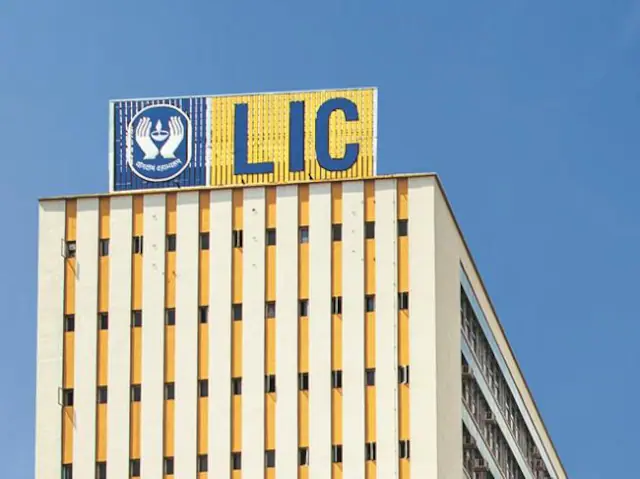
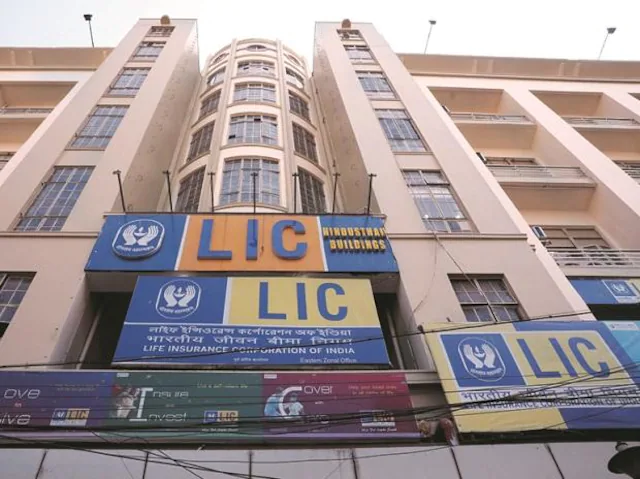
LIC IPO subscribed 1.8x a day ahead of close, big push from policyholders

 The policyholder quota was subscribed over 5 times, employee portion 3.8 times and retail individual investor quota 1.6 times.

Life Insurance Corporation’s (LIC’s) initial public offering (IPO) was subscribed 1.79 times on Sunday, a day before its close. The LIC policyholder quota was subscribed over 5 times, employee portion 3.8 times and retail individual investor quota 1.6 times. The institutional investor and wealthy investor have seen subscriptions of 67 per cent and 1.24 times, respectively.

Over the weekend, the IPO saw 1.2 million investors submit their bids worth over Rs 6,000 crore, said investment bankers. The total applications received by the LIC IPO have reached 5.9 million, highest-ever for a public offering in the domestic market. LIC was the first IPO to remain open on weekends. The government has set the price band for the IPO between Rs 902 to Rs 949 per share, with an additional discount of Rs 45 and Rs 60, for retail and policyholders, respectively. At the upper-end of the price-band, LIC will have a market value of Rs 6 trillion, making it India’s fifth most valuable firm.

Thursday, 5 May 2022

LIC IPO fully subscribed on day 2 of opening; offer closes on May 9

 Sees participation from 3.6 mn individual investors; policyholders lead

State-owned Life Insurance Corporation of India’s (LIC’s) initial public offering (IPO), the largest ever in the domestic market, was fully subscribed on Thursday — the second day of the issue. The IPO, which will remain open till Monday, has so far generated bids worth Rs 20,744 crore, including the Rs 5,628 crore raised from anchor investors. Small investors have poured in over Rs 12,000 crore in the IPO. Sources said the issue had seen participation from 3.6 million individual investors from across India and expectations were that the total applications figure would hit a record 10 million.

At the end of day 2, the policyholders’ quota had seen over three times more demand than the shares on offer, while the employees’ portion was subscribed 2.22 times. The retail investor quota, the largest of the lot, was subscribed 93 per cent. The qualified institutional buyer (QIB) and high networth individual (HNI) categories were, on the other hand, subscribed 40 per cent and 47 per cent, respectively. Most bids in the QIB and HNI categories are expected to come on the last day of the issue….LIC IPO

Tuesday, 26 April 2022

LIC board to meet Tuesday for IPO dates, issue likely opens May 4

 The government will sell its 3.5 per cent equity in LIC for Rs 21,000 crore, valuing India’s largest insurer at Rs 6 trillion

The board of Life Insurance Corporation of India (LIC) will meet Tuesday to consider the launch dates for the company’s initial public offering (IPO). The meeting will also consider the discount to be offered to policyholders, employees and retail shareholders.

The board will consider the proposal of the issue opening date of May 4 and closing date of May 9, an official said. The reservation for the insurer’s employees would also be taken up by the insurer’s board. Once approved by the board, the issue dates, reservation and discounts would be announced on Wednesday, and mentioned in the red herring prospectus (RHP).

LIC’s board, on Saturday, approved reducing the issue size of the LIC IPO Date to 3.5 per cent from 5 per cent proposed earlier. The centre would now dilute 3.5 per cent of its shares in LIC for Rs 21,000 crore subject to regulatory approval, valuing LIC at Rs 6 trillion The government filed LIC’s draft papers with the Securities and Exchange Board of India (Sebi) in February, aiming to raise around Rs 65,000 crore at a market value of Rs 12 trillion as it dilutes its 5 per cent stake. Even at Rs 21,000 crore, the IPO will be the biggest-ever and exceed the record of Rs 18,300 crore by Paytm….

Tuesday, 8 March 2022

LIC IPO gets Sebi approval; may see delayed launch over Ukraine crisis

 LIC’s IPO is one of the fastest to get Sebi approval; the insurer had filed its DRHP on February 12.

India’s markets regulator has approved the public listing of Life Insurance Corporation of India (LIC), sources told ‘Business Standard’ on Wednesday as the war in Ukraine casts a shadow over the state-owned firm’s IPO timing. The government is looking to sell a 5 per cent stake, or 316 million shares, in the insurer through the IPO. Investment banking sources said Sebi issued the so-called final observations on Tuesday evening.

LIC’s IPO is one of the fastest to get Sebi approval; the insurer had filed its DRHP on February 12. Once a DRHP obtains final approval, the company can launch its share sale. However, LIC may not launch its IPO immediately given the volatile market conditions. Investment bankers said they would want to wait till the market sentiment improves.

Benchmark indices have come off 9 per cent this year amid a surge in global oil prices following Russia’s attack on Ukraine. The government is planning to divest 316.2 million shares, 5 per cent stake, in IPO. The government, which holds 100 per cent stake in LIC, was looking mop up between Rs 60,000 crore and Rs 75,000 crore in the IPO. This would peg LIC’s value between Rs 12 trillion and Rs 15 trillion.

Sunday, 6 March 2022

CBI arrests former NSE CEO Chitra Ramkrishna in co-location case

 She will be presented before a Delhi court on Monday morning

The Central Bureau of Investigation (CBI) on Sunday night arrested former managing director (MD) and chief executive officer (CEO) of National Stock Exchange Chitra Ramkrishna in Delhi in the co-location case after her anticipatory bail plea was rejected by a Special CBI court on Saturday.

“She will be presented before a Delhi court on Monday morning,” a CBI official said under condition of anonymity. CBI had arrested former group operating officer of NSE Anand Subramanian last week. CBI may also seek extension of Subramanian’s custody on Monday whose 10-day custody ended on Sunday.

The arrests were made in the case related to the co-location scam, the FIR for which was registered in May 2018, amid fresh revelations about irregularities at the country’s largest stock exchange. The CBI had last month questioned Ramkrishna, Subramanian and Ravi Narain, also former CEO of the NSE. A report of the Securities and Exchange Board of India last month showed that Ramkrishna took key decisions at the NSE from 2013 to 2016 on the advice of a “Himalayan yogi”, whom she had never met and who instructed her to appoint Subramanian group operating officer…Read More

Thursday, 9 January 2020

RBI approves Aadhaar-based video authentication as alternative to e-KYC

Video KYC will have to be verified through Aadhaar

RBI approves Aadhaar-based video authentication as alternative to e-KYC
The Reserve Bank of India (RBI) on Thursday allowed video-based authentication as an alternative to the accepted e-KYC (know-your-customer) practices, but such verification will be Aadhaar-based, either online or offline.
The need for video-KYC was proposed in the report of the Expert Committee on Micro, Small and Medium Enterprises, headed by UK Sinha, former chairman of the Securities and Exchange Board of India (Sebi) in June last year. The panel observed that currently for conducting even e-KYC, the customer has to be physically present and the whole process takes lots of data handling. On the other hand, in video-KYC, the whole process can be done simply through a video chat where the customer can display documents. Such video-KYC can be done through Google Duo or Apple FaceTime, the committee had recommended.
However, experts pointed out that considering these applications were of foreign origin, the RBI would unlikely allow them. Under the data protection Bill, the central bank is unwilling to let companies store customer data in foreign locations. The RBI master direction did not mention what application can be used for video chat. But experts say it is likely that the government will have to develop such an app specifically for video-KYC whose servers will be located onshore. The RBI accepted the recommendations and amended its master direction on KYC…

Monday, 9 December 2019

Equity flows see sharpest dip in 3.5 years, slip 78% in November

Flows were 78% low compared to Oct; lump sum investments hit
equity mutual funds
Equity mutual fund (MF) schemes recorded worst inflows in three and a half years at Rs 1,311 crore for November. It was 78 per cent low compared to the preceding month. Despite the drop in equity inflows, the assets under management (AUM) for the industry soared to a record high of Rs 27 trillion, thanks to over Rs 50,000 crore of net inflows in debt schemes. In November, equity schemes saw Rs 16,268 crore of redemption — 47 per cent higher than the previous month.
“Investors have been nervous and current conditions have not given much comfort. Some investors may have opted to take out money with the recent rally bringing in some relief,” said Swarup Mohanty, chief executive officer at Mirae Asset Management Company (AMC). In November, equity schemes saw Rs 16,268 crore of redemption, 47 per cent higher than the previous month.
“Investors across the board have taken money off the table as markets have scaled new highs. Even in the current month, the redemptions have stayed on the higher side,” said the chief executive of a fund house, requesting anonymity. In the past three months, the benchmark Sensex has gained more than 8 per cent, hitting an all-time high of 41,163 points on November 28.
In June 2016, equity flows had slipped to Rs 320 crore, posting a month-on-month decline of 93 per cent. This was also a period when markets had registered a strong recovery, gaining over 20 per cent in the past four months.

Wednesday, 4 December 2019

Sebi would not like to get into turf war over directing examiners: Ajay Tyagi

Controller inside its privileges to make a move against review firms, says Sebi Chairman
Ajay Tyagi, Sebi chairman
Ajay Tyagi, executive of the Securities and Exchange Board of India (Sebi), on Wednesday said that the market controller would not like to get into a “turf war” over directing reviewers. He said that Sebi couldn’t enable substances to review recorded organizations on the off chance that they didn’t play out their obligations appropriately.
Naming review firms as significant guardians, the Sebi boss said that they should be considered responsible if slips are found in evaluating recorded firms. “Our position is extremely basic on the off chance that they are examining recorded organizations, in view of which financial specialists base their choices. In the event that we find that the work has not been done appropriately, at that point to financial specialists’ greatest advantage, the review firms ought not be permitted to review recorded organizations for quite a while. We are well inside our parliamentary command to see that they don’t do it and in the event that they wish to challenge that, we will challenge it as well,” Tyagi said while tending to a gathering of the Association of Investment Bankers of India (AIBI).
The remark accept importance as the Securities Appellate Tribunal (SAT) had as of late seen that Sebi had no capacity to suspend evaluators from reviewing the books of a recorded organization. The perceptions were made during the knowing about an intrigue documented by PwC in the Saytam bookkeeping outrage. Sebi has tested the SAT request 

I-T crackdown: Brokers, speculators go under scanner for false exchanges

Conducts searches at over 150 places linked to brokers, investors for alleged tax evasion
tax evasion
Countless merchants and speculators are under the scanner of the annual assessment (I-T) office for supposedly executing fake exchanges illiquid investment opportunities.
As per sources, I-T authorities on Wednesday directed overviews and search tasks at around 150 areas the nation over, including Delhi, Mumbai, Hyderabad, and Kolkata. “We have propelled a test in the issue following data from the market controller about anomalies in the value subordinate portion,” said an assessment official conscious of the improvement. The authority included this was a crisp test dependent on the investigation of certain subordinate agreements both on the BSE and the National Stock Exchange (NSE).
The test covers exchanges of the most recent five years, beginning 2014, and will proceed for a couple of more days, sources said.  The I-T office associates the inclusion with more than 20,000 substances, including exchanging individuals and financial specialists, in the issue, which could have prompted tax avoidance of about Rs 80,000 crore.
Early this year, the Securities and Exchange Board of India (Sebi) exacted an all out punishment of over Rs 55 lakh on nine substances for fake exchanging illiquid investment opportunities of the BSE. The activity had come after the controller led an examination concerning the exchanging action the section from April 2014 to September 2015, subsequent to watching huge scale inversion of exchanges….Read More

Monday, 11 November 2019

Second whistleblower letter launching personal attack on Infy CEO, surfaces

This is said to be the ‘undated’ letter that Infosys had earlier informed in regulatory filing
Salil Parekh, Infosys CEO
Days after a whistle-blower letter accused Infosys CEO Salil Parekh of “unethical practices”, another such letter has now surfaced, which has brought in several personal allegations against him.
Addressed to independent directors of the board and the chairman of Nomination and Remuneration Committee (NRC) at Infosys, the undated letter alleged that while Parekh continues to remain absent in the headquarters in Bengaluru, he prefers to stay in Mumbai to protect his personal investments in small companies.
The whistleblower, who claimed to be part of Infosys‘ finance team, has also alleged that Parekh was not able to control cost and was leading the company towards a low margin regime. In the three-page letter which has been seen by Business Standard, the whistleblower has also launched vicious personal attacks against Parekh.
While the company declined to comment, it is reliably learnt that Infosys had earlier informed the exchanges on October 22 about receiving two whistleblower mails including an undated one. The letter which has now been leaked to media, is said to be the same undated letter…

Tuesday, 17 September 2019

Sebi bans Gautam Thapar, three others from markets over CG Power fraud

Sebi restrained three entities belonging to Thapar-led Avantha Group from diverting their money or disposing of their assets
Gautam Thapar
The Securities and Exchange Board of India (Sebi) on Tuesday debarred Gautam Thapar, the ousted chairman of fraud-hit CG Power and Industrial Solutions, from accessing the capital market for a number of alleged irregularities, including diversion of money.
The market regulator also barred the chief financial officer (CFO) and two directors of the company for their involvement in dubious transactions. Further, Sebi restrained three entities belonging to Gautam Thapar-led Avantha Group from diverting their money or disposing of their assets. It has also directed CG Power to take necessary steps to recover the amount due to it and take legal action to safeguard the interests of investors.
The Sebi order comes nearly a month after the CG Power board said the company had been hit by an accounting scandal and the liabilities of the group had been understated by over Rs 1,600 crore for 2017-18. Sebi said Thapar-promoted and -related entities owed Rs 1,723.19 crore as receivables to the company, while connected parties owed another Rs 462.74 crore…

Monday, 4 February 2019

Zee group’s Subhash Chandra gives personal guarantee to mutual funds

Lenders ink formal agreement giving them greater control over developments at Zee
Subhash Chandra
Companies News: Lenders have driven a hard bargain with Subhash Chandra, the Zee group chairman, asking him to provide a personal guarantee for payment obligations on an “irrevocable and unconditional” basis.
The formal agreement inked between Zee and a committee of lenders (CoL) gives the latter more powers and greater control over the developments at the media major. The Zee group owes Rs 13,500 crore to lenders, whose exposure is secured by equity shares of listed firms that include Zee Entertainment and Dish TV.
In response to queries regarding this, Zee said, “As communicated through our official statement issued on February 3, the lenders have agreed that there will not be any event of default declared, due to the movement in the stock price of Essel Group’s listed corporate entities, giving Essel Group the required level of time to complete the strategic sale process of its key assets without any compromise on the value. Any additional terms pertaining to the agreement cannot be shared since we are bound by a confidentiality agreement.”
Zee and lenders had decided to enter into an agreement to not offload the pledged shares amid a sharp slide in the prices of the underlying securities during end-Janury. Business Standard has reviewed the draft agreement copy, which was formalised over the weekend…Read More

Wednesday, 27 June 2018

NDTV surges 20% as Sebi orders Vishvapradhan Commercial to make open offer

The stock is locked in upper circuit of 20% at Rs 39 on the BSE in early morning trade on Wednesday.

Channel may move court over blackout 

Shares of NDTV are locked in upper circuit of 20% at Rs 39 on the BSE in early morning trade on Wednesday, after the Securities and Exchange Board of India (Sebi) on Tuesday passed an order asking Vishvapradhan Commercial Pvt Ltd (VCPL) to make an open offer for the company.
Till 09:25 am; a combined 160,893 shares changed hands on the counter and there were pending buy orders for 462,932 shares on the BSE and NSE.
“The order noted that VCPL had acquired indirect control through a loan agreement in 2009, which would have necessitated an open offer at the time. The regulator has now asked for this open offer to be made with interest,” Business Standard reported. CLICK HERE FOR COMPANY NEWS
Meanwhile, the Bombay High Court on Tuesday directed the Reserve Bank of India (RBI) to consider the compounding applications filed by news organisation NDTV in a case of alleged violation of the Foreign Exchange Management Act (FEMA).
“The Bombay High Court has today directed the Reserve Bank of India (RBI) to consider the compounding application(s) filed by the Company. The Court has ruled in favour of the writ petition number 2026/2017 filed by NDTV against the RBI and Enforcement Directorate,” NDTV said in a BSE filing on Tuesday.
“NDTV had approached the Bombay High Court against the RBI’s refusal to consider its compounding applications in circumstances where the RBI was relying on the Enforcement Directorate’s unsubstantiated allegations against NDTV. The Bombay High Court has today quashed the directive issued by the Enforcement Directorate to RBI which had prevented the compounding, “ it added.

Read More : NDTV Share Price

Monday, 18 June 2018

Videocon case: ICICI Bank weighs leave for Chanda Kochhar till probe report

The ICICI board, which consists of 12 members, is divided on whether Kochhar should be on leave during the internal enquiry


Chanda Kochhar 


ICICI Bank Chairman M K Sharma has written an email to board members seeking their opinion on whether Managing Director (MD) & Chief Executive Officer (CEO) Chanda Kochhar should be asked to go on indefinite leave until the internal enquiry is concluded, said people in the know.
“In an email sent to board members last week, Sharma asked board members whether they agreed that Kochhar should go on indefinite leave until the ICICI Bank-constituted enquiry is completed to have a fair outcome,” said one of the persons cited above.

Kochhar is on her planned annual leave, the bank had said on June 1.

The ICICI Bank board had come out in support of Chanda Kochhar on March 28, quashing allegations of a quid pro quo and favouritism in giving a loan to the Videocon group, which, in turn, had invested in Chanda’s husband Deepak Kochhar’s company NuPower Renewables.

The initiation of probes by multiple agencies, including the Central Bureau of Investigation, income-tax department, and Securities and Exchange Board of India (Sebi), and a subsequent complaint from an anonymous whistle-blower led to the board’s decision to conduct an independent probe.

ALSO READ: ICICI Prudential's profit, market share down in April, May to Rs 10.12 bn

“This may have prompted Sharma to ask the board on whether Kochhar should go on extended leave,” said one of the sources.

Some of the board members are of the view that Kochhar should resume office after her leave so as to not cause any uncertainty among shareholders.

“Since the events are already recorded and possibly cannot be altered, requesting Kochhar to proceed on leave at this point in time may send the wrong signal to stakeholders, especially after the board had showed full confidence and faith in her when the issue first broke out,” one of the board members told Business Standard.

An email sent to ICICI Bank did not elicit response. Sharma, too, did not respond to text messages and phone calls.

The ICICI board, which consists of 12 members, is divided on whether Kochhar should be on leave during the internal enquiry, indicated another person.

Sources said this matter would come up for discussion in the bank’s board meeting scheduled to be held on June 27. The meeting would be the last for Chairman Sharma, who retires on June 30.

Read More : Chanda kochhar

Tuesday, 5 June 2018

WhatsApp leak: Sebi to take action against mkt operators of blue-chip firms

The companies may also face censure action by the market watchdog for alleged lapses

sebi

Sebi will soon take action against some market operators and senior staff members of about a dozen listed blue-chip firms for their alleged involvement in leak of price-sensitive information through WhatsApp.

The companies may also face censure action by the market watchdog for alleged lapses in safeguard mechanism to check leak of unpublished price sensitive information (UPSI), including financial results before they were made public for all investors, regulatory sources said.

The regulator is close to completing its probe into the matter, including for suspected unlawful gains through insider trading on the basis of leaked information, and is collating the details it had sought from all concerned companies, the officials said.

Almost all the companies have replied to Sebi's queries in this regard.

According to top officials, the regulator is taking a tough stand on the companies that fail to fix individual responsibility for any leak of price-sensitive information. Besides, the market operators, including staff members of some brokerage firms, are also under the scanner for colluding with the company executives in the case, which came to light late last year.

Among various companies from which Sebi had sought details through its interim orders, HDFC Bank last week disclosed in a regulatory filing that it has submitted the requisite information to the regulator.

Referring to Sebi's February 23 directions, HDFC Bank said, "In this regard, and keeping with its commitment to the highest standards of corporate governance and the integrity of its systems, controls and processes, the Bank has submitted the requisite information and reports to Sebi in compliance with the Sebi directions and within the timelines prescribed therein."

Sebi had asked the bank to conduct internal investigations to identify those guilty of the leak and take steps to check any recurrence, and also provide necessary information to the regulator within three months....Read More 

Wednesday, 10 January 2018

9 years after Satyam scam, Price Waterhouse banned from audit for 2 years

Nine years after Satyam scam, Sebi orders Rs 130.9-million disgorgement; audit firm says it is confident of getting order stayed

1515618540-3688


The Securities and Exchange Board of India (Sebi) late on Wednesday banned Price Waterhouse (PW) from providing audit services to listed companies and market intermediaries for two years in the Satyam fraud case. Two PW partners have been banned for three years.

The regulator also imposed a disgorgement of Rs 130.9 million on Price Waterhouse, and two of its chartered accountants — S Gopalakrishnan and Srinivas Talluri. The three entities also have to pay 12 per cent interest on the disgorgement amount since January 7, 2009, in 45 days from the date of the order.

Further, it said that no listed company or intermediary registered with Sebi to be engaged with any audit firm associated with the PW network for issuing any certificate with respect to compliance of statutory obligations which Sebi is competent to administer and enforce, under various laws for a period of two years.

These entities have been charged under Sebi’s prohibition of Fraudulent and Unfair Trade Practices (FUTP) regulation. “I find that the auditors have failed in showing any evidence to the effect that they had done their job with standards of professional duty and care as required. The auditors were well aware of the consequences of their omissions which would make such accumulated and aggregated acts of gross negligence scale up to an act of commission of fraud for the purposes of the Sebi Act and the Sebi (FUTP) regulation,” said G Mahalingam, wholetime member, Sebi, in a 108-page order....Read More 


Wednesday, 9 August 2017

Now, Aadhaar may be made mandatory for buying shares, mutual funds

When the new rule will come into effect and whether Aadhaar will completely replace PAN is not known

aadhaar, aadhaar card


The government might soon make Aadhaar mandatory for buying shares and mutual funds to prevent the conversion of black money into white through the stock market, the Economic Times reported on Thursday.

According to the financial daily, the government and the Securities and Exchange Board of India (Sebi) are planning to link financial market transactions to Aadhaar after, according to two sources cited by the report, the former came to realise that the permanent account number (PAN) might not be sufficient in putting an end to tax evasion.

"We have been told that making Aadhaar compulsory is in the offing," a top official with a financial services firm told the financial daily. (economic policy)

However, according to a CEO of a brokerage firm, who spoke to the financial daily on the condition of anonymity, the move could unsettle some "regional players" who could see a "dip in activity even in IPO market". However, the source said this dip would be temporary. According to the unnamed CEO, these players would be worried over how many clients would remain once Aadhaar is made mandatory.

According to the report, when such a compulsory linking will come into effect is unclear. Further, it is not known yet whether the Aadhaar will serve as the sole identification number for financial market transactions, thereby replacing the PAN.

Is PAN not enough?

Brokers who spoke to the financial daily said that PAN has not been able to prevent people from using the stock market for money laundering. They said that multiple PANs and fake demat accounts were being used to bring in black money into the stock market.


Tuesday, 21 March 2017

How did D-Mart shares double on day one?

Answer lies in pre-open call auction, which is a 45-minute window for price discovery

 1490126218-8585

Shares of Avenue Supermarts, which operates successful retail chain D-Mart, doubled during their stock market debut on Tuesday. 

While, DMart is not the first company whose stock has doubled on listing day—there have been at least eight other companies— but it is the first since market regulator Securities and Exchange Board of India (Sebi) introduced listing day circuit filters. 

To curb listing day volatility, Sebi in 2012 introduced circuit filters and the so-called pre-open call auction for IPO stocks. Depending on the size of the Initial Public Offer (IPO), stocks were allowed to move in a trading band of either 10 per cent or 20 per cent on their listing day.

1489073120-8576Then how did Dmart shares double? The answer lies in pre-open call auction, which is a 45-minute window for price discovery before the actual trading begins. During this pre-open sessions, buyers and sellers key in the price at which they want to buy or sell a stock. The prices are then collated and price at which most bids are received becomes the “equilibrium price”. The circuit filters apply on the equilibrium price. 

In case of DMart, the equilibrium price was Rs 604, 102 per cent higher than the issue price of Rs 299. The 20 per cent circuit filter in case of DMart was on the discovered price. Therefore, trading would have halted in the counter if the stock would have gone to either Rs 725 or Rs 483.| READ MORE 


14th BRICS summit to review current global issues, reach key agreements

  At the   14th BRICS summit   which is to be hosted by China in a virtual mode on 23-24 June, the member nations will review the current gl...