Showing posts with label RESERVE BANK OF INDIA. Show all posts

Friday, 17 June 2022

Will issue guidelines to make digital lending ecosystem safer: RBI Guv

 Speaking on inflation, Guv Das said that had the monetary policy been tighter, the economic damage would have been enormous

The Reserve Bank of India Governor Shaktikanta Das said that the Central bank will soon issue guidelines to make digital lending ecosystem safe and sound. “Big tech’s play in finance poses systemic concerns like overleverage”, Das said at an event organised by Financial Express.

He said that blockchain players pose unique problems and regulating them will require globally coordinated action. “Blockchain platforms cannot be limited to a regulator or nation. Regulators can go for activity and entity-based regulations”, he added.

Das further said, “earlier, RBI’s approach was to provide sunset clauses. However, this year credit growth is around 12 per cent, compared to 5-6 per cent last year. Reasonably satisfactory credit growth is happening.” Taking a strict tone on loan recovery, Das said that loan recovery agents using harsh methods like calling up at odd hours, foul language is totally unacceptable….Read More

Thursday, 16 April 2020

Covid-19: RBI slashes reverse repo rate by 25 bps, no change in repo rate

Earlier, the RBI had reduced the repo rate to a 15-year low of 4.40 per cent by announcing a steep cut of 75 basis points on March 27, only two days after the national lockdown was imposed
RBI Governor Shaktikanta Das
Addressing the media for the second time since the Narendra Modi government imposed a national lockdown on March 25, RBI Governor Shaktikanta Das announced a reduction in reverse repo rate by 25 basis points from 4 per cent earlier to 3.75 per cent now. The reduction in reverse repo rate is one of a slew of announcements made by the RBI governor today. This was his first address since the lockdown was extended till May 3 by the Prime Minister. “The mission is to minimise the epidemiological damage in the country due to coronavirus. I want to convey the RBI’s resolve and the way forward,” said the RBI governor.
Here are the additional measures announced by the RBI governor in his address today:


  • Liquidity management: Will undertake TLTRO 2.0 operations. LTRO of Rs 50,000 cr to begin with in many tranches for NBFCs
  • 50% of the funds in TLTRO 2,0 is for small and medium-sized NBFCs
  • A special Rs 50,000 crore refinance facility for Nabard (RS 25,000 crore), Sidbi (Rs 15,000 crore) and NHB (Rs 10,000 crore)
  • 60% of ways and means advances allowed to states until September 30, 2020
  • NPA classifications will exclude the three-month moratorium period till May-end
  • NBFCs allowed to grant relaxed NPA classification to their borrowers…

Thursday, 2 April 2020

Covid-19 relief: You can defer 3 EMIs but that may be a very costly option

SBI informed customers that in some cases, deferring 3 EMIs on a home loan may force the borrower to pay 8 more EMIs
SBI
After RBI allowed commercial banks to provide their customers a moratorium of three months for repayment of term loans, public sector banks have sprung into action. Public sector banks have informed their customers about deferment of EMIs and interest dues to help soften the blow due the coronavirus crisis. The deferment may come at a price though.
The country’s largest lender State Bank of India on Wednesday warned borrowers that deferment of equated monthly instalments (EMIs) offered under the RBI’s relief package on account of COVID-19 could put an additional cost on them. The lender also advised borrowers to repay their loans if they are in a position to do the same. SBI said on its website that deferring the EMIs for a home loan of Rs 30 lakhs with a remaining maturity of 15 years, the net additional interest would be approximately Rs 2.34 lakhs, which is equal to eight EMIs. In other words, if customers defers three EMIs then they will end up paying 8 EMIs more.


Last week, the Reserve Bank of India (RBI) gave a relief package for retail borrowers and businesses, by way of announcing a three-month moratorium on payment of all term loans due between March 1, 2020, and May 31, 2020.The dispensation is aimed to mitigate the burden of debt servicing brought about by disruptions on account of COVID 19 pandemic and to ensure the continuity of viable businesses. “In terms of RBI COVID-19 regulatory package, SBI has initiated steps to defer the instalments and interest/EMIs on term loans falling due between March 1, 2020 to May 31, 2020 and extended the repaymentperiod by 3 months. The interest on working capital facilities for the period March 1, 2020 to May 31, 2020 is also deferred to June 30, 2020,” country”s largest lender SBI said.

Friday, 27 March 2020

RBI follows global central banks, cuts repo by 75 bps to fight coronavirus

The move comes after the global central banks have been cutting rates to help shore up the economy amid coronavirus pandemic
RBI Governor Shaktikanta Das
Following in the footsteps of global central banks, the Reserve Bank of India (RBI) on Friday lowered the key repo rate by 75 basis points (bps) to 4.4 per cent, to help arrest the economic slowdown in the wake of the coronavirus (Covid-19) outbreak. The reverse repo rate now stands at 4 per cent, down 90 bps.
Repo rate is the rate at which a country’s central bank lends money to commercial banks, and reverse repo rate is the rate at which it borrows from them. MPC voted 4-2 in favour of the reduction of the repo rate by 75 bps, RBI Governor Shaktikanta Das said in an address to media. The governor informed that the members of the MPC met on March 24, 25 and 27. “It is our effort to ensure normal functioning of the market,” Das said. The governor further said that the economic growth and inflation projection would be highly contingent depending on the duration, spread and intensity of the pandemic. “Need of the hour is to shield the economy from the pandemic,” Das added.


Meanwhile, liquidity adjustment facility (LAF) has been reduced by 90 bps to 4 per cent while cash reserve ratio (CRR) has been slashed by 100 bps to 3 per cent. Earlier, the US Federal Reserve had lowered the interest rates, bringing it near zero, in another emergency move to help shore up the US economy amid the rapidly escalating global coronavirus pandemic. The Fed had cut interest rates by half a percentage point on March 3, too, in its first emergency cut since the financial crisis of 2008.

Thursday, 26 March 2020

Covid-19 relief package: FM announces Rs 1.7 trn plan for poor and migrants

Package announced includes both food security and cash transfer components
Nirmala Sitharaman
Finance Minister Nirmala Sitharaman today announced a relief package for the poor and migrants in the country in light of the 21-day lockdown in the country to tackle the challenge posed by the coronavirus (Covid-19) pandemic. The Prime Minister Gareeb Kalyan scheme worth Rs 1.7 trillion will have two parts — cash transfer and food security, said the Finance Minister. Covid-19 package to take care of the welfare concerns of the poor and migrant workers who have been suffering because of a nationwide lockdown
The FM also announced a medical insurance scheme for health workers. This Rs 50 lakh per individual insurance plan would be applicable to all health workers that includes sanitation and ASHA workers, paramedics, doctors, nurses. Two million health workers will benefit from this scheme, informed the minister.
The PM Gareeb Kalyan Scheme will have two components
  1. The Pradhan Mantri Gareeb Kalyan Anna Yojana:
Under this plan, 800 million poor people in the country will get 5 kg of rice or wheat per month free of cost, in addition to the 5 kg they already get. In addition to rice or wheat, each household will get 1 kg of preferred dal for free for the next three months.
2. Cash transfer scheme:


  • Farmers will get the first instalment of the PM-KISAN payment of Rs 2,000 soon. This move will benefit 87 million farmers across the country.
  • MGNREGS: Wage increased from Rs 182 to Rs 202 per day. This wage increase will benefit 50 million families, as their income will increase by nearly Rs 2,000
  • Poor widows, aged, and divyang: Ex-gratia transfer of Rs 1,000 for the next three months, in two instalments. 30 million people will benefit and the transfers will be done through direct benefits transfer (DBT)
  • Women with Jan Dhan Yojana accounts: 200 million such account holders will benefit from Rs 500 ex-gratia for the next three months.

Wednesday, 18 March 2020

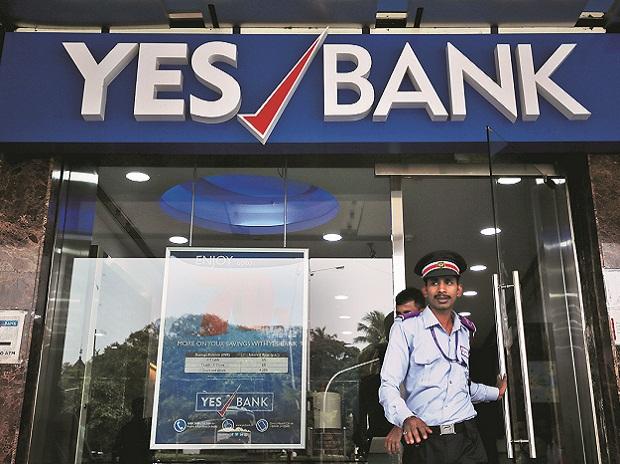
YES Bank gets Rs 60k-cr line of credit from RBI to resume operations

RBI Governor Shaktikanta Das on Monday had said the regulator was ready to offer liquidity if required
Photo- Dalip Kumar
The Reserve Bank of India (RBI) has extended a credit line of Rs 60,000 crore to YES Bank to ensure that the bank is able to meet its obligations to depositors as it resumed its full-service operations on Wednesday, according to sources familiar with the development. RBI Governor Shaktikanta Das on Monday had said the regulator was ready to offer liquidity if required.
“YES Bank has enough liquidity to meet any requirements. If required, the RBI will provide necessary liquidity support to it,” he said. “Never in the history of banks (in India) have depositors lost money. The point is, depositors’ money is absolutely safe,” Das had said in a conference, adding that the central bank’s support should come as a “comforting factor for depositors”.


However, this is a case of the RBI being the “lender of the last resort”, and, in accordance with the terms of the arrangement, the bank will have to use its immediate liquid assets before it can touch the credit line, sources said. This is perhaps for the first time that the RBI has come with such an arrangement. YES Bank gets Rs 60k-cr line of credit from RBI to resume operations In the past it preferred merging troubled banks with solvent ones. There is a technical reason for that even as the RBI officials did not spell it out in the press conference on Monday.

Tuesday, 17 March 2020

All banking services to resume from evening; ATMs have cash: YES Bank

On March 5, the RBI had imposed a moratorium on YES Bank, restricting withdrawals to Rs 50,000 per depositor till April 3 in view of its poor financial health due to bad loans
YES Bank
YES Bank, on which the Reserve Bank of India (RBI) had imposed a moratorium, will resume normal operations from 6 pm on Wednesday. On Tuesday, administrator of the troubled private sector lender, Prashant Kumar, said that YES Bank will resume normal operations from 6 pm on March 18 and it has no liquidity problem. “Our customers will be able to enjoy all the services available before the moratorium. There is absolutely no issue on the liquidity side from YES Bank. All our ATMs are full of cash,” he had said at a press conference. Kumar had also said there is no need to worry about deposits. “Complete normalcy will be restored. All branches and employees are ready. If there is too much rush of depositors, the bank branches will remain open on weekends as well,” he had added.
On March 5, the RBI had imposed a moratorium on YES Bank, restricting withdrawals to Rs 50,000 per depositor till April 3 in view of its poor financial health due to bad loans. “Only one-third of our customers have withdrawn Rs 50,000 during the moratorium. The customer feedback is that they do not feel the need to withdraw money from the bank. We have had higher inflows than outflows in the last few days,” Kumar had stated.
At the same press meet, State Bank of India (SBI) chairman Rajnish Kumar said that the lender is free to sell shares but assured that not one share will be sold in the next three years.”We are not against retail shareholders. We are all here to protect them,” he had said.The SBI has announced an investment of Rs 7,250 crore in YES Bank through the acquisition of 725 crore shares at Rs 10 each. SBI’s shareholding in YES Bank after reconstruction will be within the 49 per cent limit.

Monday, 16 March 2020

YES Bank AT1 bond write-down reflects distinct treatment for private banks

The bailout scheme requires YES Bank to write down about Rs 8,700 crore ($1.2 billion) of outstanding AT1s
Photo- Dalip Kumar
Rating agency Standard and Poor’s on Monday said the decision to write-down YES Bank’s additional tier-1 (AT1) bonds highlights the distinction in India in treatment of instruments issued by public sector banks and those from private banks. This would create losses for asset managers and raise capital costs for issuers. A complete write-down would likely raise the risk premium that investors price into Indian hybrids, said S&P Global Ratings credit analyst Deepali Chhabria.
The bailout scheme requires YES Bank to write down about Rs 8,700 crore ($1.2 billion) of outstanding AT1s. AT1 investors have filed a petition in court against the RBI, YES Bank and the government. Media reports indicate that parties are exploring an out-of-court settlement, with AT1 investors clamoring for conversion of AT1s into equity.
Under the Basel III framework, AT1 instruments are designed to be loss-absorbing tool. The holders of the debt might not get repaid in the event of financial stress. Indian regulations state that such instruments should absorb losses while the bank remains a going concern. RBI’s decision to permanently write down YES Bank’s AT1s was in line with the agency’s view that these instruments will absorb losses at private sector banks, not public sector banks, rating agency said. Indian banks’ AT1s categorically provide that any capital infusion by the government of India into the issuer as the promoter in the normal course of business may not be construed as a point of non-viability trigger. The thinking goes that, since the government owns the bank, it has the right to inject capital into the lender…
Read More On YES Bank

Thursday, 12 March 2020

YES Bank bondholders say will withdraw court plea if RBI accepts offer

Overall, more than Rs 8,000 crore of investments are exposed to YES Bank’s AT-1 bonds
YES Bank
Investors in YES Bank’s additional tier-1 (AT-1) bonds have written to Reserve Bank of India (RBI) that will accept the regulator’s offer where they can recover at least 20 per cent of investments and will subsequently withdraw petition from Bombay High Court (HC). The bondholders, in a letter sent through Axis Trustee Services, proposed that they be allotted a minimum 1,700 million shares in proportion to their current exposures.
As a result, the imputed value will work out to Rs 10 per share, which would approximately amount to Rs 1,700 crore. This will lead to “salvaging near-about 20 per cent of the principal outstanding,” the note said. Further, the bondholders have requested that the lock-in features, if any should be restricted upto 36 months in-line with the proposed new equity issuance of issuing bank. The trustee also pointed out that if the above terms are acceptable, the majority bondholders of AT-1 bonds — for which Axis Trustee is acting — shall not purse any further legal recourse and will instruct to withdraw the current petition. Axis Trustee has filed a petition at Bombay HC on behalf of the bondholders, seeking relief on RBI’s proposal for full writedown of YES Bank‘s AT-1 Bonds.
However, legal arguments are yet to begin in the court, with the matter still in pre-admission stage. Meanwhile, L&T and L&T Officers and Supervisory Staff Provident Fund also moved HC on Wednesday, seeking relief against RBI’s move. Overall, more than Rs 8,000 crore of investments are exposed to YES Bank’s AT-1 bonds.

Tuesday, 10 March 2020

SBI lowers lending rate by up to 15 bps; 10th cut in current fiscal

Overnight and one-month MCLRs have been reduced by 15 basis points to 7.45 per cent each. Three-month MCLR has been revised to 7.50 per cent from 7.65 per cent
SBI
The country’s largest lender State Bank of India (SBI) on Wednesday said it has reduced its marginal cost of fund-based lending rate (MCLR) by up to 15 basis points across various tenors, effective March 10. The bank has reduced its one-year MCLR by 10 basis points to 7.75 per cent from 7.85 per cent earlier, the SBI said.
This is 10th consecutive cut in MCLR by the bank in the current fiscal. Overnight and one-month MCLRs have been reduced by 15 basis points to 7.45 per cent each. Three-month MCLR has been revised to 7.50 per cent from 7.65 per cent. The new two-year and three-year MCLRs stand reduced by 10 basis points to 7.95 per cent and 8.05 per cent, respectively.
On Monday, another state-run lender Union Bank of India had announced cut in its MCLR by 10 basis points across all tenors, effective March 11. This is the ninth consecutive rate cut announced by the Mumbai-based bank, since July 2019. The bank has cut its one-year MCLR to 8 per cent from 8.10 per cent. The overnight MCLR has been revised to 7.55 per cent, while the new one month rate stands at 7.60 per cent, the bank had said.

Thursday, 5 March 2020

Yes Bank depositors rush to ATMs but most unable to withdraw cash

In the residential area of suburban Chembur, one ATM was dispensing cash but had a long queue of anxious depositors
YES Bank
Harried Yes Bank depositors rushed to ATMs to withdraw cash but faced multitude of problems including closed down machines and long queues, after the RBI placed the bank under a moratorium, capping maximum withdrawals at Rs 50,000 per account for a month. Aggravating the problems of depositors were difficulties accessing the internet banking channel, which ensured that they can’t transfer the funds online as well.
At an ATM in south Mumbai’s Horniman Circle, with the RBI headquarters overlooking it, the shutters were pulled down. The guard on duty said the machine was non-operational before he reported to work late in the evening and he was ordered to shut it after 2200 hrs.
In the residential area of suburban Chembur, one ATM was dispensing cash but had a long queue ofanxious depositors. One man said it was still possible to withdraw up to Rs 50,000 in multiple transactions from the machine. However, another machine nearby had run dry within minutes of the RBI announcement, a woman said. The regulatory actions, undertaken by the RBI and the government, came hours after finance ministry sources confirmed that SBI was directed to bail out the troubled lender. For the next month, Yes Bank will led by the RBI-appointed administrator Prashant Kumar, an ex-chief financial officer of SBI.
Keep Reading: Yes Bank News

RBI supersedes board of troubled YES Bank, sets Rs 50,000 withdrawal limit

Lender placed under moratorium; withdrawal capped at Rs 50,000; govt, central bank flag governance issues
Yes Bank
Yes Bank Crisis: The reserve financial institution of india (rbi) on thursday superseded the board of bothered non-public zone lender sure financial institution and imposed a 30-day moratorium on it “within the absence of a credible revival plan” amid a “serious deterioration” in its financial fitness.
Former country financial institution of india chief economic officer prashant kumar has been appointed administrator of yes bank, and every depositor could be capable of withdraw only up to rs 50,000 in overall until the moratorium is in vicinity, the rbi said in two reputableStatements issued on thursday evening. but, in amazing situations together with a clinical emergency or marriage, depositors can withdraw up to rs five lakh or the quantity lying in account, whichever is less.
That is the first time that a financial institution of this size may be positioned beneath a moratorium by means of the rbi. at some point of the moratorium, which got here into impact from 6 pm on thursday, sure bank will now not be allowed to grant or renew any loans, and “incur any liability”, except for payment closer to personnel’Salaries, rent, taxes and prison fees, amongst others. The imperative bank stated the decision became taken within the public interest and inside the interests of the financial institution’s depositors, and that it turned into left with “no opportunity”…

Tuesday, 3 March 2020

Coronavirus outbreak: US Fed cuts rates by 50 bps, RBI ready to take action

This is the first time in over 11 years that the Fed has cut policy rates by 50 bps or more
shaktikanta das
In the wake of volatility in the financial markets due to COVID-19 (novel coronavirus), the Reserve Bank of India (RBI) on Tuesday said it was ready to ensure that the markets ran well and confidence was maintained. It is monitoring global and domestic developments. RBI Governor Shaktikanta Das, in an interview to Bloomberg on Tuesday, said there was a strong reason for coordinated policy action. And the option before the RBI includes a rate cut and supporting the market through liquidity measures, building confidence, and other instruments to deal with emerging challenges.
Also, in a major step to arrest the economic fallout of coronavirus, the Federal Reserve cut its benchmark policy rates by 50 basis points (bps). This is the first time in over 11 years that the Fed has cut policy rates by 50 bps or more. The last time was in December 2008, when the rates were lowered by 75 bps. In the past 12 instances when rates were either hiked or cut, the extent of change was 25 bps.
“In the light of these risks and in support of achieving its maximum employment and price stability goals, the Federal Open Market Committee decided today to lower the target range for the federal funds rate by ½ percentage point,” the Fed said in a statement. The Dow Jones index of the US was, however, down 310.41, or 1.16 per cent, as of 11:20 pm. The Fed’s move came just after the G7 central bankers issued a statement that they would use all policy tools to achieve strong sustainable growth and safeguard against downside risks…

Thursday, 9 January 2020

RBI approves Aadhaar-based video authentication as alternative to e-KYC

Video KYC will have to be verified through Aadhaar

RBI approves Aadhaar-based video authentication as alternative to e-KYC
The Reserve Bank of India (RBI) on Thursday allowed video-based authentication as an alternative to the accepted e-KYC (know-your-customer) practices, but such verification will be Aadhaar-based, either online or offline.
The need for video-KYC was proposed in the report of the Expert Committee on Micro, Small and Medium Enterprises, headed by UK Sinha, former chairman of the Securities and Exchange Board of India (Sebi) in June last year. The panel observed that currently for conducting even e-KYC, the customer has to be physically present and the whole process takes lots of data handling. On the other hand, in video-KYC, the whole process can be done simply through a video chat where the customer can display documents. Such video-KYC can be done through Google Duo or Apple FaceTime, the committee had recommended.
However, experts pointed out that considering these applications were of foreign origin, the RBI would unlikely allow them. Under the data protection Bill, the central bank is unwilling to let companies store customer data in foreign locations. The RBI master direction did not mention what application can be used for video chat. But experts say it is likely that the government will have to develop such an app specifically for video-KYC whose servers will be located onshore. The RBI accepted the recommendations and amended its master direction on KYC…

Thursday, 12 December 2019

YES Bank share sale: Erwin Singh Braich, family offices may not be included

Bank plans to raise $1.75 billion; in talks with five European institutions: Ravneet Gill
YES Bank share sale: Erwin Singh Braich, family offices may not be included
YES Bank is likely to skip issuing shares to family offices in favour of institutional investors in the current round of its preferential issue, where the bank plans to raise $1.75 billion, its managing director and chief executive officer, Ravneet Gill, has said.
This means Erwin Singh Braich, GMR Group, and Aditya Birla Family Office, which had all put in bids, may not get a piece in the bank’s stake sale. Denying reports of a forced merger being thrust upon the bank, he said he was confident of raising the target funds soon.
“Large European financial institutions regulated by the Financial Conduct Authority have shown an interest in the bank,” Gill told Business Standard in an interview. “Since the talks are at an advanced stage, the bank will reveal the names of these investors once it enters into a binding agreement with them,” he added. It is understood that YES Bank has received an interest from four to five financial institutions, and one of them could take as much as 10 per cent in the bank. Others are expected to pick up a 4-5 per cent stake each.
Gill said that since these investors are well-governed and established names, they should pass the ‘fit and proper’ test of the Reserve Bank of India. “When these bids become binding and once we disclose the names, then nobody would have any concerns with regard to the quality of investors or their ability to put in the money. So, it will effectively put a lid on the issue once and for all,” Gill said.
Braich had bid for $1.2 billion in the proposed $2-billion stake sale, while the Citax group evinced interest to the tune of $500 million. Other family offices were to put in about $100 million, according to a YES Bank release. Gill said, “As far as Indian investors and family offices are concerned, we have told them that for this capital raise, we have to go for the institutional route.”

RBI had no objection to issuance of electoral bonds through SBI, says FM

She said the Committee of the Central Board (CCB) of RBI in its meeting held on October 11, 2017 indirectly agreed for electoral bonds to be issued if it is done by the SBI.
Nirmala Sitharaman
Finance Minister Nirmala Sitharaman on Tuesday said in Rajya Sabha that the RBI had no objection to issuance of electoral bonds through the State Bank of India (SBI). Replying to a supplementary during the Question Hour on electoral bonds through the SBI, the Finance Minister said the Reserve Bank of India (RBI) being a stakeholder was involved in extensive consultations with the government at the stage of conceptualisation. “During the consultation process they had questions about the particular platform for its issuance as to who is going to issue. And also the proforma with which it is going to be issued.
“These consultations were recorded but at the end of it as long as the bonds were going to be issued by the SBI, they did not have any objection,” Nirmala Sitharaman said. She said the Committee of the Central Board (CCB) of RBI in its meeting held on October 11, 2017 indirectly agreed for electoral bonds to be issued if it is done by the SBI. The Bank in the CCB meeting and other internal fora would have discussed the multiple facets of the Electoral Bonds schemes.
She said the proceedings of CCB mention that “the CCB supported the Bank’s stand on not issuing the EBs in scrip form and observed that if the Government decides to issue EB in scrip form through SBI, the Bank should let it be.” The main reasons for issuing EBs in bearer form are to bring in transparency to funding in the political system, she said…

Wednesday, 27 November 2019

Ujjivan SFB’s Rs 750-cr IPO priced at 3x its book value; issue opens Dec 2

The shareholders of Ujjivan Financial Services will get shares at a discount of Rs 2 per share to the final issue price.
IPO, markets
The initial public offering (IPO) of Ujjivan Small Finance Bank (SFB) will open on December 2. The price band has been fixed at Rs 36-37 a share. The issue will close on December 4. Bids can be made for a minimum 400 equity shares and in multiples of 400 shares thereafter.
The proposed issue of Ujjivan SFB comprises fresh issue of equity shares aggregating up to Rs 750 crore and a reservation of equity shares aggregating up to around Rs 75 crore for subscription by eligible shareholders of Ujjivan Financial Services.
Samit Ghosh, founder, Ujjivan SFB, told reporters at the press conference: “After we do this IPO, the promoter-shareholding will be down from 100 per cent to 84-85 per cent. Over the next two years, we will have to reduce the shareholding to 40 per cent. This is something we want to take up with the Reserve Bank of India (RBI) after we have completed with this listing.
Microfinance lender Ujjivan Financial Services is the holding company of Ujjivan SFB. The shareholders of Ujjivan Financial Services will get shares at a discount of Rs 2 per share to the final issue price. The SFB reduced its issue size after fundraising in a pre-IPO placement of over 71.4 million shares totalling Rs 250 crore, at about Rs 35 per share.
The SFB had received approval for the public issue from the Securities and Exchange Board of India in October. In its red herring prospectus, the SFB said proceeds of the fresh issue would be utilised towards augmenting its tier–1 capital base to meet future requirements, and issue expenses. The book running lead managers to the issue are Kotak Mahindra Capital Company, IIFL Securities, and JM Financial. Karvy Fintech is the registrar to the issue.

Tuesday, 26 November 2019

Electoral bonds: FinMin knew serial number could reveal donor’s identity

Ministry was reluctant to assign serial numbers initially, but relented after SBI raised concerns about internal control and reconciliation
Electoral bonds: FinMin knew serial number could reveal donor's identity
The finance ministry was initially reluctant to put up serial numbers on electoral bonds, saying they had the potential to reveal the identity of the donors, but agreed later on, after concerns were raised by State Bank of India (SBI).
After being entrusted with the task of issuing electoral bonds, SBI had raised certain concerns with the finance ministry, according to official documents accessed through the Right to Information (RTI) Act by activists Commodore Lokesh Batra (retired) and Anjali Bhardwaj. This was after the Union government issued the framework for electoral bonds, a financial instrument for making anonymous donations to political parties, on January 2, 2018.
In a letter dated January 19, 2018, SBI said that though the bonds will not carry the name of the buyer they “will necessarily need a serial number” as it will leave no audit trail for internal control and reconciliation and identifying the genuineness of the electoral bonds will become difficult at the branch level.
To this, the finance ministry drafted a clarification saying “putting a serial number would establish a link between the donor and the political party. This could discourage them to use such bonds. Hence, SBI may think of other security features, including holograms, to establish the genuineness of electoral bonds.”

RBI deputy guv M K Jain flags concerns over rising stress in Mudra loans

Banks need to focus on repayment capacity at the appraisal stage and “monitor the loans through the life cycle much more closely, said M K Jain
RBI deputy guv M K Jain flags concerns over rising stress in Mudra loans
Economy News: Reserve Bank of India (RBI) Deputy Governor M K Jain on Tuesday expressed concern about the rising bad debt level in Mudra loans. Speaking at a SIDBI event on microfinance, Jain said with the growing mobilisation of financial services, banks must enhance the capabilities of borrowers so that individuals in the new income group could not merely avail the offered services but are also capable of demanding preferred products and service suitable to their needs and choices.
“Mudra is a case in point. While such a massive push would have lifted many beneficiaries out of poverty, there have been some concerns at the growing level of non-performing assets (NPAs) among these borrowers,” Jain said.
Banks, therefore, need to focus on repayment capacity at the appraisal stage and “monitor the loans through the life cycle much more closely”, he said. This is not the first time a central bank official is warning against the rising bad debt to banks.
In a meeting with public sector bank chiefs in July, RBI Governor Shaktikanta Das had red-flagged the high bad debt in the collateral free loans, according to sources. There are three categories of loans under Mudra: Shishu, covering loans up to Rs 50,000; Kishor, covering loans above Rs 50,000 and up to Rs 5 lakh; and Tarun, covering loans above Rs 5 lakh and up to Rs 10 lakh…

Thursday, 21 November 2019

How a potential $5 bn DHFL write-off can worsen the shadow bank crisis

The potential write-off would place an additional burden on Indian banks already struggling with $130 billion of bad loans, one of the highest levels in the world
Dewan Housing Finance
India’s surprise seizure of a troubled shadow bank won’t end the woes of its lenders, faced with the risk of heavy write-offs if Dewan Housing Finance Corp. is declared a fraudulent account.
That’s because the Reserve Bank of India requires banks to provision fully for their entire exposure over four quarters if they decide a loan account involves fraud. The decision on Dewan will be based on a final report by the international accountancy firm KPMG on the firm’s lending practices, which is due to be submitted soon, according to bankers with knowledge of the matter, who asked not to be identified further.
An interim KPMG study of Dewan’s books earlier this year cited anomalies including 165 billion rupees of loans to entities connected to the company’s founders, equivalent to just under half of the banks’ total exposure of 380 billion rupees ($5.3 billion) to the shadow lender.
“If Dewan is tagged as a fraud account that will create significant additional provisioning requirement and will further dent the profits of banks,” said Mitul Budhbhatti, the head of financial institutions at CARE Ratings Ltd. A total write-off would counter some of the optimism about efforts to contain the shadow banking crisis sparked by the Reserve Bank of India’s Wednesday move to remove Dewan’s management and initiate bankruptcy procedures. It would place an additional burden on Indian banks already struggling with $130 billion of bad loans, one of the highest levels in the world….

14th BRICS summit to review current global issues, reach key agreements

  At the   14th BRICS summit   which is to be hosted by China in a virtual mode on 23-24 June, the member nations will review the current gl...