Showing posts with label Yes Bank Crisis. Show all posts

Monday, 16 March 2020

YES Bank case: ED summons Anil Ambani, Subhash Chandra and Naresh Goyal

The agency also calls Subhash Chandra, Naresh Goyal, Kapil Wadhawan, and Peter Kerkar in money laundering probe

YES bank
The Enforcement Directorate (ED) has issued summons to a clutch of borrowers of YES Bank, including Essel group Chairman Subhash Chandra, Jet Airways founder Naresh Goyal, Cox & Kings promoter Peter Kerkar, Dewan Housing Finance promoter Kapil Wadhawan, and a few more in connection with the money laundering probe against YES Bank co-founder Rana Kapoor. Besides, the federal agency has issued fresh summons to Reliance Group Chairman Anil Ambani asking him to appear on Thursday.
Ambani was summoned on Monday for questioning related to the stressed loans that were sanctioned to ADAG group during Kapoor’s tenure. But he has filed adjournment application with the ED seeking more time. An ED official said it was examining all the big borrowers of YES Bank and that is why each of the borrower had been asked to join the probe this week. Sources said ED wanted to deep dive into all the accounts which had defaulted and the loans had turned into bad debts. The agency will record the statement of the management and promoters of all the stressed firms and will make it part of the prosecution complaint, the source said.
Other than the bad debt accounts, the probe agency is verifying the rationale behind Kapoor keeping some of his realty assets on mortgage with some housing finance firms. “These properties that were kept on mortgage were actually the illegal gratification, which Kapoor has received on advancing loans to entities without due diligence and were not in line with the Banking Regulation Act,” an ED official said…

YES Bank AT1 bond write-down reflects distinct treatment for private banks

The bailout scheme requires YES Bank to write down about Rs 8,700 crore ($1.2 billion) of outstanding AT1s
Photo- Dalip Kumar
Rating agency Standard and Poor’s on Monday said the decision to write-down YES Bank’s additional tier-1 (AT1) bonds highlights the distinction in India in treatment of instruments issued by public sector banks and those from private banks. This would create losses for asset managers and raise capital costs for issuers. A complete write-down would likely raise the risk premium that investors price into Indian hybrids, said S&P Global Ratings credit analyst Deepali Chhabria.
The bailout scheme requires YES Bank to write down about Rs 8,700 crore ($1.2 billion) of outstanding AT1s. AT1 investors have filed a petition in court against the RBI, YES Bank and the government. Media reports indicate that parties are exploring an out-of-court settlement, with AT1 investors clamoring for conversion of AT1s into equity.
Under the Basel III framework, AT1 instruments are designed to be loss-absorbing tool. The holders of the debt might not get repaid in the event of financial stress. Indian regulations state that such instruments should absorb losses while the bank remains a going concern. RBI’s decision to permanently write down YES Bank’s AT1s was in line with the agency’s view that these instruments will absorb losses at private sector banks, not public sector banks, rating agency said. Indian banks’ AT1s categorically provide that any capital infusion by the government of India into the issuer as the promoter in the normal course of business may not be construed as a point of non-viability trigger. The thinking goes that, since the government owns the bank, it has the right to inject capital into the lender…
Read More On YES Bank

Friday, 13 March 2020

YES Bank fiasco: RBI asks states not to withdraw funds from private banks

‘We strongly believe that such a move can have banking and financial sector stability implications,’ the letter stated
Reserve Bank of India, RBI
The Reserve Bank of India (RBI) on Thursday urged the chief secretaries of all states to not withdraw deposits from private sector banks for the sake of financial sector stability, and assured them of the safety of these funds. The government of Maharashtra recently closed one account with Axis Bank, and decided to transfer funds from the private sector to public sector banks. The state government also advised its various departments to not put funds with private sector banks in view of the YES Bank fiasco. A few other state governments are also contemplating similar actions.
“We strongly believe that such a move can have banking and financial sector stability implications,” the letter, signed by RBI Deputy Governor N S Vishwanathan, stated. “We would like to point out that the Reserve Bank has adequate powers to regulate and supervise private sector banks, and by using these powers, it has ensured that the depositors’ money is entirely safe,” Vishwanathan said. Business Standard has reviewed a copy of the letter. The apprehension about the safety of deposits is “highly misplaced” and such a “reactive decision” will not be in the interests of the stability of the financial system in general and the banking system in particular, he said.
The resolution of weak private sector banks in the past has been done in a manner that the “depositors are not put to loss”. In the case of YES Bank too, after the imposition of a moratorium, the RBI drew up a draft scheme “without any delay”, the deputy governor wrote, adding that the central bank was making “every effort to expedite the finalisation of the scheme”.

Thursday, 12 March 2020

YES Bank bondholders say will withdraw court plea if RBI accepts offer

Overall, more than Rs 8,000 crore of investments are exposed to YES Bank’s AT-1 bonds
YES Bank
Investors in YES Bank’s additional tier-1 (AT-1) bonds have written to Reserve Bank of India (RBI) that will accept the regulator’s offer where they can recover at least 20 per cent of investments and will subsequently withdraw petition from Bombay High Court (HC). The bondholders, in a letter sent through Axis Trustee Services, proposed that they be allotted a minimum 1,700 million shares in proportion to their current exposures.
As a result, the imputed value will work out to Rs 10 per share, which would approximately amount to Rs 1,700 crore. This will lead to “salvaging near-about 20 per cent of the principal outstanding,” the note said. Further, the bondholders have requested that the lock-in features, if any should be restricted upto 36 months in-line with the proposed new equity issuance of issuing bank. The trustee also pointed out that if the above terms are acceptable, the majority bondholders of AT-1 bonds — for which Axis Trustee is acting — shall not purse any further legal recourse and will instruct to withdraw the current petition. Axis Trustee has filed a petition at Bombay HC on behalf of the bondholders, seeking relief on RBI’s proposal for full writedown of YES Bank‘s AT-1 Bonds.
However, legal arguments are yet to begin in the court, with the matter still in pre-admission stage. Meanwhile, L&T and L&T Officers and Supervisory Staff Provident Fund also moved HC on Wednesday, seeking relief against RBI’s move. Overall, more than Rs 8,000 crore of investments are exposed to YES Bank’s AT-1 bonds.

Wednesday, 11 March 2020

YES Bank crisis: Cabinet likely to take up revival plan on March 13

RBI Governor Shaktikanta Das had met SBI Chairman Rajnish Kumar on Friday to discuss the way forward.
YES Bank
The Reserve Bank of India’s (RBI’s) recovery plan for YES Bank will require the focal government’s endorsement, which may come in by Friday, as indicated by an administration official. The draft ‘YES Bank Ltd Reconstruction Scheme, 2020’ will be set up for the endorsement of the Union Cabinet, led by Prime Minister Narendra Modi, when it meets on Friday, the authority said.
The RBI had made the draft recreation plot open on Friday, a day after it assumed control over the leading body of the upset moneylender and forced limitations on loaning and withdrawal exercises. The RBI had welcomed remarks from State Bank of India (SBI), which is relied upon to hold 49 percent stake in YES Bank, and different partners by Monday. RBI Governor Shaktikanta Das had met SBI Chairman Rajnish Kumar on Friday to examine the route forward. chartAfter analyzing remarks on the draft conspire, the RBI may alter the arrangements and send it for the endorsement of the focal government.
Guideline Act, 1949, the Center can support the plan with no adjustments or with certain changes “as it might think about vital”.The scheme will come into force from the date as specified by the central government and there may be “different dates for different provisions of the scheme”, according to the law.

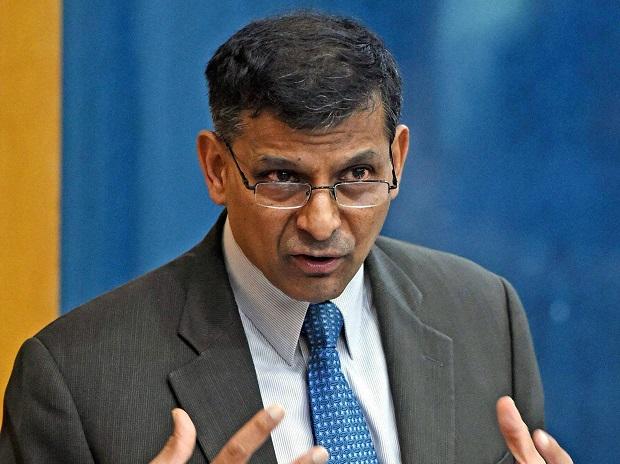
There was enough time to put together plan for YES Bank: Raghuram Rajan

Crisis-ridden Yes Bank was put under a moratorium last week, with the RBI capping withdrawals at Rs 50,000 per account and superseding its board.
Raghuram Rajan put in place a series  of actions to impose greater financial discipline on banks and forced them  to recognize stressed assets
Previous RBI senator Raghuram Rajan on Wednesday said there was a great deal of time to assemble an arrangement for YES Bank which had given “enough” notice about the issues it was confronting. Emergency ridden YES Bank was put under a ban a week ago, with the RBI topping withdrawals at Rs 50,000 for each record and overriding its board. SBI is set to get 49 percent stake in the bank under RBI’s reproduction plan.
“Truly Bank had given us enough notification that it has been in difficulty…so there was sufficient opportunity to assemble an arrangement. “I trust what we have is best accessible (plan), however I would prefer not to re-think, since I don’t have the foggiest idea about the subtleties,” Raghuram Rajan said in a meeting to CNBC-TV18. Rajan, who finished his three-year term at the RBI in 2016, attested that he has been stating for quite a while now that there is a need to tidy up the money related division rapidly and in a steadfast manner with the goal that the nation can push ahead.


“Reluctance to tidy up has delayed condition of discomfort in Indian economy… “Tidy up must be attempted on a crisis premise, in any case feeling of certainty which is required in our NBFC, private banks and even in our state-possessed banks that would be feeling the loss of, that implies money related part can’t add to the development,” he said. Rajan, an educator of fund at the University of Chicago Booth School of Business, likewise worried on making the monetary records of budgetary establishments as perfect as could reasonably be expected, fixing administration issues and recapitalising banks. “So this is something we began in 2015, and it’s 2020, 5 years is unreasonably long for it,” he said…

Thursday, 5 March 2020

RBI supersedes board of troubled YES Bank, sets Rs 50,000 withdrawal limit

Lender placed under moratorium; withdrawal capped at Rs 50,000; govt, central bank flag governance issues
Yes Bank
Yes Bank Crisis: The reserve financial institution of india (rbi) on thursday superseded the board of bothered non-public zone lender sure financial institution and imposed a 30-day moratorium on it “within the absence of a credible revival plan” amid a “serious deterioration” in its financial fitness.
Former country financial institution of india chief economic officer prashant kumar has been appointed administrator of yes bank, and every depositor could be capable of withdraw only up to rs 50,000 in overall until the moratorium is in vicinity, the rbi said in two reputableStatements issued on thursday evening. but, in amazing situations together with a clinical emergency or marriage, depositors can withdraw up to rs five lakh or the quantity lying in account, whichever is less.
That is the first time that a financial institution of this size may be positioned beneath a moratorium by means of the rbi. at some point of the moratorium, which got here into impact from 6 pm on thursday, sure bank will now not be allowed to grant or renew any loans, and “incur any liability”, except for payment closer to personnel’Salaries, rent, taxes and prison fees, amongst others. The imperative bank stated the decision became taken within the public interest and inside the interests of the financial institution’s depositors, and that it turned into left with “no opportunity”…

14th BRICS summit to review current global issues, reach key agreements

  At the   14th BRICS summit   which is to be hosted by China in a virtual mode on 23-24 June, the member nations will review the current gl...