Showing posts with label ECOMMERCE. Show all posts

Wednesday, 20 April 2022

BigBasket eyes 30% rise in GMV to Rs 13,000 crore this fiscal


BigBasket co-founder and CEO Hari Menon said that the company will significantly scale up offline stores from 90 to 695 in a year to reach out to 100 per cent of its customer base.


Online grocery seller BigBasket on Wednesday said it expects gross merchandise value on its platform to grow by 30 per cent to Rs 13,000 crore in the current fiscal with push from its quick commerce business and expansion of presence across the country.

BigBasket co-founder and CEO Hari Menon said that the company will significantly scale up offline stores from 90 to 695 in a year to reach out to 100 per cent of its customer base.

"The expected GMV (Gross Merchandise Value) for financial year 2022-23 is Rs 13,000 crore," Menon said.

The Tata group firm has recorded GMV of around Rs 10,000 crore in 2021-22.

Tuesday, 5 May 2020

Lockdown 3.0: Flipkart, Snapdeal see heavy traffic for non-essential items

New Delhi-based e-commerce firm Snapdeal said it has resumed the delivery of non-essential products in orange and green zones, along with the continuing deliveries of essential products
E-tailers go all out to keep sellers happy
As e-commerce companies start accepting orders for non-essential products from green and orange zones, they are witnessing heavy traffic from consumers for products ranging from hair trimmers and air conditioners to cooking stoves. The home ministry last week extended the national lockdown but allowed the online sales of essential and non-essential products in green and orange zones that have almost contained the coronavirus outbreak, and only essentials in red zones.
Flipkart said as people continue to stay logged in at home, whether for work or a workout class, headsets saw 200 per cent increase in searches on its platform. This could also be a reflection of a growing trend in personal entertainment, where more people are seeking ways to create their own space in crowded households. With temperatures soaring, fans and air conditioners searches have more than doubled than in pre-Covid days.


“With e-commerce being allowed for essential and non-essential products in orange and green zones in specific states, we are seeing an increase in searches for products in categories such as laptops, mobiles, air conditioners, and coolers,” said Anil Goteti, senior vice-president at Flipkart, adding, “We are working with sellers and micro, small and medium enterprises across India, and helping them prepare their businesses and workforce to make products available to consumers in this hour of need.”

Thursday, 16 January 2020

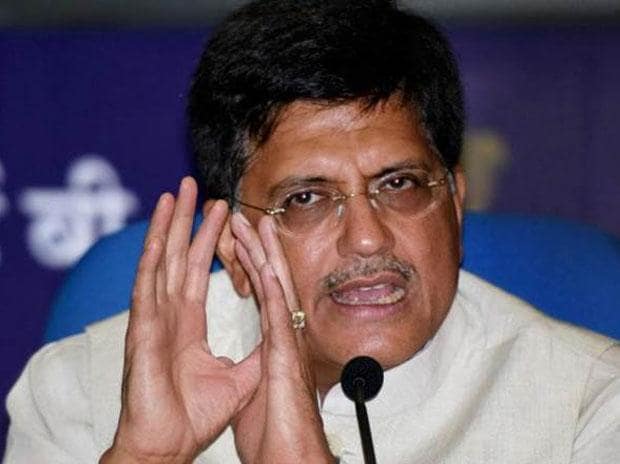
Amazon not doing India a favour by investing billion dollars: Piyush Goyal

Minister’s remarks come a day after Bezos announced $1 billion investment
Piyush goyal
Amazon is not doing India a favour by investing a billion dollars, said Piyush Goyal, Minister of Commerce and Industry, a day after the e-commerce giant’s founder and CEO Jeff Bezos announced the incremental investment in the country.
Speaking at the Raisina Dialogue 2020, an annual event organised by the Observer Research Foundation, Goyal said on Thursday, “they may have put in a billion dollars but then if they make a loss of a billion dollars every year, then they jolly well have to finance those billion dollars. So it’s not as if they’re doing a great favour to India when they invest a billion dollars.”
Bezos, considered the richest man in the world with a net worth of $117 billion, is in India for the first edition of his firm’s micro, small and medium enterprises focused event — Amazon Smbhav. In New Delhi, he announced the investment of $1 billion, in addition to the $5 billion Amazon has invested over the past five years.
The latest round of investment will go towards digitising 10 million MSME businesses in India, and help such firms export $10 billion worth of “Make in India” goods by 2025 through its platform. However, Goyal was clearly not pleased with the announcement. Talking about the losses incurred by Amazon’s marketplace, he added that if the company was bringing in money “largely to finance its losses”, which amount to $1-1.5 billion a year at a turnover of $10 billion, then it raises the question of how the losses occurred.

Thursday, 10 May 2018

Why Walmart's Flipkart acquisition is its admission of defeat in India

This deal isn't a sign that India is leapfrogging past big-box stores to some digital retail utopia

 Walmart

Walmart Inc. might want to portray its $16 billion purchase of India's largest e-commerce firm, Flipkart Group, as a brilliant strategic move, long-planned in secret, that would allow the U.S. retail giant to manage the transition away from big-box stores globally. Yet, the truth is that the deal represents a second-best outcome -- if that -- for Walmart as well as for Indian consumers and farmers.'

In the 11 years that Walmart has operated in India, it’s signally failed to build up its own business. That’s not entirely the company’s fault. In fact, it’s a reminder that India remains, in some ways, as inhospitable to foreign businesses as the People's Republic of China.

For over a decade, successive Indian governments have denied permission to Walmart -- and peers such as Carrefour SA -- to open up their own stores. Foreign investors can enter into partnerships with local retailers -- Walmart had one with Bharti Enterprises Pvt. Ltd. -- but they can't control the consumer-facing end of the business, and their supply chains are subject to fearsome additional regulations. When foreign investment in supermarkets was finally permitted in 2012, for example, the previous government required any major, foreign-backed outlets to source 30 percent of the processed or manufactured goods they sold -- by value -- from tiny Indian enterprises worth less than $1 million apiece. The government also blocked companies such as Walmart from expanding into small-town India, restricting them to cities with populations over 1 million people.

It's no coincidence that Walmart closed its deal with Flipkart now. Its joint venture with Bharti went bad a few years ago. And, in January, the possibility of having its own stores seemed finally to have closed, after the government made it marginally easier for single-brand retailers such as Ikea Group to open up stores in India but left restrictions on multi-brand retailers untouched. Even the relatively investment-friendly administration of Prime Minister Narendra Modi appears to be afraid of Walmart, possibly because the strongest political support for Modi's party has always come from small shopkeepers. Clearly, the company needed another strategy.

Walmart would’ve struggled to open its own e-commerce business as well, given that India doesn't permit foreign investment in online retailing. All you can set up are "marketplaces.” So Amazon India can't hold any of its own stock, and Indians can't buy directly from Amazon. Instead, Amazon works in India like eBay, serving as a clearinghouse for other people's goods; it’s forbidden from holding any inventory of its own. It can't even provide easy refunds.

Click Here :  Walmart Flipkart Deal 

14th BRICS summit to review current global issues, reach key agreements

  At the   14th BRICS summit   which is to be hosted by China in a virtual mode on 23-24 June, the member nations will review the current gl...