Showing posts with label WORLD BANK. Show all posts

Thursday, 19 December 2019

Crisis looms as debt wave sweeps developing nations, warns World Bank

The World Bank and International Monetary Fund have been sounding the warning about growing global debt for years, but this report is starker and calls for governments to curb debt crisis.
debt
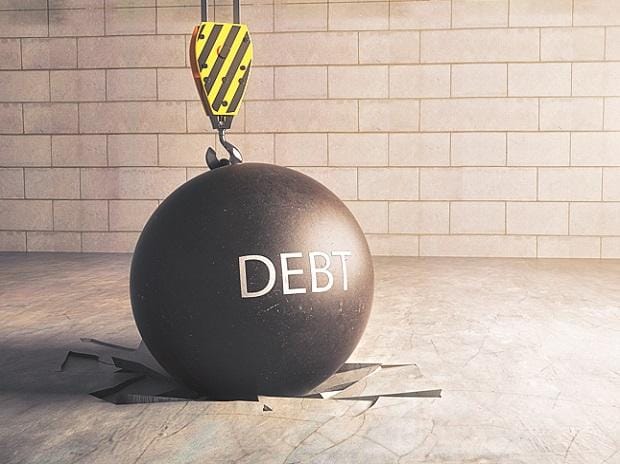
A wave of debt in emerging and developing nations has grown faster and larger than in any period of the last five decades and could end with another crisis, the World Bank warned Thursday.
And if the wave breaks, it could be more damaging since it would engulf private companies in addition to governments, at a time when economic growth is sluggish, according to a new report that covers four debt surges from 1970-2018. “The size, speed and breadth of the latest debt wave should concern us all,” World Bank President David Malpass said in a statement. “Clearly, it’s time for course corrections,” he added.
The World Bank and International Monetary Fund have been sounding the warning about growing global debt for years, but the latest report is even more stark and turned up the volume on its calls for governments to take steps to prevent a debt crisis.
IMF chief Kristalina Georgieva on Thursday said developing nations in Africa especially need to strike the right balance between financing development and a manageable debt level. The IMF reported that total global debt rose to $188 trillion at the end of 2018, equivalent to nearly 230 percent of the world’s economy. The World Bank report highlights the “striking” debt surge in emerging and developing economies, which is the “largest, fastest and most broad-based in EMDEs in the past 50 years.”
After declining during the 2008 global financial crisis, amid very low borrowing costs in just eight years since 2010, debt in these countries climbed to an all-time high of roughly 170 per cent of GDP or about $55 trillion. Much of the growth was incurred by China (equivalent to more than $20 trillion), but Beijing also has become a large lender for low-income countries…

Tuesday, 3 December 2019

Why isn’t manufacturing coming to India? Deficient reforms, says World Bank

Rigid land and labor laws and protectionist trade policies are hindering investment in India even though the government has made strides in improving the ease of doing business, according to the World
labour, labourer, workers, labour law, contract workers, daily wage labour, industrial workers
It’s going to take more than low corporate taxes to lure investors to India.
Rigid land and labor laws and protectionist trade policies are hindering investment in India even though the government has made strides in improving the ease of doing business, according to the World Bank. “What inhibits are restrictive regulations which affect its land, labor, logistics and also its policies which affect trade and goods and services,” said Aaditya Mattoo, an economist with the World Bank and co-author of the World Development Report 2020 on global value chains. That’s why the production that has relocated from China due to the trade war “has not gravitated toward India,” he said in New Delhi on Tuesday.
India jumped 14 places to 63rd in the World Bank’s latest rankings on ease of doing business, but logistics costs are still three times higher in India than in China and two times higher than in Bangladesh. With its 1.3 billion people, India is the biggest consumer market in Asia after China, yet businesses are overlooking India in favor of manufacturing powerhouses like Vietnam amid the trade war.
Companies operating in India have little flexibility in hiring and firing workers, while acquiring land is not easy. The labor laws are something Prime Minister Narendra Modi wants to address in new legislation as he ramps up reforms to bolster a slowing economy. Mattoo said the trade war is weighing on growth prospects, and if increased global policy uncertainty curbs investment, India’s income and exports would both decline by about 1 percentage point…Read More

Monday, 18 November 2019

Not just health, Delhi’s air is also toxic for economy facing a slowdown

India’s losses from air pollution increased more than four times to $560 billion between 1990 and 2013, according to the World Bank
Air pollution, air quality
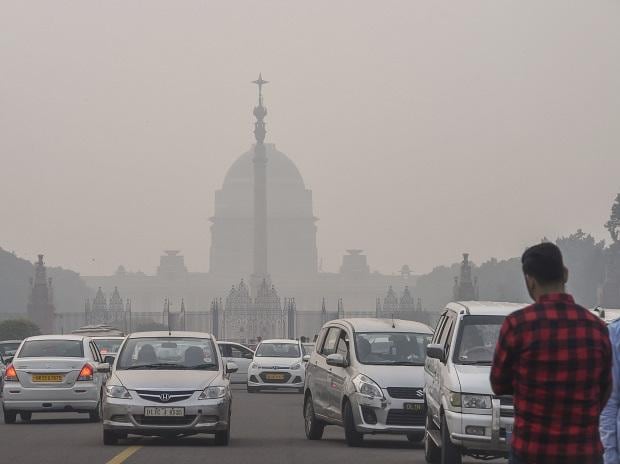
Flight disruptions, fewer tourists, lost work hours and missed school days have come to portray India’s struggles with toxic air quality in its capital city, and the intangible costs may be adding up for an economy grappling with a sharp slowdown.
India’s losses from air pollution increased more than four times to $560 billion between 1990 and 2013, according to the World Bank, which attributed the economic burden to the rising costs of public health-care and workforce disruption. Air Pollution is now being counted among the hidden costs like repelling top corporate talent, according to analysts and industry lobby groups.
“This feeds into the broader economic environment,” said Hemant Shivakumar, a New Delhi-based senior analyst at Control Risks that advises clients on political and security risks. “If the air pollution escalates year after year and there’s no response then it’s likely to send investors a different message.”
Prime Minister Narendra Modi’s government deployed 300 field teams to curb pollution after it reached record levels earlier this month, as winds carried smoke from farm stubble burning in areas around New Delhi. Despite the measures and the state government imposing restrictions on use of private vehicles, pollution levels remain a cause for concern in the capital city of what was until recently the world’s fastest-growing major economy…

Thursday, 24 October 2019

Goyal lauds PM for ‘path breaking improvements’ in India’s biz environment

India has remarkably improved in ease of doing business, reported World Bank in its ease of doing business 2020 survey
Piyush Goyal will also meet his counterparts from Japan, Singapore, China, Indonesia, Australia, New Zealand, Philippines, Thailand, and Russia
After India jumped 14 positions to be ranked 63rd in the World Bank’s ease of doing business, Union Minister Piyush Goyal on Thursday congratulated Prime Minister Narendra Modi for the “path breaking improvements” in the country’s business environment.
“India has jumped from 77th to 63rd rank in the Ease of Doing Business Rankings released just now by the World Bank. Congratulations to PM @NarendraModi ji for the path breaking improvements in India’s business environment for nation’s prosperity and job creation,” he tweeted. India has remarkably improved in ease of doing business, reported World Bank in its ease of doing business 2020 survey. The country is placed in 63rd position among 190 countries.
According to the report issued by World Bank on Thursday, India appeared among the top 10 improvers for the third time in a row. The Bank lauded New Delhi for a “remarkable reform effort”. “In economies on the list of 10 top improvers, leaders of India and China adopted the Doing Business indicators as a core component of their reform strategies,” said the World Bank.
It also praised Modi’s ‘Make in India’ campaign which focused on attracting foreign investment, boosting the private sector, manufacturing in particular, and enhancing the country’s overall competitiveness…

Thursday, 25 July 2019

Is India running out of time to cash in on its booming young workforce?

India isn’t doing enough to revamp its education system to prepare the youth for better-paying, high-skilled jobs, going by a recent World Bank report
jobs
Economy News: India, which is home to more young people than any other country, is running out of time to harness the potential of its youth to drive economic growth. The nation’s population in the under-19 age group has already peaked, government data show. That means the labor force will grow more slowly from here on out. In just over 20 years, the South Asian nation will be an aging society, similar to where China is now, according to the Economic Survey published by the Finance Ministry earlier this month.
With those risks looming, India isn’t doing enough to revamp its education system to prepare the youth for better-paying, high-skilled jobs, going by a recent World Bank report. The world’s sixth-biggest economy, and until recently the fastest-growing major one, is ranked 115 out of 157 countries in the Human Capital Index, which measures the investment in education and health care for young people.
Finance Minister Nirmala Sitharaman’s budget this month allocated 3.4 per cent of total annual spending to the ministry in charge of education, little changed from the last few years and down from 3.8 per cent in 2015. The government’s own review of public schools says “it is common knowledge” that the country’s education system suffers from a shortage of teachers and staff, poor teacher training and delays in receiving funds.

Thursday, 18 July 2019

World Bank decides not to fund project to build AP’s new capital Amaravati

World Bank ‘drops’ project after getting complaints from civil society groups that the project will displace thousands.
File photo of the under-construction Andhra Pradesh Secretariat Building at Velagapudi, near Amaravati
Current News: The World Bank will not give loans to build Andhra Pradesh’s new capital city, Amaravati, after getting complaints from civil society groups that the project had displaced thousands and the government had forcibly acquired farmlands. The multilateral lending agency on its website categorised the $ 300-million project as “dropped” after studying for months representations sent to its officials against the project.
N Chandrababu Naidu, when he was chief minister of the state, had sought funding for the project in 2015, but the Bank had deferred its decision in the light of the alleged government excesses. Andhra Pradesh is now governed by chief minister Y S Jagan Mohan Reddy, and a senior official said the government is yet to hear from the Bank. According to this official, the Bank communicates such decisions to the central government, which then passes on the information to states.
Civil society activists, including Medha Patkar’s Narmada Bachao Andolan and National Alliance of People’s Movements, hailed the World Bank‘s decision. ” We are happy that World Bank took cognisance of the gross violations involved in the Amaravati Capital City project, threatening the livelihood of people and fragile environment. We are happy that the inspection panel which was created due to the struggle of Narmada Bachao Andolan played a critical role here.
While we celebrate this victory of people, who stood up to the intimidation and terror of the state, we warn the government and financial institutions not to push their agenda without the consent of the people,” said Patkar. In a bid to mobilise resources for the project outside budgetary support, Naidu’s government had pursued funding from banks and financial institutions for around Rs 40,000 crore. Naidu’s government had raised Rs 2,000 crore for the project by issuing Amaravati Bonds last year. It’s estimated that his government had issued construction contracts worth of over Rs 25,000 crore in the region where the city will be built….

Thursday, 20 June 2019

After 128 encephalitis deaths, Bihar’s poorest prefer health to jobs, roads

Investment in public health was preferred to job creation programmes and road building by 73% and 79% of respondents, respectively
encephalitis, Bihar
As 128 children died of encephalitis in Bihar over 19 days to June 21, 2019, a new study reports that the state’s rural population prefers government investment in public healthcare over roads, jobs and cash transfers.
In a survey conducted by the Brookings Institution, an American research group, in an administrative block of Bihar, 3,800 respondents–comprising the poor, less-educated and disadvantaged caste groups–were asked to make a choice: an incremental (and hypothetical) budget for their block to be transferred directly to them as direct cash transfers (DCT), or budgetary allocations for better welfare services.
Only 13% wanted the funds to come their way via DCT. The majority (86%) wanted it to be invested in public healthcare (the remaining 1% had no opinion on the matter). Approximately 63% of respondents wanted the budget to be spent on new roads rather than the DCT scheme, the study found. Investment in public health was preferred to job creation programmes and road building by 73% and 79% of respondents, respectively.
“It would appear from these responses that some of the poorest citizens of one of the most economically underdeveloped parts of India prioritise public health well above job creation programmes and roads, with cash coming last,” said Stuti Khemani, one of the report’s co-authors and a senior economist at the World Bank’s Development Research Group.
Poor, third most populous state, Bihar gets 1% of transfer funds
The central government launched the Direct Benefit Transfer (DBT) programme on January 1, 2013, with the aim of “reforming Government delivery system by re-engineering the existing process in welfare schemes for simpler and faster flow of information/funds, and to ensure accurate targeting of the beneficiaries, de-duplication and reduction of fraud”.
This flow of funds to the public takes place through two modes, cash (DCT) or kind. During 2018-19, an estimated Rs 2,14,092 crore ($30.7 billion) was transferred to approximately 590 million beneficiaries in the country, and accounted for 65% of the total DBT provided by the central government…
Click Here: encephalitis deaths

Wednesday, 5 June 2019

Tamil Nadu Health System reform programme gets $287 mn loan from World Bank

The programme will promote population-based screening, treatment and follow-up for NCDs, and improve monitoring and evaluation
hospital, patient, healthcare, health service, sick patient
The central government, Tamil Nadu and the World Bank have signed a $287 million loan agreement for the state’s Health System Reform Programme that aims to improve the quality of health care, reduce the burden of non-communicable diseases (NCDs), and fill equity gaps in reproductive and child health services.
Tamil Nadu ranks third among all Indian states in the NITI Aayog Health Index. The state’s maternal mortality rate has declined from 90 deaths per 100,000 live births in 2005 to 62 deaths in 2015-16 while infant mortality has declined from 30 deaths per 1000 live births to 20 in the same period.
A key contribution to these achievements has been the establishment of emergency obstetric and neonatal care centres and 108 ambulance service with support from the World Bank. These have ensured that no mother has to travel more than 30 minutes to access emergency obstetric and neonatal care 24 hours a day, seven days a week. Despite these impressive gains, certain challenges in health care remain, including quality of care and variations in reproductive and child health among districts. Tamil Nadu is also dealing with a growing burden of NCDs as they account for nearly 69 percent of deaths in the state.
The Tamil Nadu Health System Reform Program will support the state government to develop clinical protocols and guidelines; achieve national accreditation for primary, secondary, and tertiary-level health facilities in the public sector; strengthen physicians, nurses and paramedics through continuous medical education; strengthen the feedback loop between citizens and the state by making quality and other data accessible to the public.
Sameer Kumar Khare, Additional Secretary, Department of Economic Affairs, Ministry of Finance said that Tamil Nadu can serve as a model for how to take health system performance to the next level by investing in the public sector and offer lessons to other states. He said that it is a moment of happiness that the World Bank is helping the state in this journey…

Tuesday, 4 June 2019

World Bank retains projections for India’s economic growth at 7.5%

For the current fiscal year, the growth is quite high, given the fact that India’s economy grew just 6.8 per cent in 2018-19, a five-year low
World Bank
After the feeble total national output (GDP) information, India has something to cheer about. The World Bank has held projections for India’s monetary development at 7.5 percent for the current financial year even as it cut worldwide monetary extension by 0.3 rate focuses. In its Global Economic Prospects report, the World Bank, be that as it may, pegged the development at a similar pace of 7.5 percent for the following two financial years.
For the current monetary year, the development is very high, given the way that India’s economy became simply 6.8 percent in 2018-19, a five-year low. Likewise, the development dove to 5.8 percent in the final quarter of the financial year, additionally a five-year base. Additionally, the International Monetary Fund (IMF) had prior sliced financial development of India to 7.3 percent from prior projection of 7.5 percent. The Asian Development Bank (ADB) pegged the development at 7.2 percent.
World Bank holds projections for India’s financial development at 7.5%
Without naming Pulwama fear assault and Balakot strike, the Bank made a reference to these episodes among India and Pakistan. “Engagements among India and Pakistan in February are an update that dormant geopolitical pressures can erupt whenever,” the Bank said. The Bank said venture rate in India was relied upon to develop at a slower pace in 2019 than in 2018. It, in any case, said speculation development was relied upon to stay strong as advantages of ongoing strategy changes additionally appeared.
“Private utilization and speculation will profit by fortifying credit development in the midst of progressively accommodative money related approach, with expansion having fallen underneath the Reserve Bank of India’s objective,” it said.

Thursday, 16 May 2019

How swachh is India? Study finds Govt data on Swachh mission is misleading

Swachh Bharat, a multi-billion-dollar program sponsored by cash from the legislature and World Bank, has a due date of October 2019 to pronounce open poop free.
swacch bharat mission, sbm, swacch bharat,
Each morning around first light, many individuals assemble by the dusty banks of a stream winding through Shikrawa town, two hours south of India’s capital, New Delhi, to do something very similar: poop in the open.
“There are near 1,600 houses in Shikrawa. Also, I know beyond a shadow of a doubt that nearly 400 of those don’t have toilets,” said Khurshid Ahmed, a town board official in Shikrawa, which is situated in the northern territory of Haryana.
Government records state Haryana – with its populace of in excess of 25 million – is squeaky clean. The state, alongside most others in India is grouped “open poo free”, while a World Bank-upheld across the nation review says just 0.3% of Haryana’s country populace poos outside. Be that as it may, interviews with over about six surveyors engaged with the World Bank-upheld study, and two partaking analysts, all raised huge worries with the technique of the study, and its discoveries.
In Shikrawa, interviews with 27 individuals appeared in any event 330 residents still crap in the open on account of an absence of toilets, issues with getting to water, or basically a hounded resistance to changing old propensities. An hour away in the town of Nangla Kanpur, things aren’t any extraordinary. Studies connect open crap to general medical problems, as it builds the spread of parasites because of water pollution. The World Bank said in 2016 one in each ten passings in India is connected to poor sanitation.
In a nation tormented by rape wrongdoings, the absence of toilets additionally excessively influences ladies, who need to walk long separations before first light or after dull to diminish themselves. In 2014, Prime Minister Narendra Modi reported the “Swachh Bharat,” or “Clean India” battle and pledged to dispose of open poo across the nation in five years..

Sunday, 2 December 2018

With over 400 dam projects, Asia seeks to harness power of Himalayan rivers

Hundreds of big projects are planned for the rivers that plunge from the roof of the world

dam projects
Latest News: Along the banks of the Godavari River, near the city of Rajahmundry in the eastern India state of Andhra Pradesh, stands a museum built in the memory of Sir Arthur Thomas Cotton. As commissioner for irrigation there in the 1840s, Cotton brought water to Andhra’s parched lands, turning them into India’s rice bowl.
An engineer in the East India Company’s army, he did this by restoring and expanding an ancient network of dams and canals along India’s great southern rivers: the Kaveri, the Krishna and the Godavari. Motivated by a belief that science would pave the way for rural capitalism, he envisaged a landscape transformed.|Dam Projects 
And so it was.
But his dreams didn’t stop with those projects. In the 1870s, Cotton proposed building a series of canals to connect Himalayan rivers to the southern tip of India and another to connect the Brahmaputra with the Yangtze through Assam and Yunnan. A stingy British colonial government dismissed his plans as unrealistic. Nearly 150 years later, the dream persists. It is like a ghost behind contemporary India’s plan to link some of its biggest rivers, at an estimated cost of nearly $90 billion.

Click Here : Business Standard OR  BS

India is not alone in its ambitions. Hungry for energy and threatened by an acute shortage of fresh water, other Asian nations are competing to harness the power of the Himalayan rivers, on which more than half a billion people depend directly for sustenance…

Thursday, 30 August 2018

Kerala reconstruction, rehabilitation: State seeks FRBM limit relaxation


Rehabilitation process of the floods, that claimed close to 350 lives, has gathered momentum

Kerala, Kerala monsoon, Kerala rain,Kerala floods


Kerala Flood : In order to open more fundraising channels for reconstruction and rehabilitation of its flood-hit areas, Kerala is set to approach the central government to increase its market borrowings limit from 3 per cent of Gross State Domestic Product (GSDP) to 4.5 per cent. The state is already in talks with the World Bank to raise Rs 100-150 billion. This comes at a time when the Centre has declined aid from foreign countries like the United Arab Emirates, which, according to Chief Minister Pinarayi Vijayan, promised “Rs 7 billion”.

If the Centre agrees to relax the Fiscal Responsibility and Budget Management (FRBM) rules for Kerala, its ability to raise money from the markets may increase by around Rs 115 billion. “At present, our FRBM limit is 3 per cent of GSDP, which we are planning to ask the Centre to increase to 4.5 per cent,” said a state official close to the development. However, senior Union finance ministry officials say there are strict parameters for relaxing the FRBM limit, and hence the borrowing and expenditure limits, for a state. 

There are no precedents for relaxing the FRBM limits for any state due to natural disasters.

“The FRBM limits are strictly defined and hence giving a one-time relaxation to Kerala because of the floods is unlikely,” said an official. “The state is free to borrow within its limits, and the central government will release more funds to help rebuild the state after the floods,” the person said.

As far as the central government is concerned, a well laid-down process is followed before deciding the aid to be given to a disaster-affected state, officials say. In case of drought, it is the Union agriculture ministry which takes the lead, and in case of other disasters, it is the Union home ministry.

Read Full Source : BS


Thursday, 17 May 2018

80% of Indians now have a bank account. So why is financial inclusion low?

No more than 1% of PMJDY account holders-3.1 million beneficiaries-use overdraft facilities available to them, and 17% of PMJDY accounts are 'zero-balance'


e-payments


Up to 80% of Indians now have a bank account, the same proportion that have a mobile phone, but financial inclusion levels are still among the world’s worst, lower than sub-Saharan Africa on some counts, according to a new report.

Despite the availability of mobile-banking services and the narrowing of gender, wealth and education gaps in account ownership, few account holders are using facilities available to them, raising doubts around improvements for financial inclusion, according to the latest Global Findex 
Survey released by the World Bank in April 2018.

India’s unbanked population has been the target of the government’s flagship Pradhan Mantri Jan Dhan Yojana (PMJDY), or the Prime Minister’s People’s Wealth Programme, launched in 2014. It has been largely responsible for the rapid increase in opened accounts, the Global Findex report said.
No more than 1% of PMJDY account holders–3.1 million beneficiaries–use overdraft facilities available to them, and 17% of PMJDY accounts are “zero-balance”, meaning they are not used, 
recent data show, although that is down from 25% in 2016 and 75% in 2014.

There is no marked improvement in access to formal credit, and 38% of Indian accounts are inactive–meaning, there were no withdrawals or deposits over the course of a year–suggesting that many Indians are still not integrated into the formal banking system.

Participation in and effective use of financial services can help drive development goals by aiding investment in education and health, helping to manage financial emergencies and reduce dependency on cash, the report said.

India not yet benefitting from mobile banking

The proportion of the Indian population accessing financial institution accounts from their phones or the Internet, making digital payments or using mobile money wallets is significantly lower than in other developing economies.

In 2017, 5% of Indians accessed a financial institution account from their phone or the Internet, and 2% of the population owned a mobile money account, the Global Findex data show.

Compare this to sub-Saharan Africa, where 21% of adults had a mobile money account in 2017, the highest anywhere in the world and a 50% increase since 2014. Digital payments are also more widespread, with 97% of adults in Kenya making a digital payment in 2017 and 60% in South Africa, compared to 29% in India.(Read More)


Tuesday, 28 November 2017

GES 2017: Make in India for the world, Modi tells entrepreneurs

He said women entrepreneurs received over three-fourths of the Rs 4.28 lakh crore loans under the MUDRA Scheme since 2015

1511885542-6185
 
economy policy:Prime Minister Narendra Modi on Tuesday invited global entrepreneurs to invest and make in India.

“To my entrepreneur friends from across the globe, I would like to say, come, make in India, invest in India, for India and for the world. I invite each one of you to become a partner in India's growth story. And once again assure you of our wholehearted support," he said, inaugurating the Global Entrepreneur Summit (GES) here.

The keynote was given by Ivanka Trump, advisor to US President Donald Trump, who is leading a US delegation to the summit. The event, being hosted by the governments of India and the US, is focused on women entrepreneurship; more than half of the 1,500 participants from 150 countries are women.


Listing the several initiatives of his government such as Startup India, the goods and services tax (GST), actions on black money and on bankruptcy and insolvency, he said his government has taken several steps to improve the business environment, leading to a jump in the country’s World Bank’s ease of doing business ranking (to 100 from 130 earlier) and improvement in the country’s ratings by Moody’s. He said the government was not satisfied and would strive to improve further to the fiftieth rank on the World Bank rating. “Our StartUp India programme is a comprehensive action plan to foster entrepreneurship and promote innovation. It aims to minimise the regulatory burden and provide support to start-ups. Over 1,200 redundant laws have been scrapped, 87 rules for FDI have been eased in 21 sectors, and several government processes have been taken online,” Modi claimed.

The PM said an environment of transparent policies and a rule of law providing a level-playing field was necessary for entrepreneurship to flourish. “A historic overhaul of the taxation system has been recently undertaken, bringing in the GST. Our Insolvency and Bankruptcy Code is a step towards ensuring timely resolution for stressed ventures. We have recently improved this by preventing wilful defaulters from bidding for stressed assets,” he said, after inaugurating the eighth edition of the GES and the first one to be held in any South Asian country.

Read More: Ivanka trump at GES 2017

Tuesday, 31 October 2017

India jumps 30 spots to 100 in World Bank's ease of doing business rankings


Paying taxes, resolving insolvency lead the charts; starting business still a concern

 1509484035-9195 (1)
 
economy news: India has for the first time broken into the club of the 100 nations easiest to conduct business in, driven by ease of paying taxes, resolving the insolvency problem, access to credit, and protection of minority investors.

The World Bank’s ‘Doing Business 2018: Reforming to Create Jobs’ report, released on Tuesday, showed India's rank in ease of doing business jumped 30 places to 100 among 190 countries. India’s rank was 130 a year ago. India has also been adjudged the fifth best-performing nation globally in reforming the business environment. The country improved its rankings in six of the 10 sub-categories used by the World Bank to judge the climate of business.

The report, covering the period from June 2 last year to June 1 this year, ranked India top among the South Asian nations. India's distance to frontier ratio, which tells how similar a country's economic practices are to global best practices, has improved in nine out of 10 categories. Also, it is now among the top 30 nations in three categories — getting electricity, securing credit and protecting minority investors. However, the World Bank noted that India lagged in areas such as starting a business, enforcing contracts, and dealing with construction permits.


"The systematic reforms by the country in a persistent manner have paid off," said Annette Dixon, vice-president for the South Asian region, World Bank.

The multilateral agency has recognised reforms by the government in eight sub-categories. It said the country had adopted 37 reforms since 2003. "Nearly half of these reforms have been implemented in the last four years," it said. The Narendra Modi government has been in power for the past three and a half years.

The World Bank did not specifically ask respondents about the implications of the GST.
It said the tax was not an issue mentioned by a majority of the respondents but added that it would have a significant bearing on India’s rankings over the next few years.

In the protecting minority investors, India is now the fourth best country in the world, a jump from the 13th place last year....READ MORE<<<<< 


Tuesday, 8 August 2017

New NITI Vice-Chairman Rajiv Kumar hints at more exits after Panagariya

According to a column by Kumar, foreign influence on Indian policy making is fading under Modi

rajivkumar759


Under Narendra Modi, foreign influence on Indian policy making is fading away, writes Rajiv Kumar, who has been selected to replace Arvind Panagariya as the new vice-chairman of the NITI Aayog. In a column published by Hindi daily Dainik Jagran, while referring to Panagariya's exit earlier this month and Raghuram Rajan's decision last year to return to academia after completing his three-year stint as the RBI governor, Kumar writes that if "rumours in Lutyens’ Delhi" are to be believed, more such resignations may occur.

According to Kumar's column, as the "Anglo-American" influence fades, India may see the appointment of homegrown experts who understand its ground realities better than their foreign counterparts and who will be willing to stay and work until the end of their terms.

Kumar, who holds a DPhil in Economics from the Oxford University and a Ph.D. from the Lucknow University, also argues in his column that it has taken a long time for the Indian policy establishment to shed what he describes as its "Macaulayist mentality".

Kumar writes that in the past, experts emerging from domestic academic institutions have been turned down for high-ranking government positions in favour of their foreign counterparts. As a result, Kumar argues, Indian policies have been influenced by organisations like the IMF, the World Bank, and the foreign universities that these imported experts revere.

As reported earlier, Kumar, a homegrown economist who likes to keep a low profile, is currently a senior fellow at the Centre for Policy Research (CPR) and has also served as the director of the Indian Council for Research on International Economic Relations (ICRIER). CPR and ICRIER are two of the biggest think-tanks in the country....


Tuesday, 18 July 2017

Income inequality: In India, a CEO earns 416 times more than his employee

The seriousness of India's commitment to end income disparity has been ranked 132nd out of 152 nations

economy, growth, teamwork, company

The seriousness of India's commitment to end income disparity has been ranked 132nd out of 152 nations owing to low spending on health and education, a crumbling tax system and wide gaps in gender pay.

Prepared by Development Finance International and Oxfam, the first index to measure the commitment of governments to reducing the gap between the rich and the poor is based on three main indicators — government action on social spending, tax and labour rights — areas critical to reducing the gap.

The report, the result of the investigation for a year, says that while countries such as Sweden, Chile, Namibia and Uruguay have taken strong steps to reduce inequality, countries such as India and Nigeria perform poorly overall. Among the rich countries, the United States earns a bad rating.

The World Bank predicts that by 2030, almost half a billion people will still be living in extreme poverty. Back in 2015, 193 governments promised to reduce inequality as part of the United Nations' Sustainable Development Goals (SDGs).(economy news)

The report raps India particularly hard on the knuckle but not before revealing that in the country, the chief executive officer (CEO) of a top information technology (IT) firm brings in a massive 416 times the salary of his company’s typical employee.

India managed to secure a lowly 149th position on the health, education and social protection spending indicator, ranking below nations like Yemen, Senegal, Congo and Serbia.

Oxfam calculates that if India were to reduce inequality by a third, more than 170 million people would no longer be poor. It also questioned the lack of a concerted effort by the government to tackle inequality.

India secured the 91st rank among nations on the progressive structure and incidence of tax indicator. "The tax structure looks reasonably progressive on paper, but in practice, much of the progressive tax is not collected," the report said.

While many countries are collecting very little tax overall, India collects just 16.7% of gross domestic product (GDP), while comparable economies such as Indonesia collects 11.9% and South Africa manages to collect over 27%....read full story 


14th BRICS summit to review current global issues, reach key agreements

  At the   14th BRICS summit   which is to be hosted by China in a virtual mode on 23-24 June, the member nations will review the current gl...