Showing posts with label SRIHARIKOTA. Show all posts

Friday, 14 June 2019

ISRO aims for the stars: Plans space station, missions to Venus and Sun

Isro said the space station would be a small module and underlined that there were no commercial plans for tourism purposes
1560454314-4256
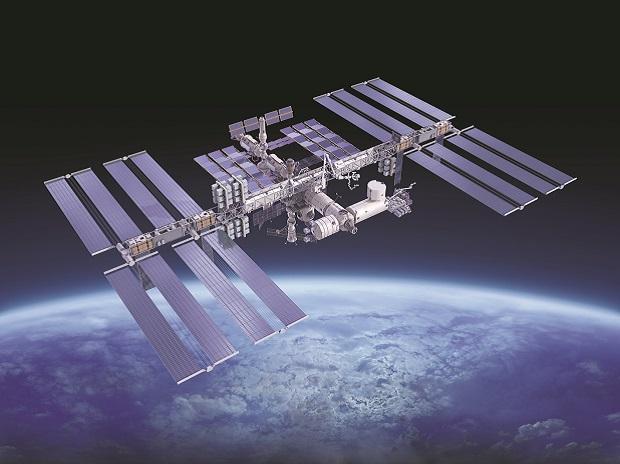
India intends to have its own space station sooner rather than later as the nation’s summit space office builds up a three-pronged way to deal with extending its quality in the external skies. The methodology centers around constant dispatch of cutting edge satellites, missions to other planetary bodies, and having an Indian in space in possess rocket.
The Gaganyaan program, India’s lady mission to take human in space, booked for 2022, would be reached out to dispatch the space station, Kailasavadivoo Sivan, director of the Indian Space Research Organization (ISRO), said on Thursday. A space station is a rocket in circle around the Earth which fills in as a base for space travelers and cosmonauts to do logical examinations.
“We need to continue the Gaganyaan program after the dispatch of the human space mission. In this specific situation, India is wanting to have its own space station,” Sivan said. The administration has put aside a spending limit of Rs 10,000 crore for Gaganyaan. There would be two flights from Andhra Pradesh’s Sriharikota without the team before the lady trip with group at some point in 2022. “We are pointing that previously or around India’s 75th Independence Day in 2022,” said Jitendra Singh, clergyman of state at the Prime Minister’s Office.
Isro said the proposed space station would be a little module, and that there were no business designs thusly. “The station would be utilized to lead small scale gravity tests. The underlying arrangement is to check if space explorers can remain for 15-20 days in space. In any case, the particular subtleties would rise after India finishes up its previously kept an eye on mission,” said an ISRO official.

Thursday, 11 January 2018

Another milestone for Isro with 100th satellite: 10 things you should know

16 nanosatellites made by the US placed into the sun-synchronous orbit of the Earth

isro-pslv-c40-launch-pti-650_650x400_41515724810

India on Friday launched a polar rocket with 31 satellites, including three Indian and 28 of six other nations from its spaceport in Sriharikota. The 44.4-metre tall Polar Satellite Launch Vehicle (PSLV-C40) roared into a clear sky after a perfect lift-off at 9.29 a.m. after a 28-hour countdown. The 320-tonne rocket will eject the satellites one-by-one and deploy them into the earth's lower orbit about 17 minutes and 18 seconds after the lift-off.

Isro Chairman designate K Sivan says PSLVC40 is special for Isro since it is coming after a failure 4.5 months back.

PSLVC40 Performance was excellent and entire system perfectly. Its a green flag for high profile missions.

S Somanath, Director, LPSC says today's successful launch is a reassurance to all of us about PSLV. The previous launch failed due to a "very minor" issue.
Here's all you should know about the launch:
  • For the mission, the Indian Space Research Organisation (ISRO) used PSLV-C40 launch vehicle, which is carrying 31 satellites, including three from India and 28 from six other countries.
  • The weather observation 'Cartosat-2 Series' satellite and 29 others will be inserted into a 505-kilometre sun-synchronous orbit after about seventeen and a half minutes since its liftoff.
  • This satellite is the seventh remote sensing satellite in its series and has the mission life of five years.
  • Its uses include monitoring urban and rural applications, coastal land use regulation, managing services like road networks and water distribution, detecting changes in geographical features and creation of land use maps.
  • The flight is the first since the setback suffered by the PSLV in August last and is set to demonstrate that the workhorse rocket is back in the game for reliable satellite launches in the low earth and polar orbits....Read more

4 months after failed bid, ISRO launches 100th Satellite Cartosat-2 Series

The total weight of all the 31 satellites carried on-board PSLV-C40 is about 1,323 kgs
1511892773-2274

The Indian Space Research Organisation's (ISRO) on Friday launched its 100th satellite along with 31 others in a single mission from the space port of Sriharikota.
The 42nd flight of India's Polar Satellite Launch Vehicle (PSLV-C40) carrying the 710-kg Cartosat-2 series satellite took off from the Satish Dhawan Space Centre (SDSC) SHAR, Sriharikota.

The total weight of all the 31 satellites carried on-board PSLV-C40 is about 1,323 kgs.

The 28 international customer satellites were launched as part of the commercial arrangements between ISRO and its commercial arm 'Antrix Corporation Ltd'.

Of the total number of satellites carried by PSLV-C40, 30 satellites were launched into a 505 kms polar Sun Synchronous Orbit (SSO).

ALSO READ : Another Milestone For Isro With 100th Satellite: 10 Things You Should Know

According to ISRO, the Cartosat-2 series satellite launch is a follow-on mission with the primary objective of providing high resolution scene specific spot imageries.

It carries panchromatic and multi-spectral cameras operating in Time Delay Integration mode and is capable of delivering high resolution data.


It will be the third satellite in the Cartosat-2 series.

ISRO had successfully launched Cartosat-2 Series satellite on June 22, 2016.

It is similar to the earlier Cartosat-2, 2A and 2B.

The images sent by Cartosat-2 series satellite will be useful for cartographic applications, urban and rural applications, coastal land use and regulation, road network monitoring, water distribution, creation of land use maps and change detection to bring out geographical Land Information Systems and Geographical Information System applications.

ISRO Satellite Centre Director M Annadurai had recently said the launch of 28 satellites from abroad and three Indian satellites during the mission would mark the roll out of the 100th satellite by the space agency.

Today's launch also marks the first launch for ISRO in 2018 following the unsuccessful mission of navigation satellite IRNSS-1H last year.

On August 31, 2017 India's mission to launch its backup navigation satellite IRNSS-1H on board PSLV-C39 failed after the heat shield did not separate in the final leg of the launch sequence and as a result, the satellite IRNSS-1H got stuck in the fourth stage of the rocket.

14th BRICS summit to review current global issues, reach key agreements

  At the   14th BRICS summit   which is to be hosted by China in a virtual mode on 23-24 June, the member nations will review the current gl...