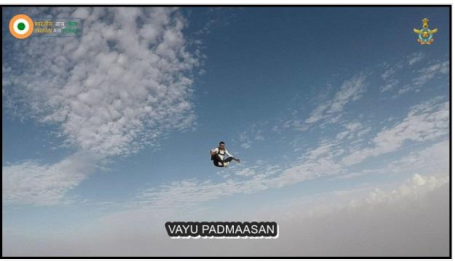
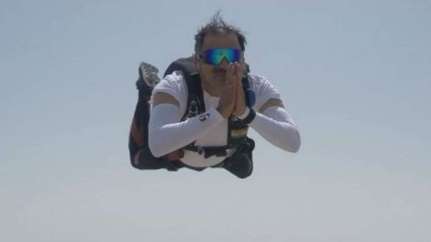
A text dating back to early medieval India considers yoga an activity that can lead to the liberation of one’s soul or ‘moksha’
Yoga has been India’s answer to fancy fitness regimes followed in the west. It has spread to all parts of the world to such an extent that we celebrate the International Yoga Day. Almost every Indian city has something planned to celebrate on this day.
While the Prime Minister practices yoga in Dehradun with over 50,000 people, Vice-President Venkiah Naidu will be the chief guest at a yoga day event in Mumbai. Yoga day is being celebrated in other locations like Hyderabad too.
Where to practice Yoga
But here’s the irony- Yoga must be done in a secluded place, says the Kurma Purana (Kurma Purana Part II, translated by Ganesh Vasudeo Tagare, published by Motilal Banarsidaas in 1982), an early medieval Indian text. It lays down few more rules for the practice of yoga. The text has prescribed specific locations where yoga can be done – A well-guarded place, in a cave, on the banks of the river, a temple, and isolated place with no worms. It also prohibits its practice in the Caitya( Buddhist place of worship), at four-cross roads, cremation ground, dilapidated cowpen or, crowded places.
Yoga- A concept that changed from early India to early medieval India?
In addition to the popular belief that yoga is a medium of exercise and is limited to practice of the Asanas, chapter eleven of the Kurma Purana refers to the fact that meticulous practice of yoga leads to the attainment of liberation as it ‘quickly burns the entire cage of sins.’ This is in addition to what Patanjali says about Yoga. Patanjali has called yoga, ‘a way to out to rest endless chain of thoughts’. Another meaning of yoga is found in the Markandeya Purana, say historians. The Markandeya Purana has called yoga as ‘disunion with ignorance and union with Brahman.’ Therefore, by the beginning of the Common Era, had become a formula to attain liberation. In the Rig Veda, historians have noted that ‘yoga’ was used to denote connection between words. It came from the root word ‘Yujir’ which means unite or connect.
Having already mentioned that the text dating back to early medieval India considers yoga an activity that can lead to liberation, there is a whole chapter elucidating the form. It goes on to say that knowledge originates from yoga and yoga functions through knowledge. Further to this, it is believed that Siva is pleased with one who is devoted to the practice of yoga.
Classification of Yoga
This Purana goes on to classify yoga as Abhaava yoga and Mahayoga. There is third usage ‘Brahma yoga’. Abhaava yoa is where the person introspects and realises oneself thoroughly. The Purana does not explain in detail Mahayoga. So far as Brahma yoga goes, it is one which leads to realisation.
Yoga is made of eight essential elements- Pranayama, essentially controlling breathing, Dhyana, Pratyahara which means not letting external factors influence oneself, Dhaarna or retention, Samaadhi or trance, Yama or control, Niyama or self-restraint, and Aasana or posture.
The text talks about many sub-types of pranayama- Uttama, Madhyama and Adhama, based on the breathing patterns. Performing pranayama by reciting mantras such as ‘om’ is called ‘sagarbha’ yoga and pranayama sans recitation is ‘agarbha’.
It goes on to detail the stages of pranayama as Recaka( exhaling), Puraka (inhalation) and Kumbhaka (holding breath). It is believed that 12 pranayamas lead to dhyana. A person is in a trance if he has done 12 dhyanas.