Showing posts with label social distancing. Show all posts

Monday, 24 January 2022

S Korea's daily Covid count tops 8,000 for first time amid Omicron spread

 The new record came amid the spread of the more transmissible but less deadly Omicron variant, which became dominant in the country last week
South Korea, coronavirus, economy

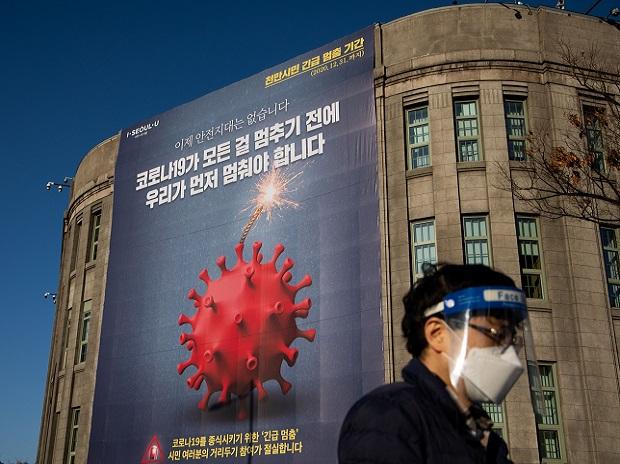
South Korea’s daily count of new coronavirus cases topped 8,000 for the first time on Tuesday, as the highly contagious Omicron variant spreads rapidly despite the recent extension of strict social-distancing rules to slow infection.

The Korea Disease Control and Prevention Agency (KDCA) reported 8,571 cases for Monday, exceeding the previous peak posted in mid-December of 7,848. The new record came amid the spread of the more transmissible but less deadly Omicron variant, which became dominant in the country last week, and despite less testing over the weekend. South Korea reinstated tougher distancing curbs in December as record-breaking numbers of daily cases and critically ill patients threatened to saturate its medical system before the Omicron wave hit.

Daily tallies had almost halved to around 4,000 this month but began rebounding last week because of Omicron infections, logging their second-highest level on Saturday. The surge fuelled worries about a potentially bigger wave ahead of the Lunar New Year holidays, when tens of millions of Koreans usually travel across the country for family visits. Health officials said Omicron would likely account for more than 90% of new infections within two to three weeks, while daily numbers could reach 20,000 to 30,000 or even higher.

Monday, 13 April 2020

Coronavirus brings focus on division of power between the Centre and states

Experts stress the need for an over-arching central law to deal with epidemics
PM NArendra Modi | Photo: ANI
New York Governor Andrew Cuomo is getting heaps of praise as he tackles the coronavirus pandemic in his state, despite being at loggerheads with US President Donald Trump. In India, there still exists a conundrum over the division of powers between the Centre and states to fight the pandemic. Several experts want an over-arching central law to deal with similar situations in a quasi-federal democracy where fragmented laws don’t demarcate the roles of the two.
Around three years back, the ministry of health put up for discussion the draft Public Health (Prevention, Control and Management of Epidemics, Bio-terrorism and Disasters) Bill, 2017. The draft Bill mentioned the role and responsibilities of the Centre and states in a medical emergency. The Bill, however, never saw the light of the day. According to Article 246 of the Constitution, matters related to public order and health are mentioned in the state list. To deal with the fast-spreading pandemic, the central government took recourse to the Epidemic Diseases Act, 1897 (ED Act), and the Disaster Management Act, 2005 (DM Act). Subsequently, it announced a countrywide lockdown to contain the spread of the coronavirus, using provisions in the DM Act.


As the virus quickly spread across the country, many experts called for the imposition of an emergency, which could give the Centre wide-ranging powers. However, such a measure would have faced implementation challenges. “The Constitution does not directly mention health emergencies of the kind India is currently experiencing. However, once central legislation becomes applicable, Article 256 applies. That provision says that states must comply with central laws, and the Centre can issue directions to demand compliance,” says Shubhankar Dam, professor of public law and governance, University of Portsmouth School of Law, UK…Read More

India coronavirus dispatch: What happens when a Covid-19 case is confirmed?

The scientists helping fight a pandemic, the future of agricultural markets, and how the government responds when a Covid-19 case is confirmed – read these and more in today’s India dispatch
isolation centre at the NSCI dome, coronavirus, beds, hospitals, patients
Here’s a round-up of articles from across publications in India on how the country is dealing with the coronavirus pandemic – from scientists helping fight a pandemic, to the future of agricultural markets, and how the government responds when a Covid-19 case is confirme.
Expert Speak
Webinar: Was the lockdown successful in breaking the chain? Is herd immunity going to save us from the virus? Who needs the mask? Listen to this webinar to know what Dr Shahid Jameel, a well-known virologist and CEO, DBT, India Alliance, and Dr Arvind Kumar, chest and lung surgeon at New Delhi’s Sir Gangaram Hospital, and founder of Lung Care Foundation, have to say about the coronavirus outbreak in India, the lockdown, the treatments, vaccine developments and future of the pandemic.
Citizens Under Lockdown
These scientists are not medical experts but are still trying to help fight coronavirus: They are not virologists or involved in medical research, but a team of around 400 scientists has come up with different ways to bolster India’s attempts to tackle the Covid-19 pandemic. They are busting coronavirus-related myths — a major menace in current times — besides using government data to derive calculated estimates about the spread of the disease. Read here about how they are also helping manufacture masks and low-cost ventilators.


For Indians under lockdown, social media is the go-to source for news and entertainment: With Indians locked up inside homes, social media usage has gone through the roof in the country. Total session time – the time spent each day – on popular social media apps such as Facebook and Instagram grew significantly between February 2 and March 29, data show. Read more here.

Monday, 23 March 2020

Coronavirus pandemic: Africa gets much-need care package from Jack Ma

An Ethiopian Airlines cargo flight from Guangzhou, China arrived with 5.4 million face masks, 1.08 million testing kits, 40,000 sets of protective clothing and 60,000 protective face shields
Jack Ma
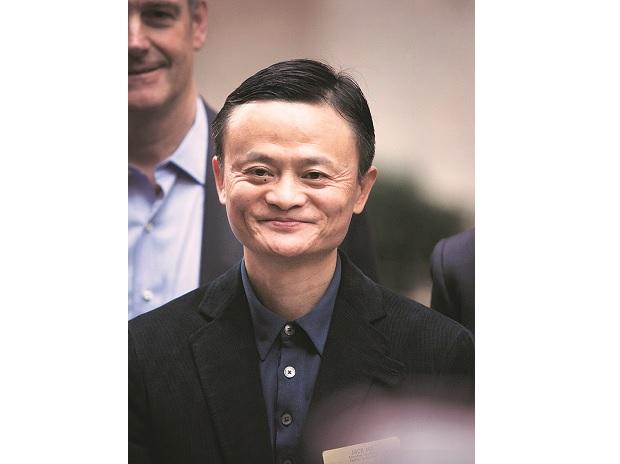
With the coronavirus increasing its spread across Africa, the continent received a much-needed care package from Chinese billionaire Jack Ma. A cargo flight containing more than 6 million medical items arrived Sunday in Ethiopia’s capital, Addis Ababa. The supplies from Ma, the founder of China’s e-commerce giant Alibaba, will be distributed to African countries in need of supplies to battle the spreading Covid-19 pandemic.
An Ethiopian Airlines cargo flight from Guangzhou, China arrived with 5.4 million face masks, 1.08 million testing kits, 40,000 sets of protective clothing and 60,000 protective face shields, according to Ethiopian officials and the Jack Ma Foundation. Ethiopian Prime Minister Abiy Ahmed last week pledged to distribute the supplies to other countries in Africa. Ma has sent similar shipments of medical supplies to countries in Asia, Europe, North America and Latin America.
The Coronavirus has been relatively slow to reach Africa but has now spread to at least 43 of the continent’s 54 countries, with more than 1,100 cases confirmed. In response many African countries are imposing restrictions. Mozambique confirmed its first case Sunday and cancelled all visas to the country, closed schools and banned gatherings of more than 50 people.
Kenya announced new restrictions Sunday, after it confirmed eight new cases, bringing its total to 15. It closed all bars and restaurants as of midnight Sunday and halted all services at churches and mosques, saying that houses of worship had not implemented safe social distancing. Kenya also suspended all international passenger flights effective Wednesday and closed the border posts to neighboring Uganda, except for the transport of cargo.

Wednesday, 18 March 2020

China's HIV drug experiment to treat novel coronavirus outbreak fails

The test “was a heroic effort. Unfortunately, the trial results were disappointing”
coronavirus
A pill containing two HIV drugs that was touted as a potential treatment for the novel coronavirus was not effective, according to a study released late on Wednesday in the New England Journal of Medicine. A test in Chinese patients with severe COVID-19 disease found the 99 who received AbbVie Inc’s Kaletra, a combination of lopinavir and ritonavir, fared no better than the 100 who received standard care.
People who received the combination showed small gains in the time to clinical improvement and mortality at 28 days, but the differences were not statistically significant. People on the drugs showed clinical improvement after a median of 15 days compared to 16 days with standard care, a difference the researchers characterized as “significant, albeit modest.” The study results were published online in the New England Journal of Medicine.
The lopinavir-ritonavir combination also produced more side effects, prompting the treatments to be halted in 13.8% of patients. The drug combination was not tested against a placebo, which is the gold standard in assessing the effectiveness of a treatment. All of the patients had pneumonia and were treated at Jin Yin-Tan Hospital in Wuhan, the city where the pandemic began. The treatment “was not associated with clinical improvement or mortality in seriously ill patients with COVID-19 different from that associated with standard care alone,” concluded the team, led by Dr. Bin Cao of the National Clinical Research Center for Respiratory Diseases…
GET ALL LIVE UPDATES ON CORONAVIRUS OUTBREAK

Covid-19: Entrepreneurs urge PM Modi to scale up testing infra, capacity

India must increase its efforts for asymptomatic testing at a large scale to diagnose community transmission, say entrepreneurs in their representation
coronavirus
India remains at the bottom among all nations affected by the coronavirus disease (Covid-19) when it comes to testing suspected cases, even as the number of cases in the country is increasing rapidly. There is a dire need for India to test, not just those who might die, but also those who might spread the virus. A group of entrepreneurs and venture capitalists wrote to Prime Minister Narendra Modi, urging him to scale up testing infrastructure and capacity by allowing the private sector to participate in the testing process.
In a presentation prepared by venture capitalists and founders of 51 start-ups and businesses, including Abhiraj Singh Bhal, co-founder of Urban Company (formerly Urban Clap), CRED founder Kunal Shah, and Snapdeal co-founder Kunal Bahl, said that countries which had acted “early and strongly”, such as South Korea, Singapore and Japan, had been able to somewhat control the spread when compared with countries that acted late — Irab, Italy, France and the US, among others.
“With one of the lowest coronavirus testing rates in the world, the country must scale up its efforts by aggressively testing those with symptoms and those without symptoms, because asymptomatic people are more likely to spread the virus if they are not diagnosed in time,” said the presentation. It noted that India must increase its efforts for asymptomatic testing at a large scale to diagnose community transmission. As the number of coronavirus cases scale up, so should the testing of asymptomatic at the earliest.
According to the current testing protocols in the country, India can conduct up to 10,000 tests a day. And only those with a history of travel to high-risk countries affected by the virus and people who came in contact with those having tested positive are asked to be quarantined for 14 days, and those who show symptoms of the infection are tested.

14th BRICS summit to review current global issues, reach key agreements

  At the   14th BRICS summit   which is to be hosted by China in a virtual mode on 23-24 June, the member nations will review the current gl...